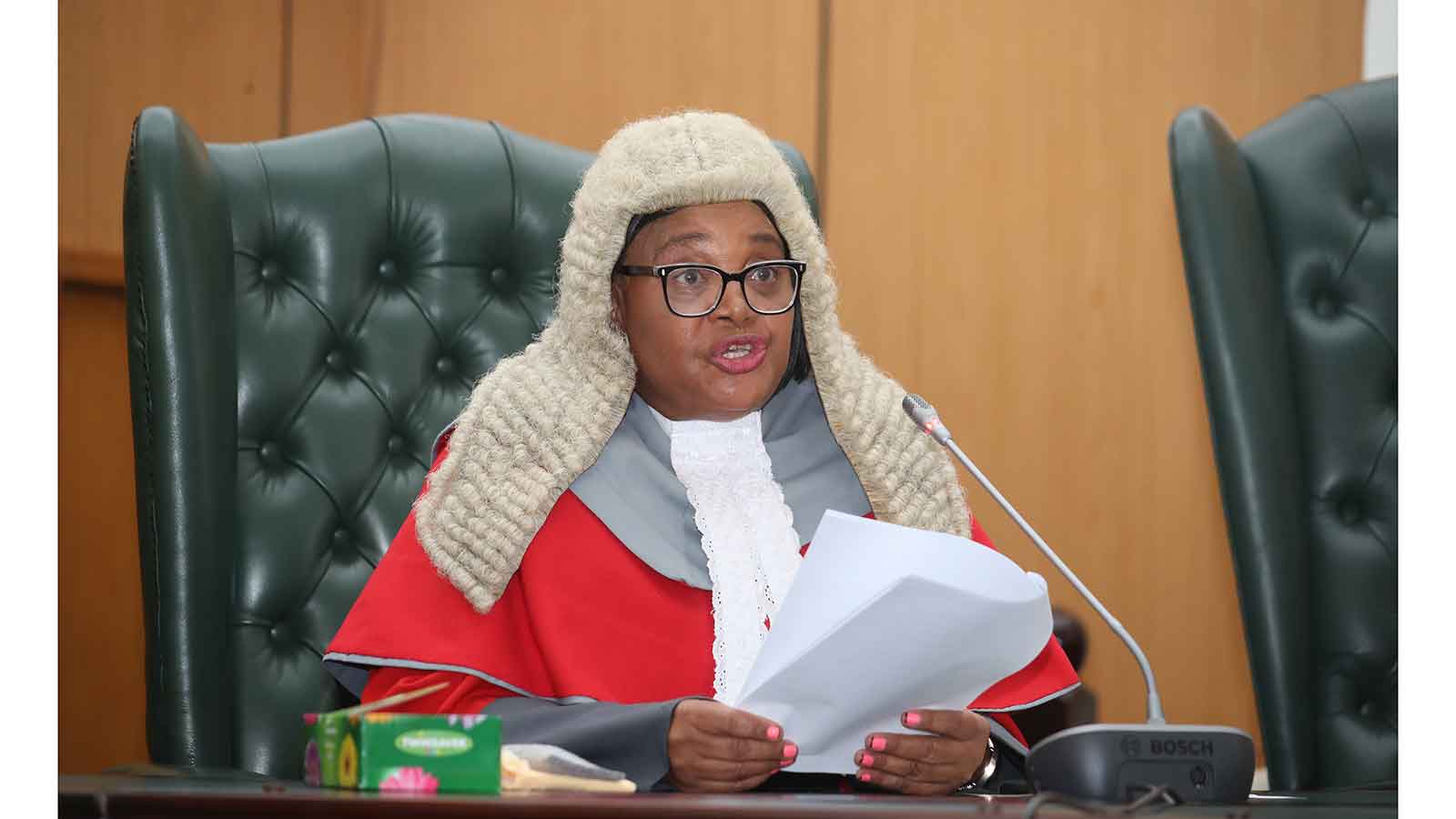
THE appointment of the new Chief Justice of Zimbabwe, Elizabeth Gwaunza, marks another milestone in bringing women into the top national posts.
Chief Justice Gwaunza now heads the judiciary and chairs the Judicial Service Commission by virtue of her office.
She is also a senior judge of the Constitutional and Supreme Courts, so the position is vital for the continued implementation of a highly qualified and independent judiciary.
The Chief Justice sets the whole tone of the judiciary and much of the legal profession.
That gives the Chief Justice not just the formal authority of the appointment, but also the full backing of all in the judiciary and legal profession.
Chief Justice Gwaunza, thanks to her long and very distinguished career in both the legal world and the judiciary, has that acceptance, and President Mnangagwa was largely just confirming this acceptability and trust.
The post-Independence history of Zimbabwe has seen women moving into all levels of the judiciary, which in colonial days was 100 percent male.
The first woman magistrate was sworn in soon after independence in 1980; the first woman judge of the High Court was sworn in four years later in 1984; the first woman Supreme Court judge was appointed in 2001; the first women judges were appointed to the Constitutional Court when it was split from the Supreme Court as required by the Constitution.
As of this week, Chief Justice Gwaunza, who also heads the Constitutional and Supreme Courts; Judge President Mary Zimba-Dube, who heads the High Court; and Chief Magistrate Vongai Palmer Guwuriro, who heads the vast number of lower courts, are all women.
So, for that matter, are Attorney General Virginia Mabiza, who is the top legal adviser to the Government; Prosecutor General Justice Loice Matanda-Moyo, who heads the National Prosecuting Authority of Zimbabwe; and Permanent Secretary of Justice, Legal and Parliamentary Affairs Vimbai Nyemba.
So the appointment of Chief Justice Gwaunza was, in that sense, the capstone.
It must be stressed that none of these appointments were made because the person was a woman. All rose to the top on merit as each position fell vacant.
Chief Justice Gwaunza’s legal background has been that of an activist in the pursuit of justice for all.
Before her appointment to the High Court in 1998, she had co-founded and was the national coordinator of the Women and Law in Southern Africa Research Project.
She was also Director of Legal Aid in the Justice Ministry and was a director of Legal Affairs in the Ministry of Community Development and Women’s Affairs.
Her 28-year service as a judge saw international recognition, including an appointment to the International Criminal Court for the former Yugoslavia.
She was elevated from the High Court to the Supreme Court, as the second woman judge to sit on that court, in 2002 and was appointed Deputy Chief Justice in 2018.
So she has seen it all in a distinguished career and has an academic reputation as well in inheritance and family law in Zimbabwe, an area where a lot of careful change has been required and properly managed, all the time looking at individual needs and rights to ensure maximum fairness.
Africa has, interestingly, taken the lead in appointing women to the top judicial posts.
Of the 10 national Chief Justices, six are now in Africa.
The continent has taken the global lead in this regard and is shining a bright light on the rest of the world.
We are confident that our new Chief Justice, with her background and vast experience, will be a highly effective Chief Justice, maintaining judicial independence and the law, but ensuring that its implementation is inclusive and fully fair in all respects to those who come before the courts for legal redress.