Online Reporter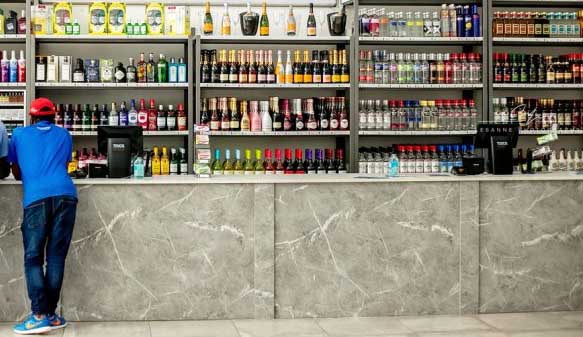
MANY people have been worried about the major proliferation of bottle stores and bars, usually described as sports bars, in their communities and dislike seeing these across the road from churches or near schools and hospitals.
It is also clear that many bottle stores are not too fussed about ensuring that customers are 18 or over.
While the responsible minority ask for identity in dubious cases, there are many bottle stores that sell liquor to anyone even if they look underage. And now there are reports that some bottle stores have diversified into illegal drugs and substances.
The Ministry of Local Government and Public Works is now starting to take action and the National Liquor Inspectorate is assessing how and when licences were issued and under what conditions.
The Local Government Ministry needs to be involved as the licencing authorities are the local councils, and they are supposed to enforce the rules.
For a start, bottle stores and bars cannot be located near hospitals, schools, old age homes and places of worship. That is the planning law. There can be debate on what is too near these social benefits. Presumably the planning rules are in place to remove what could be a serious nuisance and, at least in the case of schools, to keep drinkers and children separated.
There are other complications, such as the fact that hotels and sports and other clubs usually have a bar and that most supermarkets have liquor sections, regulated with a separate licence.
There is also the complication that a bar or bottle store could have been established years before a neighbouring church or school was built, or a new hospital established.
There is a provision, usually enforced, that a prospective applicant for a bottle store or bar licence has to advertise this and name the future holder of the licence and the person who will actually manage the bottle store or bar.
This implies that everyone who may be concerned reads legal notices.
Already we have been promised a significant upgrade in planning advertising for service stations and fuel outlets, with a billboard to be erected on the site giving details of the development plus the procedures to be followed if you want to register your approval or disapproval.
We think that this is an idea whose time has come for many other developments and for the issue of bottle store licences.
If the bottle store or bar is to open in an existing shop in a shopping centre then a large notice can be taped inside the window. There are already rules for bars and nightclubs about noise abatement and soundproofing and the notice can include details there as well.
Several supermarkets have already separated their liquor sales and ordinary supermarket business, sometimes with a decent partition and sometimes even using separate shops.
Often this was done to cope with the different opening hours of the two types of business, and sometimes to cope with the sensibilities of a significant group in the intended market or community.
We think this separation should be mandatory, with children barred from the liquor section although perhaps allowing all items in an adult’s trolley to go through a single till point.
But this separation would also allow some thought about the appropriateness of the bottle store, and to force if necessary the supermarket owner to stop customers drinking in public outside their doors.
This problem of bottle store licence holders not fussed about public drinking near their premises, and being quite happy to keep selling refills and top-ups to obviously inebriate customers, is one of the reasons why so many want far stricter enforcement of the liquor licensing laws, and why many people are dubious about allowing another bottle store into their local shopping centre.
Enforcement of the licencing laws, and tightening these when necessary, could help make licence holders take responsibility.
The ministry’s decision to demand accountability from local authorities is also very welcome.
The liquor licencing committee of even a large city council is usually just a handful of councillors and a couple of officials. So they are quite happy to licence almost anything almost anywhere since they do not live near the future liquor outlet.
We all have to accept that selling alcoholic beverages is a legal business and that adults should be allowed to buy their drinks without much fuss or bother, and be allowed to buy them near to their homes.
But the businesses also have to be a reputable businesses willing to follow reasonable rules and be subject to the sort of tighter planning rules that other potential public nuisances have to follow.
There has been a lot of liberalisation of liquor sales in the past 60 years, but that liberalisation was accompanied by sets of rules and regulations to prevent many of the abuses that have now tended to proliferate.
We do not have to return to the days of bottle stores closing at 5pm, supermarkets banned from liquor sales, two bottle stores and just one hotel with a bar and one sports club with a bar in each suburb. But we need to retain the regulations that accompanied our present liberalisation.