admin
admin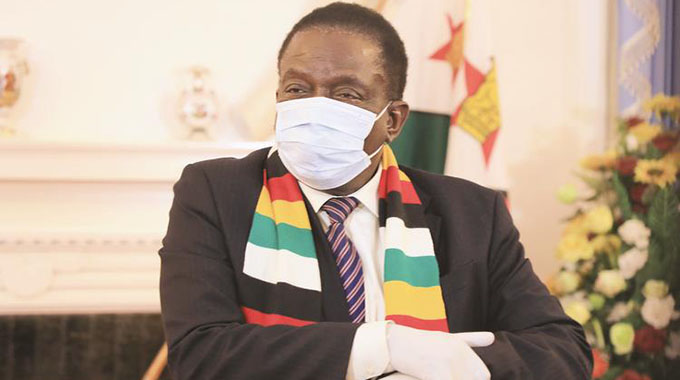
The night curfew for non-essential operations and staff and the shortening of operating hours for exempted, but non-essential business, plus the tighter enforcement of existing lockdown regulations on movement and safety measures like mask wearing, will slow the spread of Covid-19 and allow Zimbabwe to cope and eventually defeat the virus.
Our lockdown regulations were already tight, and had already done much to prevent a wildfire outbreak. But they have been flouted, and flouted by more people, which has seen a rapid rise of infections within our communities.
President Mnangagwa was forthright in his address to the nation on Tuesday night. Covid-19 is here, right now, and we all have the duty and responsibility to make sure that our rates of infection, illness and deaths remain low.
A major portion of his address was stressing the need for people to follow the rules already set on unnecessary movement, mask wearing, social distancing, hygiene and the like.
The curfew and shortening of business hours for non-essential businesses, with the retail end of some defined essential services such as food shops, restaurants and service stations now put in the same category as ordinary shops, were needed because a significant minority of people were not obeying the rules.
They were wandering around at all hours, partying and generally flouting lockdown rules with ever greater complacency. The problem of enforcing the rules is harder at night, when it is difficult to see or check such flouting, and so the shorter working hours so everyone in non-essential businesses can get home in time to beat the curfew, and the curfew itself.
There are exemptions to the curfew, but when police or other security agencies stop you at night you have to be able to persuade them that you are in the small pool of exemptions. Most people are not, and so face arrest, fines or court appearances.
The President also made timely reminders that there are other rules that were announced right at the beginning of the lockdown or in the 14 amendments we have seen since.
Most non-working people are supposed to stay at home unless they are buying food, medicine or getting water. Everyone has to wear a mask in public, and a potential loophole has been plugged by clearly stating that this means both the nose and mouth are securely covered; the flapping lower strings and the uncovered nose, common failings, are not allowed.
Social distancing of one metre minimum has been there since the beginning, and has been flouted since the beginning. Zupco and other permitted mass transport has been allowed, but under conditions that are not universally obeyed although are not flouted outrageously.
All business operations and premises are required to observe and enforce World Health Organisation anti-Covid-19 standards, and that was spelt out yesterday in the new amended regulations.
Now business owners in the exempted sectors have to move fast if someone tests positive or dies.
We have already seen responsible businesses following the now mandatory rules of closing the affected premises, disinfecting and testing everyone.
The new measures and the appeal to follow the older measures far more strictly did not come out of the blue, but out of an informed position that is meant to stop the spread of the virus. In fact, there is no other better way of fighting the spread of Covid-19, except to limit physical interaction among the people.
It is in the process of movement that people acquire the virus from those they meet, so the less people interact with each other, the less the virus is likely to spread in the country.
If one looks at the new measures, they are all meant to enforce the limits on unnecessary movement of people so that they do not either acquire the virus from others or spread it.
In the absence of a vaccine, avoiding unnecessary movement is the best solution so far to curtail the rapid spread of Covid-19.
We can only successfully stop the increase in the new infections through religiously following the measures announced and stressed by President Mnangagwa this week.
Zimbabwe and other African countries are fortunate enough that the virus spread to the continent later, after it ravaged some countries in Asia and Europe. The most important lesson we can draw from countries like China, Spain, Italy and South Korea that were hit by the virus earlier is that extensive testing and social distancing can successfully halt the spread of the virus.
It is natural that lockdown brings with it many challenges, and many people are bound to be tempted to disregard the measures, and have been flouting the measures.
We need to understand that the challenges emanating from the lockdown are far less than those that will confront us in trying to contain a rampaging spread of the virus.
This is because Covid-19 is very infectious and any laxity can result in the infection of most of the populace.
And it does need one to show the symptoms to spread it — those with no symptoms or mild symptoms can still spread the virus even if they are unaware they are infected themselves.
There is no time for complacency or over-relaxation, as the virus is still within our communities.


 Online Reporter