

 admin
admin
Zimbabwe is still moving steadily towards readmission as a full member of the Commonwealth, even if this movement can sometimes be on the slow side, with a lot of majority support within the grouping and those more reluctant recognising that being an unreasonable holdout is not going to enhance their own status.
Generally, there is recognition that with the adoption of the 2013 Constitution there was a big jump forward, coupled with the Second Republic accelerating progress in bringing our law, some of which dates right back to Ian Smith, into conformity with that Constitution, so making sure that the rights Zimbabweans made it clear they wanted in 2013 are in practical effect.
Administratively, the Second Republic not only wants to be fully compliant with what the Constitution states, but also wants to be open and fair to everyone in the country, regardless of who they support in elections or in what they say and do.
While all these changes and reforms are making Commonwealth admission as close to a done deal as is possible before a Commonwealth summit confirms everything, we must remember that we are doing what we are doing because this is what Zimbabweans want, and what Zimbabweans voted for, not because we are ticking boxes on some sort of Commonwealth check sheet.
That is an error made by some in some opposition quarters, that external pressure will produce what they desire, which is from what they have actually said not so much ticking boxes, but that they should be the ones in power, regardless of how they obtained that power.
And that is where they leave the shared vision and start that weird alliance with foreigners who, to be blunt, are unlikely to care very much what Zimbabweans think so long as they are agreeable to what foreigners think.
It is not that difficult to win an election in Zimbabwe. You simply have to be good, be trusted to deliver what you promise, and be able to make promises that are realistic and in line with what voters want.
This list does not include being the sort of person who might be more acceptable to some foreigner living somewhere else, just being the person who is most acceptable to the voters in Zimbabwe.
The critical point is that we choose, we decide.
We agree that one of the things we chose, and which we have already decided, is that our choices reign supreme and that everyone in Zimbabwe needs to accept the democratic fact that those with the most support will be the President, the Parliament and the local authorities.
We do not need these imposed by foreigners or by some minority, and we went through a long period where a minority could impose some fairly dreadful policies so we know what we are talking about.
Along with this general democracy that we recognise the results of elections, is the need to recognise that we all have rights, a lot of rights, and there are many limits on what a majority can do and how that majority needs to give due recognition to individual rights, however irksome or difficult some of those exercising those rights can be.
Zimbabweans do not need to be forced to grant each other essential human rights, or to demand that their Government is open, clean and fair, and preferably efficient and able to deliver.
This is what we expect.
In our journey since we won the right in the struggle for independence to have the sort of country, society and political leadership we want we have been making sure that we correct any errors we made, and come back from any wrong turnings we made. And sure, we have made some, expected because we are human not perfect being.
Generally our changes have been positive, and move us forward in line with our shared visions.
The fact that much of that vision is shared by the Commonwealth, at least in theory if sometimes less so in practice, means that we would like to be a member.
You do not join societies or clubs or churches or anything else where you disagree with the principles or tenets of that society; life would be intolerable if you did have to do things that you disagreed with.
There are advantages, which is why most countries that have near automatic rights of membership, ex British territories or colonies, or at least ex territories of a Commonwealth member or former member, the position Namibia was in when it joined, did join.
In addition there are the odd country with very close ties to Commonwealth members, Mozambique and Rwanda, host of the last Commonwealth summit, for example, do apply and are admitted.
There is that minor condition that everyone involved in Commonwealth business or meetings speaks English.
A Commonwealth summit is the largest single gathering on the planet where there are simply no translators, everything being in a language that everyone can speak, even if it is, as is often the case, their third language.
For Zimbabwe there are those general benefits, but more particularly there would be the recognition that we have fulfilled the goals set by our own citizens, which are in the main the goals of the Commonwealth and would help cement our reintegration into all aspects of the global community.
We of course have the support of more than 90 percent of that global community, and that would probably include around 90 percent of Commonwealth membership, but the Commonwealth works by consensus rather than by majority vote, so there is what could be seen as veto power by a minority but in the end no one wants to be in a minority of one. That is where we are now heading.
A lot of the sanctions, pressure for sanctions, pressure for international isolation, came not only from losers in our elections, and that pressure has been severe, but also from those who felt that our land reform was wrong.
We ourselves while maintaining that it was vital and that the resulting increase in fairness and justice have more than repaid the effort, also agree that we have been slow in fulfilling our own Constitutional guarantees that displaced land owners were entitled to compensation for improvements they made, although not the land itself.
The Second Republic fixed that, by delivering the deal with the displaced landowners.
There is still the interesting fact that we need to be fully connected to critical sections of the international community to speed up the required payments, but this is what we want to do, to effect closure of the whole programme as well as being totally fair to those who were affected.
So total reintegration into all areas of the global community would remove what triggered the original isolating pressure.
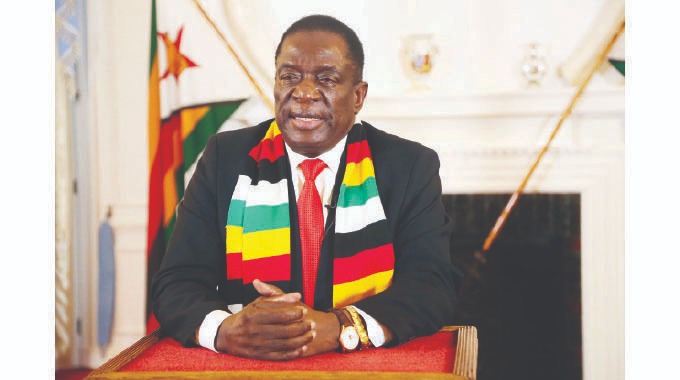
The process of full global integration has been a hard road, but one that President Mnangagwa and his Government have pursued diligently and with practical effort, again because this benefits Zimbabweans rather than because it is desirable in itself.
We have made a lot of progress, and Commonwealth recognition of that would be another desirable step.


 Online Reporter