admin
admin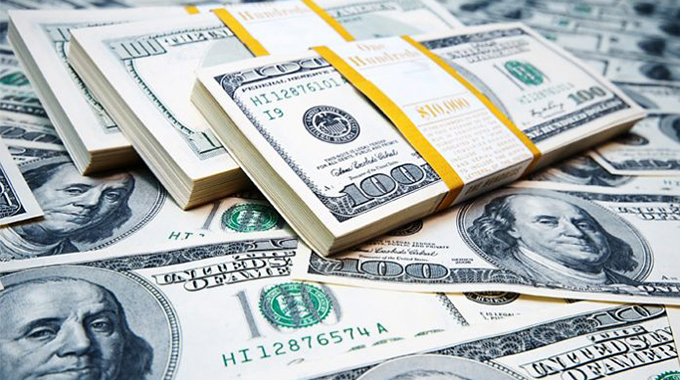
Importers have received a very clear double message from the last two foreign currency auctions with this week’s auction amplifying one message, that bargains are rarer in the auctions, and then, with a record allotment, that there is enough foreign currency to meet all legitimate needs.
In the last two weeks, the minimum accepted bid for a US dollar was $82, after three months when those bidders at $80 or more were able to buy all they needed and three weeks before that when bids of $79 worked.
That has effectively reset the lower limit on the bid band, but this week’s US$36,3 million allotment signals that this, rather than lack of funds, was the reason for the rejections.
The previous lower limit had produced an exceptionally stable exchange rate, which is in fact a weighted average with some paying more and some less depending on bids.
For four months this average, which is what exporters are paid when they sell funds, was moving around in a 75c band, sometimes up a bit and sometimes down. At the same time though, monthly inflation, while slashed from the previous appalling levels, was still chugging along at a little below four percent, on average.
For a change this was not being fed by Zimbabwean suppliers trying to keep up with exchange rates, but rather from a bit of catching up from those who had not been putting up prices every week.
Electricity, water and even bus fares rose, substantially, as regulators of such utilities and services carefully examined cost structures and efficiencies and then granted the rises required for these to catch up with the inflation of the first half of the year.
That put in some higher costs for producers, but we cannot expect Zesa to generate energy at a loss, or water suppliers to lose money on every litre they pump.
Government, as part of its policy of removing subsidies and replacing these with direct payments to the very poor, added a whisker extra to the inflation, although for practical purposes this did not affect most households as things like subsidised roller meal were not reaching ordinary families, but being diverted into the black market and sold at far higher prices.
The policy over subsidies makes sense. Subsidies produce inefficiencies into markets, encourage waste, fuel black markets, and even when they do work subsidise everyone, including the very rich. It makes far more sense to give the same money directly to those who need assistance.
For a start they get more help since the budget is divided among fewer people, and secondly the evils and distortions are eliminated.
Another contributor to the low monthly inflation was from market forces acting on farmers, a largely unregulated group, who do need to make a profit on the things they grow and cattle they raise. They had a bit, not much, but some catching up to do.
And finally we had the oil prices, which had fallen to record lows at the start of the Covid-19 pandemic, starting to rise as lockdowns across the world eased and demand rose.
Zimbabwean fuel prices are built purely on the actual delivered cost of refined fuels with a set of taxes and mark-ups then added. The decision to tax petrol and diesel equally did cause a small diesel price rise, but also ensured that tax cheating was largely eliminated.
All those small accumulated rises did, in effect, cause the exchange rate to fall in real terms by perhaps 15 percent over four months.
This was considered purely positive. When the auction rate stabilised every economist, or at least those thinking straight, reckoned the point of stability was too high and not justified by the fundamentals, largely built on the stability in money supply by Government’s own dramatic fiscal reforms.
There were good reasons for such a high initial exchange rate. The main one was everyone looking over their shoulder at the black market rate, which will always be higher because of the huge margins required in that market and the fact that the market is unregulated and so can be used to fund undesirable purchases and transfers.
But with the auction system working properly, and with producers able to buy their legitimate foreign currency requirements easily and legally, the markets eventually decoupled.
Even the fuel sector, with 70 percent of imports done with free funds, was not linked to black markets, at least at the business end. Direct importers are funding their supplies and taxes from their own revenue from retail sales.
Many customers paying in foreign currency are either using retained export earnings or other legitimate free funds and private motorists dipping into the black market are two steps removed from the importer and their dollars are “laundered” on the forecourt.
But now we seem to have reached a stage where the official exchange rate has reached the level suggested by the fundamentals, or at least close to that level. This would mean that a totally level rate would start creating its own distortions of waste, and would be putting pressure on exporters who, after all, have to sell an average of 40 percent of their foreign currency inflows.
We have been down the route in the past of expecting exporters to subsidise importers and all it leads to is falling exports, rampant cheating, black market manipulations, side deals and other abnormal messing around. Zimbabwe needs a normal market and stability.
The auction system is market driven. Importers pay what they bid, and if they bid too high then their costs rise more than should. And generally speaking importers have a very good idea of what the market price of a US dollar is when they prepare their bids.
But the Reserve Bank, while not able to manipulate an auction or set a rate, can adjust availability of US dollars to chop off bids it reckons are too low and this is the only control it has.
It did this in the first two months of auctions to get rid of those wanting huge bargains, effectively setting a lower band limit, and now appears to be following, far more delicately, the same process to signal where it thinks the lower limit of the bid-band should be.
As it has to buy the currency from exporters in the first place this is legitimate. Golden geese need to be fed.
Importers understand, and after the rejection of a quarter of the bids by volume last week to deter bargain hunters, this week just one percent of main auction bidders, who normally have highly-skilled chief financial officers, went below $82.
Even the SMES, who rarely have a chartered accountant on the staff, were only a couple of percent higher.
That average rise in the rate, incidentally, of just over a three quarters of a percent a week almost precisely tracks monthly inflation, suggesting strongly that we will retain stability in real terms and, with only marginal weekly rises, everyone now accepts inflation has been tamed and normal market forces can operate.
And as inflation continues to fall, rate rises will be even smaller, but still market driven.



 Online Reporter