


 Online Reporter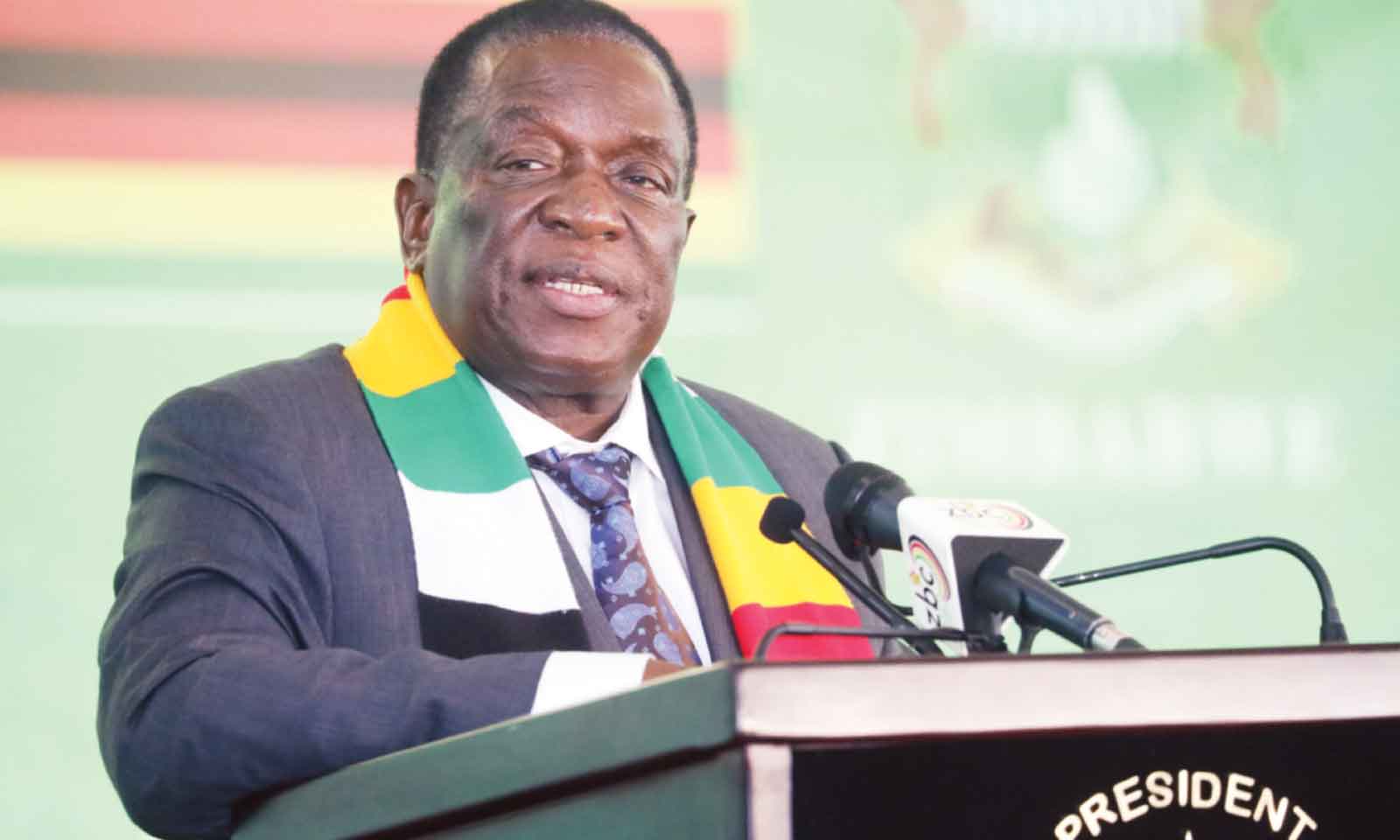
A FLURRY of announcements from Washington and Brussels last week has cast a stark new light on the geopolitics of the 21st century.
The unveiling of “Project Vault”, a United States plan to create a US$12 billion strategic stockpile of critical minerals, and the formation of a US-European Union rare-earth alliance, are the latest most explicit manoeuvres in a new great game, where Africa’s geological endowment is the central prize.
For African governments and citizens, this moment demands not celebration, but the utmost circumspection.
We must be wary of once again becoming a pawn in a great-power rivalry, our resources extracted to fuel foreign prosperity while our own poverty is cemented.
The data underscores why the world’s gaze has returned to the continent.
Africa holds 55 percent of the world’s cobalt, nearly half its manganese, over a fifth of its graphite and the vast majority of the planet’s platinum and chromium.
These are the building blocks of the future — electric vehicles, artificial intelligence, advanced weaponry and renewable energy systems.
The bitter irony is that this wealth, which should be the engine of our development, has historically been the cause of our impoverishment.
From the brutal extraction of rubber and ivory in the colonial era to the persistent “resource curse” of the post-independence period, the pattern is clear: Africa provides cheap raw materials and others reap the astronomical value added through processing, manufacturing and intellectual property.
Project Vault is not an altruistic plan for African development; it is a manifestation of American strategic anxiety.
It is modelled explicitly on the Strategic Petroleum Reserve, created in the 1970s during an oil crisis that threatened Western economies.
Today, the crisis is perceived as a dependency on China, which refines nearly 90 percent of the world’s rare earths.
The US initiative, and the accompanying summit of 55 nations, including key African suppliers like the Democratic Republic of Congo (DRC), aims to build an allied “trading bloc” to bypass Beijing.
This is the language of bloc formation, of a new Cold War where supply chains are weapons. When US Vice President JD Vance speaks of “expanding production across the entire zone”, African leaders must hear the echoes of history: a call to open our veins wider to feed a foreign industrial machine.
The competition between East and West is real, but for Africa, the risk is that it becomes a competition over us, not for our holistic benefit.
Most often, we are seen as a source, a “critical partner” in supply, but rarely as an equal partner in value creation.
This is why the worldview articulated by President Mnangagwa at the World Governments Summit is not merely rhetorical nationalism but a critical survival doctrine for the continent.
“We move on the basis that gives us the best results for our resources . . . We don’t need to please the West or please the East. We please ourselves.”
At this juncture, “pleasing ourselves” must be defined with ruthless clarity and strategic intent.
Firstly, it means an end to the raw materials bargain. No major agreement should be signed that does not have, at its core, binding commitments for local beneficiation and value addition.
Why export cobalt concentrate when we can host battery precursor plants?
Why ship graphite flakes when we can manufacture anode materials?
This requires building our own human capital, infrastructure and regulatory frameworks to capture this value.
Secondly, it demands that we leverage this moment of competition to our advantage.
Instead of being passive recipients of terms, African nations must collectively and individually negotiate from a position of strength.
Our minerals are not a desperate commodity; they are an indispensable necessity for every advanced economy.
This leverage must be used to secure technology transfer, equitable joint ventures and investments that build integrated industrial ecosystems on African soil.
Thirdly, we must critically re-evaluate partnerships.
Engagement with any other power should be judged on a single, non-negotiable criterion: Does it tangibly move Africa up the global value chain and improve the living standards of its people?
The deal that brings the most factories, the most jobs and the most retained wealth is the one we must take.
The shadow of the 1884 Berlin Conference, where foreign powers carved up the continent for its resources, looms large.
The tools have changed — from colonial decrees to complex trade agreements and mining concessions — but the fundamental dynamic of extraction remains a threat.
The new “Vaults” and “Alliances” being built in Washington and Brussels are designed for their security, not ours.
Africa stands at a precipice.
We can allow the new great-power rivalry to relegate us to the familiar, impoverished role of the quarry for the world.
Or, we can heed President Mnangagwa’s call, unite around our common interest and insist that this time, the mineral wealth beneath our soil becomes the foundation for wealth above it — in the form of diversified economies, skilled populations and sovereign technological capability. The world needs our minerals to build its future.
Let us ensure we use them to build ours.



