EDUCATION must be far more than just a formal process that leads to examinations with those who pass having opportunities to continue their education and gain reasonable employment and those who do not, a majority, are left to find their own way in life and become day labourers or subsistence farmers.
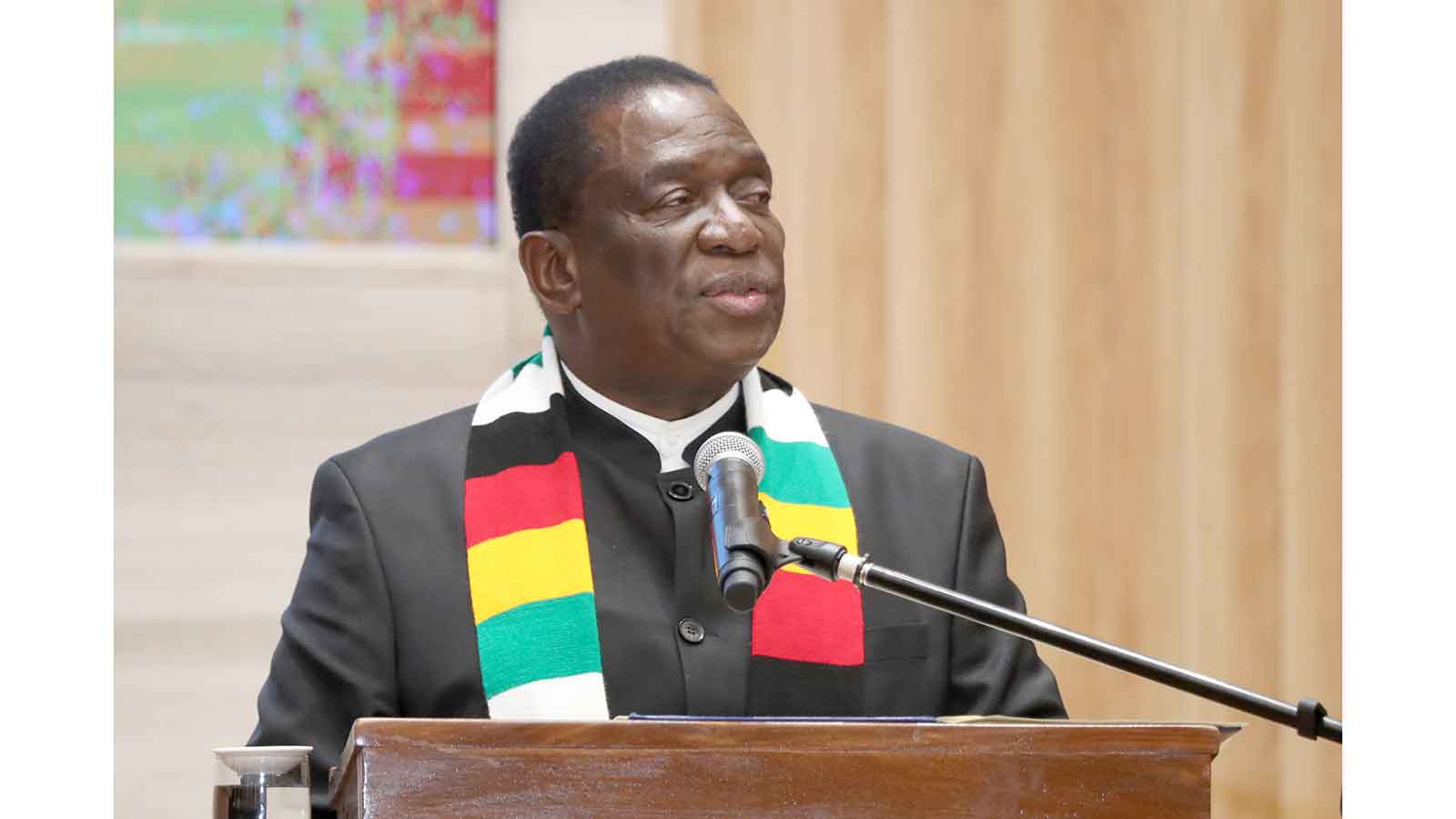
President Mnangagwa stressed this central need for a complete change in thinking when he spoke to the 24th Session of the Junior Parliament this week, before outlining what his Government had already done, what it was doing and what it would do.
The wastage of the colonial concept of drawing an uncrossable line between those good at examinations and those not so good has been incredible.
Far greater is the huge social cost of condemning those who do not pass O’level or higher examinations to what amounts to the scrap heap.
Even those successful in examinations frequently lacked practical skills to create their own businesses or hold down reasonable jobs in the formal sector, again building resentment and waste.
The Second Republic has redefined what education is supposed to do.
This is to fit every child to make their way in the world, earn a decent living and be able to bring up their own families. No one could oppose such a policy, but it does entail a lot more than just traditional primary and secondary schools of varying quality and a fairly low average of facilities.
Three major approaches have been set to turn this new policy into something practical that will educate and train up our young people to becoming productive members of their families, communities and the nation at large.
The first was to upgrade the large number of schools, mainly in rural areas although urban areas had their problems, so all children have access to the sort of technical education they need in the 21st century. This includes proper science laboratories in all secondary schools, as science is only meaningful when you do science rather than read about it. ICT needs computers linked to modern solar and satellite technologies to ensure every child has access to ICT use and the internet, ending the dramatic gaps in the past.
The second set of changes, built on the upgrade of schools, was to add practical applications of the theory taught in classrooms and laboratories, the Heritage 5.0 syllabuses now compulsory in all schools with teachers trained to manage them.
This reinforces the theory, as it is easier to understand when it is also applied, and provides the first level of training in practical skills to all children, even if they eventually earn doctorates in esoteric subjects.
The third leg of the new policy is the creation and expansion of vocational training, mainly for the youth, although there are no age limits when it comes to learning essential practical skills as most farmers are now aware after their training with practical inputs back-up to move from subsistence to commercial agriculture.
Throughout the changes and additions, the stress of the Second Republic on practical results, rather than endless symposiums and discussion, has been apparent. In fact, the main job of the upgraded Youth Ministry, divorced from the arts and sports where it had existed as a junior partner, is to build, upgrade and spread the vocational training centres and the youth service centres so every child has access.
The President stressed the need for excellence in these centres and with such excellence everyone, even graduates, can benefit from practical skills training.
With skills people can earn a living either running their own business, as that huge group of farmers are expected to do along with many others now moving up the ladder across a range of practical applications. Or they need to be useful in employment in existing and new industrial concerns where investors need people who know what they are doing or can be easily trained to handle the sort of sophisticated equipment that a modern industrial centre will automatically have to install.
The history and experience of the four industrial revolutions around the world has shown that huge transformations can take place in a single generation. But unless those participating are equipped with useful skills the gaps between groups can grow. So instead of seeing a more egalitarian society with everyone moving up the ladder roughly together we get the gross inequality, we can see in some developed countries that should know better.
The President has frequently stressed that economic growth must include everyone, with no place and no person left behind.
The Vision 2030 of an upper middle-income country implies that most people must be somewhere in the middle-income brackets if the vision is realised, and that means that everyone needs to have the necessary skills to enter those brackets. So we return to the stress on skills development and upgrading of schools. It all fits together.