

 admin
admin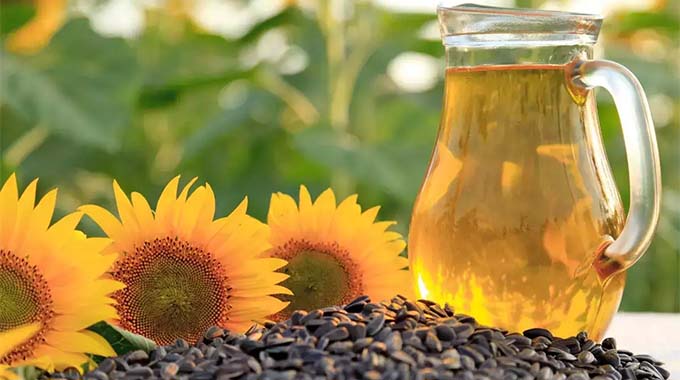
Zimbabwe is about to harvest more than half the oil seed it requires for cooking oil over the next 12 months, a major jump on recent years which have seen the country heavily reliant on imports.
Examining the results of the foreign currency auctions shows that cooking oil and margarine manufacturers have been major buyers of foreign currency, but their demands have been falling over the past couple of years as the general progress in agriculture takes effect.
The first major effort and major success was in grain production, to end the import of basic food. That major effort has seen national self-sufficiency in first maize and traditional grains, and then wheat with surpluses now the norm.
These surpluses are being at the moment used to build reserves, so that if Zimbabwe is hit by severe drought we still eat what we grow, rather than import.
Last year our oil expressers spent US$290 million importing oil seed and semi-processed products like raw soya oil. This year they will be spending US$130 million.
We tend, when pushing for self-sufficiency in food, to be looking at the savings in foreign currency, but this is less important with the major surge in mineral exports and the resulting state of affairs where our foreign currency inflows now regularly exceed our outflows. So saving foreign currency is important, but not the ultimate aim.
What is now more important is that we are paying foreign farmers and foreign merchants US$130 million this year to supply us with raw materials for cooking oil and margarine, mainly farmers in Europe and Latin America.
It would accelerate our economic growth and boost rural development and rural incomes if we paid that money to Zimbabwean farmers instead to grow more oil seed.
Since oil seed is a cash crop, rather than for on farm consumption, the money spent to get Zimbabwean farmers to grow this vital raw material is cash in the bank accounts of our farmers, and they will spend that money on all sorts of things that the rest of us make and supply, so everyone wins.
Oil seeds were included by the Second Republic in the input programmes for both smallholder and larger commercial farmers, but many farmers considered them secondary to the need to get the main food grain sorted out.
Now that has been done there is obviously need for significant expansion of oil seed.
Part of this upgrade in oil seed will come with the sorting out of cotton production, which had come close to collapse until the Government stepped in and started sorting out Cottco, the major financier and buyer of cotton.
This seems to involve something close to renationalisation of that company after the failure of its private investors to ensure proper management and adequate resources.
No one is suggesting that the old Cotton Marketing Board and its monopoly will be restored, since there is need to boost private sector investment in the industry, but there is also need to make sure that there is a guaranteed market for every boll of cotton reaped and that any farmer who follows the basic conditions of the Agriculture Ministry can receive inputs.
Cotton seed is a prime raw material for vegetable oils, and was at one time the main source of seed for oil expressers.
It is now moving back into being an important element with production of cotton, which includes fibre and seed, jumping from just over 56 000 tonnes in 2021-2022 to more than 152 000 tonnes in the crop now being harvested.
While much of the fibre is still exported the cotton seed itself is processed inside Zimbabwe, with the oil extracted through the same hexane process used for soya and the residue going into stockfeeds. There is an extra process in cotton to remove a single impurity but this is not complicated.
The build up of soya bean production widened the range of feed stock and this particular crop is now at last moving ahead.
It used to be a prime element in the crop rotations practised by large-scale commercial tobacco and maize farmers, being a legume that could help restore fertility as well as an extra source of revenue. But growing production should see a harvest of 93 000 tonnes compared to 82 000 tonnes last year.
But the main jump in production in the past summer season has been in sunflower. The harvest has gone from just over 11 000 tonnes last year to an expected harvest of more than 90 000 tonnes this year, as Government and private contractors went to considerable trouble last year to ensure seed and inputs were provided.
Sunflower used to be an almost universal cash crop across much of the smallholder sector, but for some reason output fell right back with a lack of buyers on the market and a lack of inputs.
Too many expressers opted for soya alone. That has obviously been reversed, both by Government and by the entry of one of the largest margarine and cooking oil manufacturers into the seed end.
The sorting out of the input supply chains for cotton and sunflower will see a lot of money flow into the pockets of the smallholder sector this year, as both crops are dominated by small-scale farmers and while sunflower can be processed at farm level, almost all the seed is sold.
Now that our farmers are growing almost all the grain we eat, with rice the only major grain still almost entirely imported although some useful Japanese expertise input will start making inroads there, we can push oil seed.
Already the Ministry of Lands, Agriculture, Fisheries, Water and Rural Development is seeing only modest increases in the area planted to grains next rainy season, with productivity increases now assuming more importance, but we still need to increase both hectares planted and productivity of oil seed crops.
It is also easier to export oil seed, and even better cooking oil, than bulk maize since oil crops have higher value and lower bulk so the transport component is less in the final price to a customer and cooking oil has a longer shelf life than maize meal if we are adding local value before export.
We could also expand our oil seed production by adding rape. There is hardly a backyard in Zimbabwe without some rape plants, and while the varieties for seed are different from the varieties for vegetable leaves, there is little difference in the actual growing, so a lot of farmers would need only modest extra training concentrating on how to let the oil rape grow to maturity and the precise moment for harvest.
Rape is a major oil seed in much of the world, especially Europe and Canada.
We have already made impressive progress in boosting oil seed production, and our farmers can grow a lot more as they build and rebuild the expertise required, so we can switch from paying Ukrainian, Russian and Argentinian farmers to grow the raw materials for our vegetable oils, and continue paying Zimbabwean farmers to grow more.



 Online Reporter