admin
admin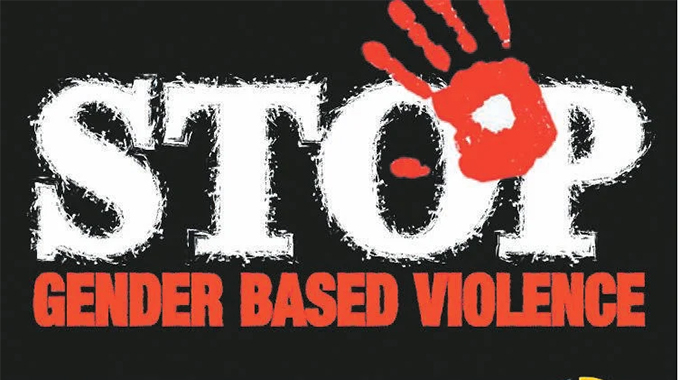
AN ugly giant dwells in our midst.
Gender based violence, in all its dreadful forms such as sexual violence, domestic violence, human trafficking and child marriages, has destroyed many lives and continues to do so.
While Zimbabweans enjoy extensive legal protection through the Domestic Violence Act, GBV persists, with women constituting the bulk of the victims.
To that end, from November 25 every year, which is the International Day for the Elimination of Violence against Women, up to December 10, the Human Rights Day, Zimbabwe joins the rest of the world in commemorating the 16 Days of Activism against Gender Based Violence.
The 2021 international campaign has been advocating for an end in violence against women and girls and the commemorations which end today (Friday) have been running under the theme ‘Orange the world: End violence against women now.’
However, activism against GBV should not be limited to only 16 days.
We look forward to a wholesome 365 days of action against the scourge.
Recent local events paint a gloomy picture and necessitate that.
According to a 2015 report compiled by the Ministry of Women Affairs, Gender and Community Development, 68 percent of the 3 326 women interviewed experienced some form of intimate partner violence (which includes physical, sexual or psychological abuse) by a current or former spouse or partner in their lifetime.
Of the 3 274 men interviewed, 46 percent said they had perpetrated some form of violence in their lifetime.
The Zimbabwe National Statistics office recently reported that at least 21 women are raped daily in Zimbabwe, translating to one woman being sexually abused every 75 minutes.
There has been an upward trend in the numbers over the past decade.
Sadly, most victims suffer in silence due to fear of stigmatisation.
When it comes to domestic violence, Great Zimbabwe University lecturers, Messrs Maxwell Chuma and Bernard Chazovachii conclude that violence perpetrated by men against women, particularly in households, is viewed as a normal part of gender relations.
The victims might not realise that they are being abused; they might even play along, which is a travesty.
Due to that, such cases often go unreported.
The silent victims need our help, the time for action is now.
We assist by talking about it, not turning a blind eye.
More worryingly, gender based violence can be found in hidden places. We therefore need to look closer and fish it out.
An illustration will suffice.
Owing to growth in online activity, social media bullies have found a new avenue to use in propagating GBV.
Perpetrators of GBV are using cyberspace to spew hate and gender discrimination, particularly against women in politics.
Activist, Madame Linda Masarira is a perpetual victim of gender based violence on micro-blogging site Twitter.
While attacks on her seem political, there is a gender dimension to the whole case.
Whenever Madame Masarira says something online, she is often shot down by comments on how scruffy she looks.
Attention is often diverted from whatever points she would have been trying to communicate to her looks.
That is thinly-veiled verbal harassment, an attack on a woman who is trying to leave a mark as a politician.
One does not need to agree with Madame Masarira’s worldview to see that attacking her like that is just wrong.
What does her looks have to do with her political career, imagined or real?
No one has ever bothered to mention any male politician’s looks when they address the public because their looks are irrelevant to what they stand for, and yet for women this seems to be the starting point.
It is those seemingly small things that make or break spirits.


 Online Reporter