admin
admin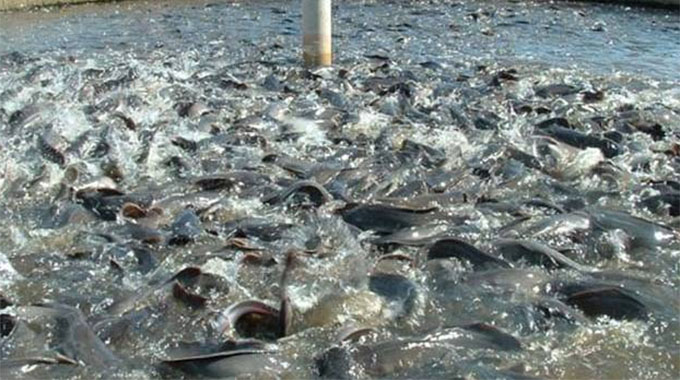
ZIMBABWE produces around 33 000 tonnes of fish a year, which sounds rather good until you realise that this is a little over half of what is needed, and that excludes the sort of market potential of seeing more Zimbabweans adding fish to their diet.
Traditionally fish was an occasional addition to diets, the country having a few perennial rivers, but outside the Zambezi Valley the catches were not large. Since then a swathe of large irrigation dams and urban reservoirs have been built, plus thousands of small dams and now a programme of adding fishponds to the village business units being set up as the Presidential Borehole Scheme adds tens of thousands of village and school boreholes over the next few years.
No one is suggesting that Zimbabweans are going to abandon beef, poultry, pork and goat meat, but rather that fish will move up the ladder from being an occasional treat to a significant part of the average family diet, an addition rather than a substitute and providing better and more balanced diets.
The wealthy already have these options. Go into any major supermarket and you will find packs of dried kapenta on the shelves, and deep freezers with some bream, the occasional trout from the Eastern Highlands, and a range of imported sea fish, with mackerel from Namibia probably the most abundant. You can also find the odd vendor offering fresh bream on roadsides, a dodgy business considering the short shelf life of many fish, or dried fish.
And that is about that.
Yet the kapenta revolution shows in many respects what is possible. This fish is a fairly recent and welcome addition to diets arising from a decision to introduce the species, native to Lake Tanganyika, into Lake Kariba in the late 1960s with the commercial fisheries starting in the 1970s but only really getting into their stride in the 1980s.
RELATED STORIES
Although kapenta is a non-indigenous fish, it has not displaced any indigenous species and in fact has filled an ecological niche that did not exist before the giant lake was created and provides not just the base of a large commercial fishery but also a prey fish for indigenous carnivorous species. The market is there but the resource is probably being overfished according to those who operate on the lake.
A far larger commercial fishery, using the many dams in the country, and providing fish at roughly the same price as poultry or beef could flourish as that kapenta revolution shows. This would be besides the fish farmed and caught at community village level in small dams and fishponds, although those sources could also produce commercial surpluses that between them would amount to a lot more fish.
The species of choice are the tilapia, a native African fish, which feed on water plants. They are regarded in many areas as an invasive species, causing other problems, but when farmed this is not a problem since most are caught and eaten, so the positives in Africa at least grossly outweigh the risks.
The fisheries and aquaculture resources department in the Ministry of Lands, Agriculture, Fisheries, Water and Rural Development has a number of units that breed the fingerlings, the very small newly hatched tilapia, and introduce them into small and larger water bodies where commercial or even subsistence fishing is practised.
We need to remember that most small dams on seasonal streams and even larger ones on rivers have very little in the way of natural fish stocks because these water bodies are a new phenomenon in Zimbabwe, with almost all dams built since the 1950s. They might not be suitable for Lake Kariba, where the Zambezi did have its own fish stocks, although with a missing small prey fish, but are ideal for almost everywhere else.
The mission now is to build up, rapidly, the output of the breeding programmes and here the Food and Agricultural Organisation is keen to be involved, providing technical assistance that has seen the launch of a hatchery guidelines handbook so that we use existing research into best practices and then build up our own applied research and practices from there.
With the introduction of many more fingerlings, we also need to create the fisheries that go with this. Even communities with small dams and fishponds might need assistance over simple technology to make sure they can catch the fish and certainly some thought needs to be given to how these can be processed for safe storage and sale.
The larger irrigation dams need to have dedicated fishing industries, with nets and almost certainly suitable boats, and decisions need to be made on whether there will be annual releases of fingerlings or whether we are looking at sustainable natural stocks and fishing limits and reserve breeding grounds to preserve breeding stock.
We also need to watch water pollution, and here Lake Chivero is an example of a dam where few would want to eat any fish caught there.
The trout fisheries in Nyanga were created in colonial times to provide sport fishing, rather than regular food supplies, and there were annual releases of fingerlings, so the annual release is a viable option.
The private sector will need to be involved at least at the larger dams as commercial fisheries grow, since catches there will need to be processed and frozen at the lakes, and then moved to markets. Dried fish is a millennia-old processing option, but again we need to work out the best processes to ensure safety, lack of contamination and proper marketing. In many cases skills need to be built up since this is something relatively new, at least for many Zimbabweans.
Fish farming and fisheries are an extra source of rural income, and thus contribute to rural development which requires the maximum number of sources of income if rural communities are to become upper middle income communities. But the new industry needs to be sustainable to cover its costs, and needs to be backed with a proper marketing network.



 Online Reporter