admin
admin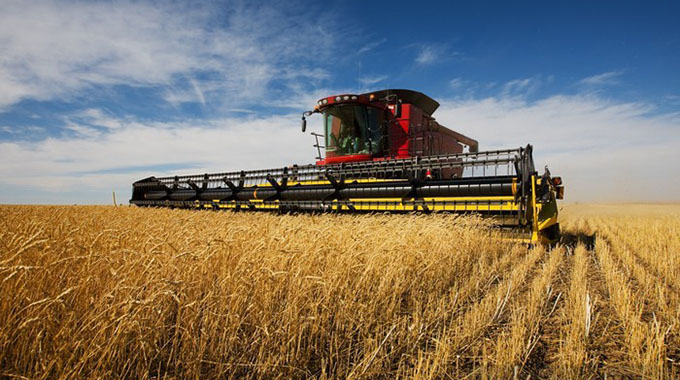
Many people misunderstand the purpose of the serious Government efforts to drive import substitution through growing more of the food we eat and making more of the goods we consume and think that the primary aim is to save foreign currency.
That is a useful, and highly desirable by-product; even self-sufficiency in food, while strategically more important, is still a by-product, although even more desirable.
But the primary goal of all development must be to create real new wealth through production, rather than consumption, and to ensure that this new wealth is fairly spread far enough to uplift many of our poorest families and poorest communities.
So the announcement by the Grain Millers Association of Zimbabwe (GMAZ) that the country has saved US$80 million in foreign currency by growing a record crop in the last winter season perhaps misses the critical point that Zimbabwean wheat farmers have, between them, earned the equivalent of an extra US$80 million, around $1,6 billion more than they earned last year.
And that is real wealth, created by growing something, producing something. There is not a single printing press in sight, just silos filling with the new larger harvest. And the new money will be spread quite far. The farmers get the money but they are not keeping it all.
They have workers to pay; they had to buy fertilisers and chemicals; they had to pay for replacement pipes and pumps and technicians to come out with their tool boxes to repair equipment; they will need to pay for other goods and services. So a lot of Zimbabweans will benefit.
When the millers talk about prepaying the Grain Marketing Board (GMB) $2,24 billion for an initial bulk order of 80 000 tonnes of wheat, and the harvest was big enough that more orders will be placed later, they are, in effect, talking about paying Zimbabwean farmers for growing that wheat, rather than scampering off to the foreign currency auctions to buy US dollars to pay farmers in some other country to grow it for them.
That $2,24 billion stays in Zimbabwe, and eventually reaches a surprising large number of bank accounts and mobile money wallets.
Some of it will be spent on new capital equipment and machinery, so farmers can produce even more next year and their suppliers can manufacture the inputs they need. But a fair amount will end up in wage packets, those of the farm workers and the workers in the supplying factories. And some of those workers will be new, since if you expand production you, in the end, have to hire more people to do the extra work.
And those pay packets benefit a whole lot of other industrialists, from the people who make basic groceries through the people who make clothes end all the way to people who make bricks and cement for the wage earners who now want to start building a home.
So import substitution is the low-hanging fruit we can grab while we build our productive sectors. Eventually some of those sectors will need exports if they are to continue to grow but right now everything we grow or make at home, keeps money in Zimbabwe, adding to our total national wealth, and that money is spread across wage packets and allows others In the economy to grow, by producing stuff for the primary producers and for the people with those wage packets.
With the advent of all our fiscal and monetary reforms over the past 27 months since the advent of the Second Republic, foreign currency has gradually ceased to be the limiting factor it once was when we pretended we were richer than we were by printing monopoly money and claiming it was worth whatever face value we put on it.
In fact, soon after the Government took the first major steps towards the end of 2018 by getting its own budget and own spending under control, that is switching off the printing presses and living off what we all pay in taxes, the normal laws of economics quickly drove Zimbabwe into a positive current account, that is we finally started exporting more than we imported.
Part of the reason for the switch from being a net importer to a net exporter, is that we now produce more of the things we consume ourselves while our export receipts, dominated by tobacco, gold and platinum, continue to increase. And the bulk of our export earnings now go on things like raw materials, machinery, spare parts, chemicals and the like, rather than on pre-packed products made or grown elsewhere.
Of course, as a developing country, we need to be a net exporter. This is because we are poor in capital.
We need investors to come in; we need to tap global development funds that lend for major development projects at low rates of interest.
That means we have to be able to tell investors that we will let them take their profits, after all their local and other operating costs, plus their taxes, have been met, back home. We need to repay money we might want to borrow for the really things. But we still win big since all those investments and borrowing create wealth, jobs and infrastructure.
So import substitution is not so much designed to save foreign currency.
That is an automatic result, and one that is highly beneficial. But primarily it means we produce more, and all production means someone in Zimbabwe must be paid for that production. So as a country and as individuals we grow richer, moving from poverty to that middle-income status we have set as our 2030 Vision.
There was a time when countries would use protective tariffs to encourage local production, or else totally manage the economy through licences, which is a path Zimbabwe has followed. But both of these are now recognised to be wealth limiting, as they are artificial. Using cost advantages and market forces makes far more sense, since they are based on reality.
To go back to the wheat harvest. Even if Zimbabwean farmers get paid world prices, the millers win since trucking wheat from Lions Den or Masvingo is a lot cheaper than shipping it half way across the world. Assured supplies and far simpler procurement are major bonuses.
So this is why the Government, in our National Development Strategy, emphasises agriculture and infrastructure.
Getting a million plus of the poorest Zimbabwean households out of dire poverty by giving them the means to produce, and that requires both infrastructure and funding, increases our national wealth and spreads that wealth.
It automatically means those households eat better, that the country grows its own food and we cut imports, but those are automatic by-products. And that increase in wealth, in the hands of many, automatically means a lot of new customers for industry, so more production and more jobs.
As with so many Second Republic reforms, if you start with the basics and get them right, concentrating efforts and resources, you can rely on market forces and the private sector to do the rest and solve a whole lot of other problems almost automatically so long as you have legal reforms to make doing business easier and some schemes to allow hardworking people, especially youths women who have been left behind, to climb in.
The Second Republic is being built on such insights, and that is why our economy is now working and growing.


 Online Reporter