admin
admin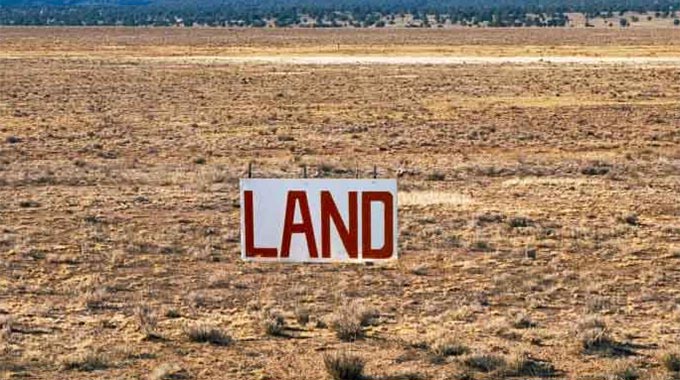
The declaration by the Government that any future allocations of farmland will be only to qualified and determined farmers should not be a surprise to anyone, considering the slew of policies in place to increase agricultural production and ensure ever larger harvests of an increasing range of crops.
Around 270 000 Zimbabweans are now on the waiting list for farmland, plus another 10 000 in the diaspora. While there are bound to be some, perhaps many, who just want a “piece of land” as a sort of insurance, there must be a good number who have obtained farming qualifications, who have practical experience, and will use any land allocated fully and properly.
The major redistribution of land in the early 2000s did allocate A1 and A2 farms to many serious farmers, and the new records set in tobacco output and wheat harvests, plus the large harvests of for maize and traditional grains, bears witness to that.
While many of those farmers did not have the capital and finance at first, under the Second Republic there have been financing and input arrangements that converted the land allocations to serious farmers to something meaningful, and these are the farmers who have been, along with those in communal lands and the few private landholders, building Zimbabwe’s agricultural industry.
But the access to finance and inputs has been dependent on finding farmers who will use them properly. The tests are highly practical. The farmer has to be resident on the farm, for a start, even if they have a daytime town job while they build up their farm business, has to be business orientated, and has to show that they will use the access to inputs properly.
There has been no God-given right to inputs. The commercial loans to the larger farmers, mostly the A2, have come through the banking system with Government guarantees.
The financial institutions are expected to vet the farmers they lend to, and keep track of them and the funds they have lent.
The input schemes for small-scale farmers have required these farmers to attend courses arranged in their area by the Ministry of Lands, Agriculture, Fisheries, Water and Rural Development, and do the initial spadework, and that is literal digging, to show they are committed. Tobacco merchants have led the private sector in contracting farmers, working with the Agriculture Ministry to make sure the farmers have farms, however small, and are equipped to grow tobacco.
But there are also a lot of people who were allocated land and who have done very little or nothing.
Driving through the countryside you can see farmland lying idle, or perhaps just one or two cows, and no serious attempt to farm. Those allocated this land are simply not serious and after more than five years of the Second Republic’s efforts to back real farmers, they have no excuse. They are simply not real farmers.
The time has now come when those who just wanted land, without any intention of becoming proper and full time farmers, should be moved off valuable and fertile land which can then be put in the pool for reallocation, and this time following the vetting and testing of applicants to make sure that they are real farmers.
Of course, those allocated land they have not been farming are entitled to compensation for improvements they have made, but the whole point is that these land holders have made no improvements and in many cases have let the improvements they inherited, and which the Government is now paying for, just rot, with bush encroaching on cleared fields.
There are, admittedly, some who have used a small part of their allocated land and appear to be holding more land than they can use. These can be supported although they need to think about how much land they really need, and surrender the rest.
Farmland is a finite resource. That is why there was land reform. No one was stopping an industrialist who wanted a stand to build a factory from buying that stand, and even the very largest factory with a huge workforce only needs a couple of hectares, far smaller than the smallest A1 farm.
There are some with a colonial mentality. The settler regimes tended to dump indigenous people without urban, mining or estate farm jobs in the countryside, so there are some who still want a “piece of land” as insurance. Then there are those who copy the worst of the settlers in wanting to stand on a kopje and admire “their” land all around, and just use it for picnics.
This concept of a “piece of land” needs to be dropped, now. There can be villages and even retirement villages in rural areas, where those who want to live in their family rural area but limit any farming to a few vegetables can build or buy a house or cottage with just a small garden, but these people do not need to be allocated even a small farm.
Rural development will see rural industrialisation and the growth of small urban centres for these industries and the service providers for farmers, and the processors of farm produce, but such a centre does not absorb much land, neither does a new school or a decent high-end clinic or any other public service.
We need to see the sort of rural areas you find in highly developed European and Asian countries: a patchwork of intensively used farms, many of them very modest in size, but producing a very high income per hectare, with the hub villages scattered within the farming areas providing services, and hosting rural industries processing farm produce. They will probably also host the churches and at least the high schools, plus a vocational training centre and medical centre, and even some retirement cottages. But the bulk of the land will be farms and those farms will be producing.
We cannot afford to waste farmland on people who do not want to farm, or who cannot farm, when among the applicants for farmland there must be energetic, skilled and trained people who, given the opportunity, will convert a slice of farmland into a highly productive farm, earning a decent income while they feed the nation and provide the agro-industrial raw materials.


 Online Reporter