admin
admin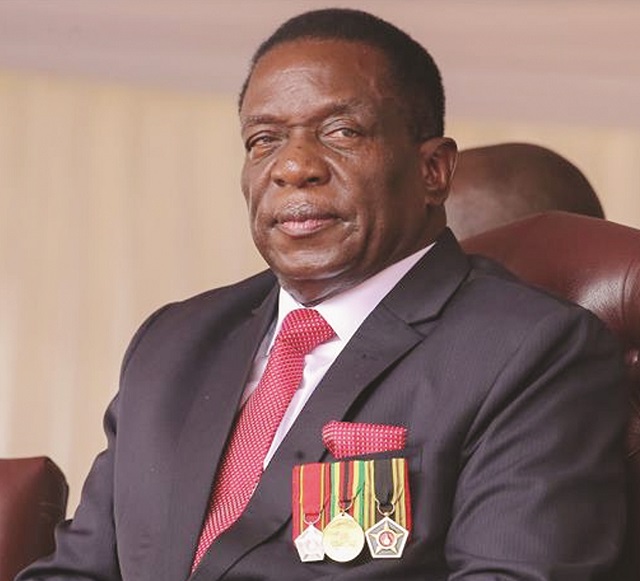
President Emmerson Mnangagwa on Tuesday launched the $4,2 billion Karo Resources consolidated platinum project in Mhondoro-Mubaira which is set to create a combined 90 000 jobs. The first 15 000 jobs will come direct from employment by Karo Resources while 75 000 will be created through secondary and tertiary industries when the project reaches its peak by 2023.
The mining company is set to build a world class mining complex with a refinery for platinum beneficiation. The Mondoro-Mubaira project is set to completely change the mining landscape in Zimbabwe. This is one of the many big projects that the new dispensation has attracted to Zimbabwe since coming in office last November.
On Wednesday, President Mnangagwa commissioned the African Chrome Fields tech-savvy aluminothermic chrome processing plant outside Kwekwe town.
Two weeks ago he commissioned a $241 million project to upgrade and modernise Beitbridge Border Post. The border post is one of the busiest inland ports in Sub Sahara Africa and opens up Zimbabwe to the rest of the world. Cde Mnangagwa said the upgrading and modernisation of the border along with similar projects throughout the country represent the Government’s resolve to change and modernise infrastructure towards the achievement of a middle income economy by 2030.
“This event indeed signals a new beginning, a new Zimbabwe full of hope and immense possibilities. A Zimbabwe open to the region and open to the world, ready to play its part in facilitating regional and continental integration and industrialisation,” said Cde Mnangagwa.
A month ago the President officiated at the laying of the foundation stone for the $1,5 billion Hwange Thermal Power Station expansion project expected to create 7 000 jobs directly and indirectly at its peak. Early this year Government signed a $1 billion deal with the Sinosteel Corp that will see the Chinese firm building a 400 megawatt coal bed methane power plant in Matabeleland North province and setting up ferrochrome smelters at its local unit at Zimasco.
The investment, with potential to create 250 000 jobs, will be implemented in phases. The first phase involves the drilling of two coal bed methane (CBM) wells at Shangani to fire 12 MW pilot power station. The company will also build two ferrochrome smelters in Zvishavane and another one in Kwekwe where it already operates the country’s largest ferrochrome plant. Sinosteel Corp is one of the companies that have moved in quickly to exploit Zimbabwe’s investment opportunities as opposed to waiting for the elections.
These big projects being implemented are a confirmation of the Government’s resolve to turnaround the economy. It is therefore not in dispute that Zimbabwe will never be the same again following the Government’s decision to open its doors to both foreign and local investors.
The country’s economy is definitely on a firm road to recovery and the challenge is to keep up or improve on the momentum.


 Online Reporter