admin
admin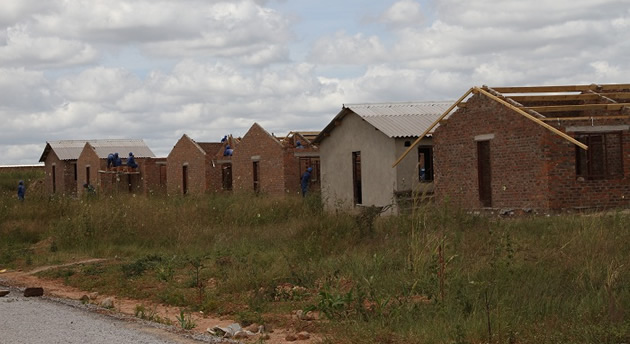
THE national housing backlog has been a thorn in the flesh for many Zimbabweans for far too long. Poor planning, lack of capacity and corruption in most local authorities have seen the supply for residential accommodation fail to keep up with an ever growing population.
At independence, young families in the country’s two major cities could get houses after having registered on the waiting list at housing offices run by respective councils. The houses in high density suburbs were available under a rent-to-buy facility.
As the demand for accommodation grew, councils then started providing serviced residential stands instead.
However, lack of planning by local authorities coupled with a culture of corruption led to the demand for stands outpacing availability. While most, if not all, urban councils in Zimbabwe have sufficient land for residential development, none of them is able to service enough stands.
Those who did not want to follow the council route approached building societies which offered affordable rates for loans, making it easy for employed Zimbabweans to build or buy their dream homes. Over the years greed saw most banks charging usurious interest rates which make it impossible for the majority of workers to afford mortgage.
Then came the idea of housing co-operatives to enable low income groups to pool resources under the self-help concept. Many were able to build houses this way. Lately, however, that noble concept has been subverted by what have come to be known as land barons who use housing co-operatives as a vehicle for self-enrichment.
The end result is no secret: houses are beyond the reach of ordinary Zimbabweans.
Over the past few years Government has taken a few correct turns in as far as reaching the intended beneficiaries of its housing schemes is concerned. The latest initiative is Wednesday’s launch of the National Building Society (NBS), which opened with an initial capital of $25 million.
The National Social Security Authority launched the building society to avail affordable loans to thousands of low-income earners in need of low-cost residential accommodation, including people in the informal sector.
NBS managing director Mr Ken Chitando says Government expects the building society to provide at least 2 000 housing units per year, with 30 percent of these earmarked for civil servants.
This is in line with Zim-Asset targets, as Government should provide at least 300 000 housing units by 2018 to ease the housing backlog which currently stands at 1,25 million.
Mr Chitando said there would be preferential pricing for first time home owners at a low interest rate of 9,5 percent for mortgages over a 25-year tenure.
Another positive development was Government’s move to stop allocating land to developers and housing co-operatives, while all servicing and housing development on State land is now done by the Urban Development Corporation.
This was in response to instances where millions of dollars were lost to bogus land developers while many housing deals went sour after it turned out that they were illegal.
These are two brilliant examples of a Government that is finally rolling up its sleeves and dealing with problems that have seen millions of Zimbabweans denied or failing to access a basic human right. And therein lies the panacea to the country’s housing woes: Government must be at the forefront of providing houses or making them affordable to Zimbabweans.
Every Zimbabwean deserves a house that they can call home. A large number of young families have been condemned to unhomely houses. This is because Government left this important responsibility to greedy chancers.
We welcome the entry of NBS which will not only make housing affordable, but will serve as the much-needed catalyst to push other banks to lower their ridiculous charges. We also foresee a situation whereby a number of banks will lose clients if they resist change.
Finally, young families can also say: “Home, sweet home.”


 Online Reporter