Online Reporter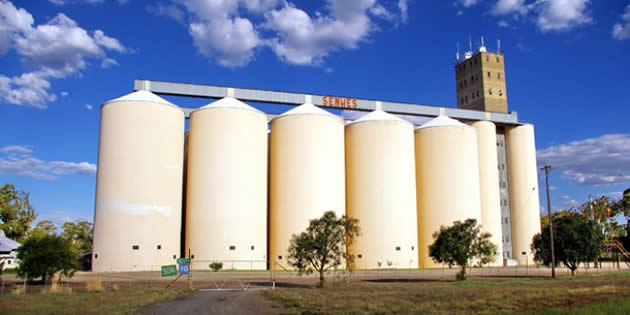
A MAJOR policy of the Second Republic has been to ensure that Zimbabwe is self-sufficient in basic food, given an adequate rainy season and the detailed programmes that ensure farmers have inputs and a guaranteed market to sell their surplus crops.
Outside exceptionally severe droughts, this policy has been successful and so there are good grounds to stop imports of grains that are grown in the country except in exceptional circumstances.
This goes beyond the localisation of production and the saving of foreign currency for imports. One important plank of the Government policy has been to guarantee a market for all farmers through the Grain Marketing Board, along with the setting of GMB prices.
Pfumvudza/Intwasa farmers are obliged to sell their surpluses to the GMB because they receive free inputs and so are technically-contracted to the GMB although usually most of their production is retained on farm for their own consumption.
Other farmers still benefit from the guarantee and the GMB price, since even if they are contracted to others or are self-financed and able to sell to whom they like, the market price cannot fall below the GMB price since farmers will simply switch deliveries to the marketing board if that happens.
Generally, the GMB only really wants to store the long-term reserves, but is prepared to be a supplier for local agro-industries although preferring they buy their needs directly from farmers.
But if industries are allowed to import then we will find more and more of the local harvest just being stacked up unsold, over and above what is considered prudent for carry-over stocks and reserves for the bad years.
Zimbabwean farmers do get a modest premium for delivered grain over world prices, usually roughly just the difference in transport costs, so there is little incentive to import if the local stocks are there.
A longer-term policy is to see local farmers improve yields and efficiencies so that pure market forces can operate, but at the moment we need to be careful.
Even when there are adequate local stocks, there are likely to be some in our manufacturing sector who for all sorts of reasons want to import even when the local supplies are good.
It has happened and the greater availability of foreign currency in the private sector means that this is now possible.
So the Ministry of Lands, Agriculture, Fisheries, Water and Rural Development wants to see a ban on imports of those grains that are grown locally, meaning that only rice and the hardest wheats can be imported, and even here there are moves to start production of both these crops.
There are obvious requirements when working out the timing of such a ban. The last summer season, while producing a fairly reasonably harvest with surpluses of summer crops, started late for rain-fed farmers and ended late. So a lot of the maize and traditional grain still needs to be harvested and dried before it can be stored or sold.
But this just means that we are probably going to have to rely on at least some imported grain until July since there were no carry-over stocks. As the crop is brought in it will be enough for all needs.
Last year, when it was obvious that Zimbabwe would need to import, the Government made some careful moves to ensure that the private sector would do the importing and the financing of imports.
The reserve stocks from the previous good season and whatever commercial crop was harvested last year and held by the GMB were assigned to the Government food programmes for the vulnerable.
Private-sector millers were told they would not be able to buy from the GMB or open market and would have to import.
Probably rightly expecting that if permits for just enough imports were issued someone would try to corner the market for speculative gain, the Government issued import permits to whoever applied, and for several times what was needed.
This meant that there was no profiteering and price rises, but that there are in circulation far more potential imports than required.
We would hope that most manufacturers will see the sense in buying grain locally, rather than importing, if only because they often know who grew the grain and can establish a decent relationship with suppliers.
This would make an import ban largely academic, since no one would be importing in the first place.
But if there is an attempt to buy grain outside, and it would probably have to be lower quality grains to make such a move financially attractive, then a ban might have to be imposed. An import licence usually only specified the grain, not the required quality.
A surprising amount of regulation has to be imposed to deal with a small minority of businesses, those who see speculation, profiteering, cheating and other ills as normal.
If everyone was honest, transparent and co-operative then a lot of bans and other regulations would simply not be required.
Unfortunately respectable business ethics and methods are not universal, hence the need for more than just the most basic regulatory environment. The respectable as well as the consumers have to be protected against the cowboys.
As we move into more irrigation, better yields and more storage, we should be able to build up both our national reserves and become, once again, a food exporter.
But we are not there yet so we need to be careful. And of course, we need to support our own farmers and make sure that what they grow we do indeed eat.