admin
admin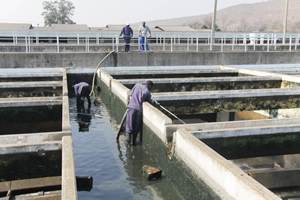
 The major water and sewage problems afflicting Harare and its satellite towns arise from a set of bad decisions made in the early 1990s, curiously enough just as the city reached the culmination of a 10-year programme to dramatically increase water supplies and to process its waste to a high level of purity, ending shortages of both raw and treated water.
And in that hour of triumph the seeds of destruction were planted.
To go back further: in the late 1940s Harare was growing very fast and was very short of water; so the city went into partnership with the Government and built the dam that impounded Lake Chivero, each taking half the water.
A new, and expandable, water works was built and named after the mayor who pushed so hard for the project, Morton Jaffray. Over the decades new purification units were added.
In the 1970s Manyame Dam came on stream. This dam, at that stage, did not supply Harare with water but did allow most of the government’s Chivero water to be transferred to Harare, so the city benefited and was able to keep expanding Morton Jaffray.
During the 1980s, from the time of Mayor Tizirai Gwata onwards, the largest single water and sewage project in Harare’s history was planned and implemented.
A tunnel was dug from Lake Manyame to the waterworks. The waterworks were doubled in size, pipelines to the city were duplicated, the huge Warren Control serving the western suburbs was commissioned and modern giant sewage processing plants were built at Firle and Crowborough to ensure that more than half the water pumped to the city could be returned to the dams as almost pure water.
The final step of that plan was to commission the new half of Morton Jaffray and then immediately rebuild the old half, some of the units now being more than 40 years old. And the council, which had done so well in the 1980s to get this far, baulked and “postponed” the rebuild.
In the same decade, plans to keep expanding the two main sewage treatment plants were “postponed”.
Plans to upgrade the plant serving the Ruwa catchment, near Tafara, were “postponed”.
Debate to switch the water culture of Harare from waste as much as possible to keep revenues high to use water wisely, paying a bit more per unit but having lower water bills, was stifled or “postponed”.
Now, at long last, those 20 years of growing destruction are to end.
The China EximBank is lending US$144 million; 19 Chinese engineers have moved to Harare for four years.
Morton Jaffray will finally be renovated, boosting treated water output to the designed 614 million litres a day; the sewage works will be renovated and expanded, ensuring that once again high quality water returns to the dams; the four major pump stations at Morton Jaffray, Warren Control, Alex Park and Letombo will be renovated and upgraded so the abandoned suburbs finally get their fair share of water.
Coupled with this are plans by the city to help people use water better, with pre-paid metres (and in China a pre-paid system is almost universal) ensuring that there is a reliable revenue flow and that people use water wisely.
The cost of a bath may be a couple of cents, but many will soon see that US$10 to water a lawn is unnecessary.
For we all need to remember that all this work and all this money simply restores Harare to where it should have been in the mid-1990s. But in those 20 years most of us have learnt to use water far more wisely.
The 614 million litres a day is enough for high health and living standards, so long as it is used for healthy living, not for wasting.
Only after the Chinese have gone home in 2017, and Harare has implemented good water use, can we then discuss how we might add to our water supplies.



 Online Reporter