dyton mupawaenda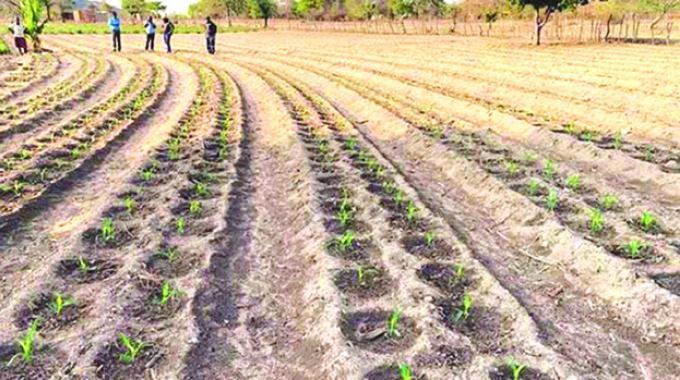
With the start of a new year, Zimbabweans have been taking stock and thinking about all that they have to do to improve their own lives, that of their families and upgrade their communities.
In a New Year message, President Mnangagwa laid down the most essential pair of points, that we all have to work very hard and together as we continue our journey to ever higher levels of national and individual prosperity.
The Government through its policies and active programmes can provide the framework and many opportunities, but it cannot do the hard work that we all need to do using those opportunities.
A good example is the Pfumvudza/Intwasa programme that has done so much, and is doing so much, to covert subsistence smallholder farmers into households with rising incomes. The best applied science has developed new farming techniques, the Government has backed this with a network of extension officers and free inputs.
But the farmers still have to do the hard solid work of preparing their plots by digging a lot of holes, have to go out and collect mulches, have to plant their seeds, have to tend their crops, and then have to harvest. Only then can they store what they need on farm and sell the rest and earn some money, perhaps for the first time in their lives.
It is much the same for whatever we do, wherever we live. But the point is, as is obvious for a farmer, we all harvest what we sow and we all have to think and act carefully, looking at what we can do this year, this season, and what preparations we can make for improving our output next season, next year.
And sometimes we have to cope with disappointment, when things do not work out as well as we hoped. But that does not mean we were wrong not to make the effort. What it does mean is that we work out why something did not work so well and then start thinking about what we need to change, what we need to add, how we can make it work next time.
To go back to the example of basic farming, a large bunch of farmers in the 2021-2022 season lost much of their maize crop during the hot dry spell in the middle of the season.
But if they had planted traditional grains they would have had a harvest, so everyone learned that they needed to plant back-up plots of these grains in most areas, and only these grains in the highest-risk areas.
The next season they had harvests and made money.
The basic economic growth in Zimbabwe is still driven by growth in agriculture and mining. But it is becoming ever more obvious that we need to be looking at value, value addition and smart production rather than just expanding volume, useful as that might be.
In agriculture that means making sure the inputs generate ever larger harvests, and that the biggest single input, the farmer’s labour, generates a rapidly rising value.
Amid all the talk about the advantages of Pfumvudza, it is rarely mentioned that a plot is not all that large, in fact quite a lot smaller than the less efficient field it replaces, but that its yield is a lot higher.
Farmers may think in tonnes per hectare, but as they go more and more commercial they need perhaps to be thinking in dollars per hectare.
Mining is much the same. There has been a fall in process for most minerals, nothing catastrophic, but still noticeable. But so far as the mining companies and the nation are concerned, that simply provides incentives for mining high volumes from the same investment of capital and labour, and then making sure that this output rises in value despite falling ore prices as more processing is done before sale.
Here the Government has been taking a policy lead, with mining companies that do not meet laid down targets for beneficiation being charged higher taxes. This has seen far more processing with some minerals, such as lithium from then end of March, going as far the international standard for fully processed.
The rising volumes resulting from rising investment by the miners, plus the extra value they are generating by more processing, should see the total value of minerals rise despite the fall in many prices.
The biggest single jump in value comes very soon when the first phase of the new Manhize steelworks opens, converting cheap iron ore, coke and limestone into far more valuable steel.
Manufacturing, the third major productive sector, is continuing to expand although many industrialists still use old production models and innovation levels are below those in the primary sectors.
Economists have warned that this sector needs to start switching to a far more export-orientated model as the Africa Continental Free Trade Area comes into operation, where their modest protection against imports largely ceases but the opportunities for export rapidly rises.
This requires increases in efficiency, ever more use of the raw materials generated internally by farmers, miners and primary industry rather than imported materials, and a willingness to embrace and develop the latest technologies.
The goal of all this national activity, and the central thrust of the Government back-up and policies, is to move Zimbabwe into an upper middle-income economy within six years. For the ordinary Zimbabwean this means that they need to progress personally to the middle-income and upper middle-income categories through their own hard work.
An upper-middle income economy means that most people will have to be in upper-middle income families themselves, with some richer and some a bit below, but the majority within the average bands.
That in turn means that the increase in economic activity needs to spread to include the majority of the population with “no one and no place left behind” as President Mnangagwa keeps stressing. If a large group of people are below upper middle income by 2030, then the country will be below itself, since the nation is only the sum of its people.



 Online Reporter