admin
admin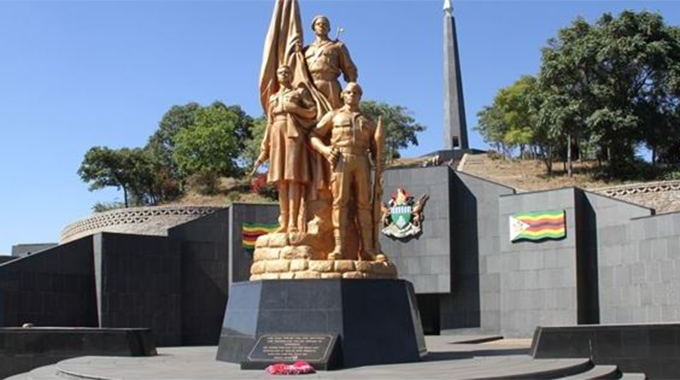
Today we commemorate our National Heroes Day, where we pay tribute to the heroes and heroines, who fought and liberated our country, and to those who have come after and have dedicated themselves to serving the people of Zimbabwe in many ways.
The dual nature of the hero status will be seen before the main commemorations at the National Heroes Acre with the funerals of the latest two national heroes who both died very recently: Ambassador Johannes Tomana and Retired Brigadier General Milton Siziba.
Too young to have fought in the liberation war, Ambassador Tomana’s public service has all been post-independence rising to Deputy Attorney-General, Attorney-General, Prosecutor-General and Ambassador to the DRC.
In his legal posts he had to make crucial decisions and as the first Prosecutor-General after the split in the functions of Attorney-General he had the major responsibility of setting the example and building the system so that the he and future holders of that office would fully act independently and would be able to resist all pressures, political and other, when pressing charges against the criminal and dishonest.
Brig-Gen Siziba was old enough to fight in the liberation war, and he did, with his record being top notch. After independence he stayed in the army rising to high rank, before moving over to Zimbabwe Prisons and Correctional Service.
His hero status is anchored on both his war service and his subsequent public service.
When looking at the two men being buried today we can see the serious way they applied themselves to their public duties, and the difference they made to Zimbabwe.
Those are the criteria needed for hero status. In passing it can be noted that both were exceptionally competent and could have made a lot more money, if that was their goal, in the private sector.
This continuity with that first Heroes Day in 1980, when the heroes were just those who had built up the nationalist struggle and fought in the war of liberation is important.
Their ranks are not limited once and for all, but are continuously being added to as exceptional people perform exceptional acts.
Of course, besides those designated as national, provincial and liberation heroes there are many, many more.
A lot of work has been done to list all those who joined the liberation armies, and to list those who died on active service, to use the conventional term.
But besides these are the unlisted, the people who were killed for actively supporting the liberation forces, the people who were tortured for doing so, those who suffered severely for doing and saying what they believed was right.
Then there are all those who have done their duty properly and fully, and whose names are not listed, but are probably still remembered by the children they once taught, the sick they nursed, the farmers they helped, the people they served.
They need to be remembered as well, for living decent productive lives and doing everything above board.
We sometimes forget when we talk about the corruption that has drastically diminished in the last few years that even when it was at its height, there were many who did not fall to temptation, who resisted pressures, who did not want to be that sort of person.
All these unsung heroes are one reason why we have the annual commemoration of all our heroes, the listed and the unlisted, so that we do not miss anyone out.
Today is a day when we can take stock, can think about what makes a hero and can think about the people we respect and admire and work out why.
There are many common traits, but the major one is the ability to make the right choices, and the ability to do their duty in a way that wins them the respect of those they work with and the communities they live in.
Sometimes the right choices are not easy choices. Those who launched and supported the early nationalist movement faced jail and detention and exile.
Those who went off to volunteer for the armed struggle, and to be trained and then to fight, faced an even harder choice, one that led many to their deaths.
But these were people who were simply not prepared to live a lie, to pretend that all was right with the world, or to go and hide in the darkness because they feared to stand up for what they saw was right and to oppose what they saw was wrong. They put their lives on the line.
Many faced with choices today still have to have the moral courage to do what is right and not just go with the flow.
They may well have to make sacrifices and sometimes to be unpopular, and sometimes to miss out on the temporal rewards that they see the less honest and the timeservers win.
They might not get medals or be listed among the official heroes but their families and communities will know who they are, and will remember.
And it is not a bad epitaph when we can say: “They did right and they did their duty.”
Heroes Day helps us all by holding up those who have been recognised and showing us that through their examples we live better lives in a much better country.
But we can all follow those examples in whatever we do every day, every year, as we make the right choices, resist the temptations and do our duty to our neighbour.


 Online Reporter