

 admin
admin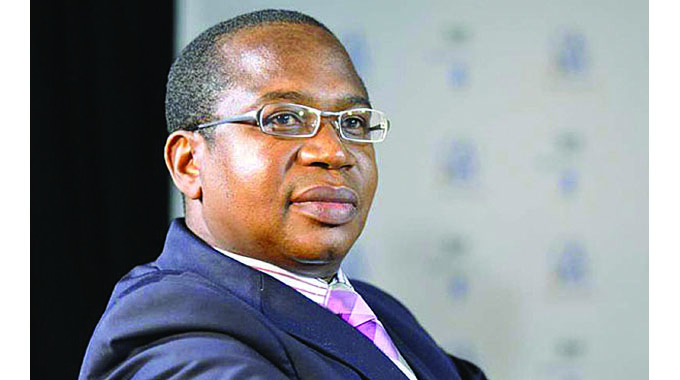
The US$961 million, Zimbabwe’s share of the new issue of special drawing rights to all members of the International Monetary Fund, may not be riches beyond the dreams of avarice but since it amounts to roughly 20 percent of annual Government revenue, it will be extremely useful.
More importantly it is in convertible currency, special drawing rights, that can be sold easily for any major currency, and so builds Zimbabwean official reserves held at the Reserve Bank and under its control.
This is what the IMF intended when it decided to make the new issue of its special drawing rights, nicknamed paper gold. The basic purpose was to ensure that the major outbreak of Covid-19 and the resulting measures to control it across the world did not plunge the global economy into a serious recession or even a depression.
Covid-19 and the range of national lockdowns and restrictions on international movement plus the required increase in health spending, which includes the massive global spending on vaccines, did see the global economy contract last year, with recovery modest this year. Zimbabwe will be doing a lot better than the average, thanks to a whole lot of economic management upgrades and its range of programmes designed to push production that were already in place or planned under the Second Republic.
As the new money arrived in Zimbabwe’s account at the IMF, the fiscal and monetary gatekeepers of our economic recovery and the managers of our economic growth, Finance and Economic Development Minister Mthuli Ncube and Reserve Bank Governor John Mangudya, made it crystal clear that this cash was not going on consumption or being spent on a range of goodies.
In fact, the two appear to be planning on using it for its intended purposes, covering some of the direct costs of the global pandemic and then pushing forward on the national development strategy already in place, allowing some parts of that whole range of programmes to be moved forward faster.
Their tight rules of accountability, transparency and exceptional careful fiscal and monetary management are not going to be changed by a single comma.
Covid-19 did create some direct costs for the Government, and while Minister Ncube has managed to cover these it did involve some careful rearrangement of spending to ensure that the fundamental achievement of a balanced budget remained in place.
The public health system was already in the process of being rehabilitated and upgraded, as we saw this week with the almost casual announcement this week that 32 modest-sized hospitals were being built to help fill the gap in the public health sector between the clinic network and the provincial and national referral hospitals, with four of these now nearing completion.
But over the past 20 months we have seen local authority isolation hospitals, often in pitiful stages of neglect, taken over by Government and properly rehabilitated and equipped. We have seen intensive care units at major hospitals brought up to scratch and expanded and small similar units, sometimes just a couple of beds, established at a wide range of smaller hospitals. All these will be a major addition to the public health sector long after Covid-19 has retreated into history.
A lot of extra health staff have been hired, and the Government has managed to pay them without breaking the budget after tightening up on tax collection and reforming its licence fee system.
In addition to these upgrade costs, the Government has already found US$140 million to buy vaccines, syringes and the like for the national vaccination programme, largely from budget surpluses, and that is a major expense and one that will almost certainly need more funding.
Then there are the requirements to help those whose livelihoods were devastated by the lockdowns and other required public health measures, largely the extra social payments. These are very modest payments that allow people who, through no fault of their own, need money to buy basic food and the odd other essential requirement. Also on this list are the special schemes that allow the hardest hit business sectors to borrow on easy terms the money they need to survive until the good times roll round.
Some of that money from the IMF can go on direct budget support. There is a bonus here as most of that budget support is needed in local currency, so the Reserve Bank can raise that by selling off some of the IMF cash to the productive sectors, what the auctions are designed to achieve and are achieving. This means no new money is printed, a very important part of our economic reforms, but the Government gets its extra budget and the industrialists get their foreign currency.
But Governor Mangudya has been very careful to stress that this addition to national foreign currency reserves is far less than the US$1,7 billion already in the banking sector, and basically just sitting there doing nothing. Zimbabwe is in the curious position that the bulk of its reserves are in private hands, and both the Reserve Bank and Treasury have made it clear that they want the private banking system to do its job and re-enter the trade finance business and start using at least some of those giant reserves in normal banking business.
The IMF extra allotment can help ease some pressure, but it is a one off, there are many calls on that money, and we need to fix the fundamentals down the line in the banking sector following the fixing of these in the Government and the monetary policy.
The new allocation cannot and will not replace the need for permanent reform of the systems, just help a bit in speeding up progress.
At the same time Minister Ncube has made it clear that he will not be spending money like water. In fact, after sorting out a couple of budgetary strains caused by Covid-19, he sees the bulk of the money useful for accelerating his capital programmes, and especially for helping to improve the funding of his rotational funds, those where he gets the money back. In other words, he sees the IMF special facility as an injection of capital rather than an injection of spending money.
In general we are going to see what is now normal in the Second Republic, very careful economic management, hair-shirted prudence, accountability and more of the same.
The injection is very useful, but basically it is going to be used to push forward what was already in progress a little bit faster.


 Online Reporter