admin
admin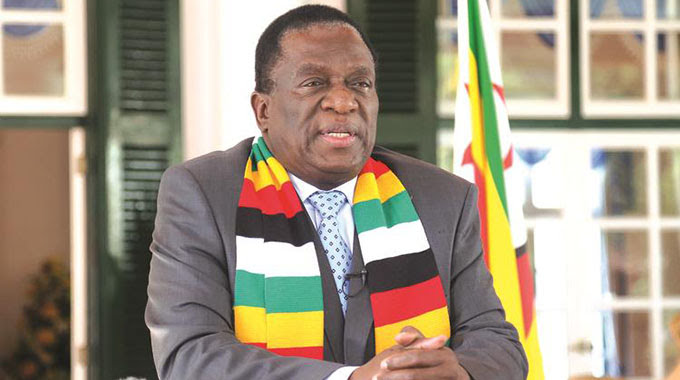
ZIMBABWE can develop faster and more completely if it builds a modern industrial economy from first principles and using the latest technologies rather than plodding through the stages mapped by the developed economies as they grew over the last couple of centuries.
President Mnangagwa stressed this strongly yet again this week when he opened a meeting of the Zanu PF Central Committee on the threshold of the 21st National People’s Conference, which is centring attention on industrialisation and modernisation as the path to Vision 2030, the attainment of an upper middle income society.
The President wants all sectors in Zimbabwe to adopt and adapt the latest global technologies, but he also wants Zimbabweans to think outside the box and innovate and research, rather than just look for external or traditional solutions.
After all, the two education ministries between them have been chewing up the largest budgetary allocations since independence, and this huge investment, while ensuring everyone benefits from their human right to education, also needs to be seen as an investment into the future of Zimbabwe.
The heritage-based Education 5.0 of the Second Republic does stress the need for children and youths to be shown how to use their education, as well as just pass examinations, and already some excellent ideas and business openings have come out of the upgrade. The President wants to see a lot more of that.
Zimbabwe sees its economic growth as the sum of a lot of individual and corporate efforts, rather than following some master plan, with all the bits and pieces ensuring not only a high rate of total development, but also ensuring that this growth and the value of the growth is spread as widely as possible.
By advancing on a broad front, gaps are easy to identify and fill, as it becomes obvious that new opportunities are being created.
The President was keen on extending what has started to happen, stronger links and support between established businesses and the new ventures of young people.
There are already cases where a major business has realised that if only some smart youngster got stuck in, then a particular supply bottleneck would be resolved, and from there it is a short step to encouraging a suitable youngster.
Subcontracting is both a modern and a traditional way of building an industrial base, and it was only in the middle decades of the industrial revolution that there were attempts by some industries to have a high level of vertical integration and to try and do everything themselves.
More sensibly working within a more complex economy works a lot better, so that those who can think innovatively on a particular problem can run with the solutions.
Zimbabwean industry has tended in the past to be very keen on staying inside that comfortable box that the President is keen for them to move out of. Part of this was the policy of past governments and regimes.
Earlier colonial governments did not want industrialisation, instead seeing colonial Southern Rhodesia as a land of farmers and miners without a skilled working class.
When industry was needed there were tendencies for the Government to be involved, and that could and often did stifle innovation.
UDI saw a dramatic expansion in industry, but at the cost of modernisation, competition and competitiveness, and when that curious hybrid of detailed planning and private ownership was forced to open its doors, a lot of the highly protected overpriced and low-quality products just did not make it.
But this box still exists and far too many major industrial concerns see their future in a protected environment and growing through acquisition rather than opening new factories and making new products. Some of the foreign investors have been more successful simply because they are not starting with processes that were there and thinking that was there, but were able to grab the moment and start anew.
This has brought some welcome competition into our industry, as well as some new successes, but we have some distance to go.
One of the largest and successful industrial investments has been the new steel mills at Manhize built by Dinson Iron and Steel Company. That new steel town looks quite different from older towns, largely because it does use the new continuous technologies rather than the batch processing pioneered in the 19th century, and with its raw materials largely round the corner is able to show how competitive Zimbabwe can be.
This use of our huge natural resources, which includes the large pool of skilled people since Disco is rapidly training up its Zimbabwean workforce which can be done quickly because they already had the basics, is critical.
Combine that with the modern technology and you start creating a model that can be used to industrialise Zimbabwe.
To a large extent it is the message that the President has been continually preaching: expand, grow, add value, use our resources, use our people, use modern technologies, innovate, open more businesses.
This is how our country will grow and the old-fashioned ideas of growth through acquisition and being careful to make no waves need to be dropped and the far better approach now on offer grabbed.
Fortunately our new business people seem to have developed the right ideas and it is to them that we need to entrust our real future, rather than trying to resurrect dinosaurs.


 Online Reporter