daniel chigunwe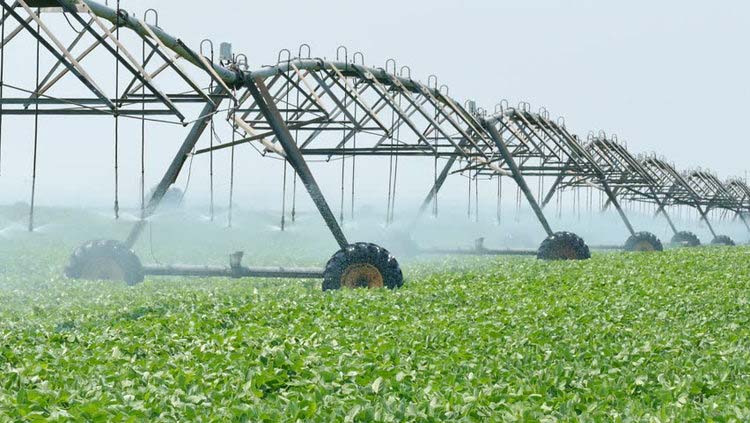
The major effort to ensure that farmers with irrigation potential are able to assign this to their maize crop if it becomes necessary, with a 31 percent cut in the cost of raw water, will make all the difference if there are prolonged dry spells.
It is important to note that the Ministry of Lands, Agriculture, Fisheries, Water and Rural Development is not talking about a fully irrigated maize crop, such as what has to be arranged for the wheat crop, but rather expects farmers may well need to supplement inadequate or erratic rains during an El Nino season.
Supplementary irrigation can vary. In recent seasons it would have made a major difference early last year when there was a prolonged dry spell in the middle of the season, a dry spell of sufficient length and intensity that it severely damaged a respectable fraction of the maize crop, sharply reducing average yields, and in some cases destroyed the crop.
More access to supplementary irrigation and more use of irrigation during that dry spell would have paid large dividends for fairly modest extra water costs.
The reduction in the final cost of raw water by Zinwa, a cut of 31 percent from US$16,41 for a megalitre, a million litres, to US$11,36 was arranged through a complex formula involving a 25 percent reduction in the Zinwa fee along with temporary suspension of one levy and halving another.
One major requirement was to maintain Zinwa’s viability. There are costs involved in storing, releasing and pumping water and these have to be covered otherwise Zinwa will quickly move from an efficient parastatal that is able to continually expand its operations, to an insolvent organisation on taxpayer life support and subject to sudden closure.
Where the ministry had room to manoeuvre in its calculation was that this additional maize irrigation water was not normally sold, so a whole range of fixed costs need not be applied, leaving just the operational costs of getting the water to the average farmer left to factor in. This removal of the need to cover fixed costs explains the far larger cut in the levies, which largely are assigned to fixed costs.
Arrangements have also been made to allow irrigation farmers to pay in arrears, that is when they deliver their maize and are paid, with the irrigation costs then deducted from the final payment, a system already used by many farmers when it comes to financing more usual inputs such as seed and fertiliser.
Adding water to the list of inputs means that cash does not have to be found upfront.
That again is important for viability. For a start most farmers planning large summer maize production have already made their applications for finance and cannot just suddenly stroll into their bank or other finance house with a supplementary request.
The banks involved have also worked out how many farmers they can support and any addition to the average loan could well see some deserving farmers denied finance.
The other important factor is to ensure that farmers who can irrigate will “turn the taps on” if they need water and not delay too long while their crop is damaged.
The lower cost of water and the delayed payment system will help overcome excessive reluctance, although the costs are still high enough to ensure no farmer will waste water or just splash out, literally, when it is not really needed.
Supplementary irrigation used to be a major factor on the large estates broken up during land reform and with climate change and more seasons being “normal to sub-normal” or having greater degrees of erratic rainfall, now needs to become an ever more essential part of normal farming practice.
While the actual amount of water used might only be 20 to 30 or so percent of the water required for a dry-land crop during a summer season, it still requires access to a fair amount of irrigation equipment since the whole crop might need to be irrigated during prolonged dry spell.
But generally a farmer can factor in supplementary irrigation for say half his crop at any one time, allowing twice as much area to be planted as would be case with a pure irrigated crop like wheat.
This sort of calculation needs to be done carefully for those 400 or so irrigation schemes where smallscale farmers are being helped to add maize to their irrigated crops.
They can if the irrigable land allows be able to add more area for a crop that just needs supplementary irrigation, helping to maximise their harvest.
Two additional factors now have to be added. First the Agriculture ministry and the farmer organisations need to be involved with ZETDC to ensure that adequate power will be available, at the right time and in the right places, to irrigate maize when necessary.
This is less predictable than the demands of the wheat crop, but should be possible with the rolling load-shedding schedules that ZETDC has had to adopt, making sure that there is no load shedding of farming areas when the irrigation is on.
The second is that if more irrigation than originally estimated is needed, then adjustments can be made to the final producer price. Generally this should not be required, since the farmers gain with a much higher yield for their other fixed costs and so can absorb a modest extra cost of more water from those much higher profits.
But the calculations need to be done and if the irrigation costs are higher than expected then the extra needs to be paid.
That will raise the price of mealie meal and other maize products, since we have abolished subsidies some time ago, but these rises need not be excessive and it needs to be made clear would only be there if there was no other way of ensuring that the maize was grown in the first place.
At the same time farming economists must ensure that no one, let alone consumers, are subsidising inefficiency on the farms.
At the same time the full potential of Pfumvudza needs to be exploited, that is the separate hole for each plant, so that it is easier to trap whatever rain does fall, and making sure that water harvesting makes sure the water does end up in the holes.
Secondly there is the strong emphasis on mulching, encouraging all Pfumvudza farmers not to skimp or cut corners when it comes to using mulches.
Conservation agriculture is a good, if somewhat labour intensive, way to make best use of every drop of water that does fall as rain.
The Government, through the Ministry of Lands, Agriculture, Fisheries, Water and Rural Development has taken on board the El Nino warnings and the seasonal climate forecast and has eschewed all wishful thinking, instead putting in place a wide range of policies to ensure that farmers can cope with what have been forecast as “normal to sub-normal” rains.
Farmers need to take advantage of these policies and the expert advice now readily available to all farmers to get a decent harvest despite the challenges.
Overcoming challenges through careful planning, rather than ignoring them and hoping for the best, is the new Zimbabwean way and one we need to follow.



 Online Reporter