admin
admin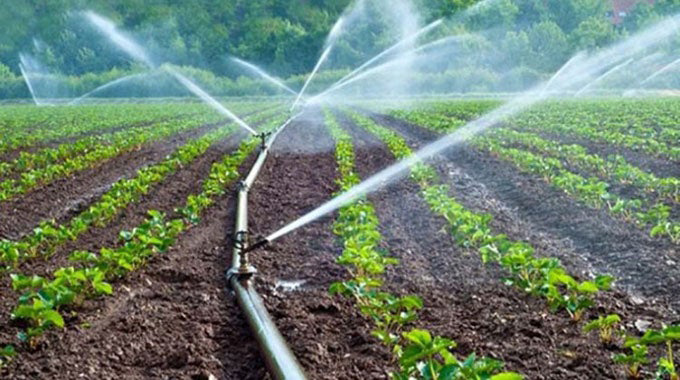
It is becoming increasingly obvious that global warming and the accompanying climate change will present a great many challenges to Zimbabwe but also present some opportunities, although these will need a lot of investment and management to be turned into reality.
For a start our rainfall patterns have been altered. These are always averages and in a sense we never have a totally normal season, since each one is different and “normality” is defined as the average generated by the records. The records now date back well over a century with detailed observations in some areas, and even in what were once considered remote areas we have records dating back many decades.
But a number of trends can be seen developing. Droughts are more frequent; they do not come every year but we have more years of drought in the last decade or two than we had when global temperatures were a degree cooler. And research on sand banks and the like has shown that during what has been called the mini ice age of the later Middle Ages and earlier modern times Zimbabwe was wetter.
The same weather patterns that wrecked the Norse colonies in Greenland and brought more famines to northern Europe also made it possible for Great Zimbabwe to flourish in an area that is now more marginal for rain-fed agriculture. And the general prediction is that as global temperatures rise we are in one of the zones that get less rain.
At the same time, even in better years, there is a trend for the persistent rains that farmers need to start later, along with a later arrival of those early thunderstorms that at least started wetting the soil even when they brought high winds and lightning. The fall in our lightning deaths is partly due to better housing and more people taking precautions, but also due to less lightning in the first place.
Seasons can end earlier as well. So even when we have average or above-average rainfall it is more concentrated, so heavier showers rather than those periods of several days of light rainfall that feed the crops without washing anything away.
And we appear to be getting more tropical storms and cyclones coming in from the Indian Ocean. We have always had these of course and there are the spikes in our records for some areas that record their arrival along the whole length of our eastern border from the north-east to the Lowveld.
But they appear to be now more frequent and of higher average intensity and that seems to be borne out by the records that are accumulating for the whole of the south-west Indian Ocean. Generally meteorological models of global warming bear out predictions that we will see more cyclonic activity.
We are not going to have one every week or every month, but we are likely to see a sudden surge in rainfall at least once a season and perhaps more often, with this being extremely intense in the area where the powerful low-pressure cell actually crosses the border, since Mozambique is not wide enough to absorb all the energy of such tropical depressions, storms or cyclones.
The solution and the requirements for Zimbabwe to continue boosting production are obvious. We need more irrigation to cope with changing rainfall patterns so we can get crops established in time, irrigate during the dry spells in the middle of the season and bring crops to harvest if rains end early.
New shorter-season varieties of crops, and new varieties that need less water, will enhance such a programme, and reduce costs of production, but they still need water to become established and to grow. This is one of the reasons why irrigation has to be backed by good management, good farming practice and good research. Anyone can grow crops in a desert given water, but the final input costs can make that unprofitable and there are other problems that need careful management to address.
The easiest irrigation is boreholes on farms, with the water right there, and using solar powered pumps to extract the water when the sun shines, storing it in reservoirs and tanks. That needs care as we already know in Harare, where the exceptionally shoddy municipal water supplies have seen a proliferation of wells and boreholes over the last 20 years. A fair percentage have run dry as water tables fall, with a lot more water extracted than is added. We have been chewing up centuries of rainfall in a few years. We can still use underground water, but we have to be careful that we only use what is being put back.
We need more dams, both the smaller seasonal ones that can catch some of the runoff, and far bigger ones that can store water for several years and especially store the heavy rainfall and run off when a tropical storm system hits a particular area. The Second Republic has been active here, completing semi-abandoned projects and starting, and completing because funding is secured in advance through economic reform, new dams.
It wants to accelerate the progress, adding outside funds to what the Treasury is already mobilising, so dams and irrigation are now on the investment agenda and a determined effort was made at the ongoing Dubai Expo to attract investors with interest shown, so we should start seeing results.
There is the distribution infrastructure, first the trunk canals, pumps and pipelines that get the water to the farms, and then the on-farm facilities that get the water to the crops. That requires investment as well, a lot.
Then comes the management. A significant fraction of older irrigation schemes, especially those involving smallholder farmers who are the overwhelming majority of users and future users, have seen problems when pumps and other equipment need to be replaced, and no machinery lasts forever, or when expensive maintenance is required.
This has seen the Second Republic committing good budgets for what is termed rehabilitation but more importantly for changing the management model and boosting the training for farmers. It is clear that there is need for far more active management and longer-term financial arrangements and that some farmers need more technical information on how to make every drop count.
Water costs money to store and pump, so it is an input that has a price and however the finances are allocated they have to be on a budget and that budget has to be funded. Generally the cost of water is recovered, several fold, by the higher production but there are still the cash-flows to sort out so the money appears when it is needed, generally at quite different times from when the money appears after a harvest. Hence the need for more active management from Government or investors or both.
So, along with the myriad of other reforms by the Second Republic is the programme to tackle irrigation properly, all the way from finding new sources with the new dams and new investment to making sure that the farmer who needs the water gets it, when it is needed and in the quantities needed.
Once again much of this is simply putting together the technical skills Zimbabwe has, finding the money and doing practical management. This is what is now being done, and being accelerated so that we can cope with climate change, and turn the talk and the metre deep piles of plans into water flowing onto crops.



 Online Reporter