Online Reporter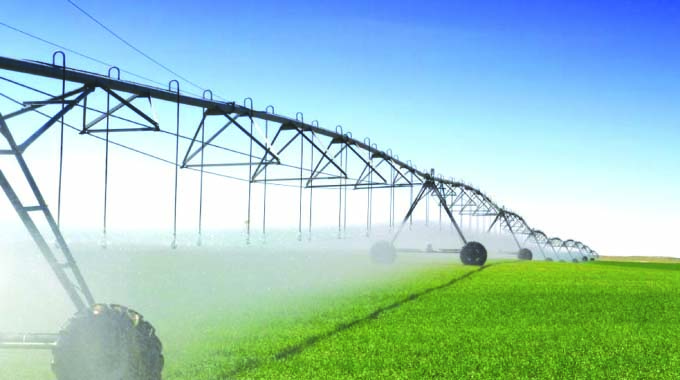
RAINS are so far excellent this season, with meteorologists expecting enough to ensure that farmers and their families have sufficient food and that their commercial surpluses are high enough to fill the granaries.
But we need to prepare for less fortunate years.
No one knows in which years, or how bad they will be, only that there will be more droughts at some stage. Even in the better seasons and the good seasons, there are gaps in rainfall quite often and the present season is exceptional in that the rains started in early November, something we have not seen for several years.
All this means that to continue our progressive policies of bringing decent wealth into rural areas by guaranteeing good crops year after year, and simultaneously ensuring that Zimbabwe can feed itself every year, with surpluses that can be sold to neighbours, or better still converted into value-added products that can grab regional and continental markets, we need more irrigation.
At the moment we can irrigate 223 000ha for summer crops, perhaps a fair bit more if we start looking at more flexible arrangements so that we can provide supplementary irrigation rather than full irrigation since even in a bad drought year some rain falls.
The latest plans see 340 000ha for the next summer, a jump of 56 percent. This seems huge, but a lot of the extra capacity is coming from the decision to use the largest interior lake, Tugwi-Mukosi, in the Lowveld.
While the Second Republic completed the long-delayed dam wall, and several seasons have filled the lake, hardly any of this potential irrigation has been used. Next year we start earning the dividends from that huge investment.
Besides using that huge potential, there are many other dams, some still building, some built, but with modest irrigation schemes attached, and some that are older, but careful studies show can put some extra hectares under irrigation.
Some of the dams will supply large greenbelts of irrigation, some just a 1 000ha here or there. But when it is all added up there is a lot of land that will produce crops in winter and keep farmers going in dryer summers.
Irrigation also allows far more growing of perennial crops, such as citrus and other fruit trees, that cannot thrive easily on rain falling for a few months of the year.
Besides these major schemes we have what farmers themselves, singly and in communities, can do. May commercial farmers have access to the small farm dams, and it would seem a smart move for those financing farmers to look at expanding the number.
In addition, this year saw President Mnangagwa bringing irrigation to the small scale farmers, with a scheme that would help them finance their first hectare of irrigated land; obviously those who do well can expand that area every year.
Again besides boreholes and occasional perennial river, we should be looking at the small and inexpensive farm dams on suitable streams.
A lot of the basic building, given suitable plans, can use local materials, local labour and be undertaken by local communities.
Concrete only starts being needed for the spillways, the dam walls themselves being carefully built from local stone and earth.
In the past, it was using labour in the slack winter months. Increasing farm mechanisation should mean more tractors available to haul in the materials in community schemes.
For those dubious about 1 ha of irrigated land on each family farm should remember that we have 3 million small scale farming families.
Another major programme by the Government is to keep expanding the winter harvests or wheat and related crops to 1,5 million tonnes a year.
We have, over the last four years built up our soft wheat harvests rapidly to self-sufficiency and surplus.
Research has found suitable varieties of durum wheat that we must now add, around 30 percent of the harvest needs to be this wheat.
With the expanding irrigation we have enough irrigated land to handle both crops without trying to juggle shortages between the two.
We grow enough of the related barley to malt for our clear beers, although harvests could also be expanded to provide more of this useful grain used in a variety of foods.
We can talk about a 1,5 million tonne harvest of winter wheat and related crops by 2030, but we need to make sure that this huge harvest is made up of a spread of crops from that most useful family.
Export markets will not just happen, especially as we need to irrigate our crops while major producers use rain.
So we would expect our exports to be made up more of processed and partly processed products, selling for example a milled flour made up of the right proportions of soft and hard wheat that regional bakers want to buy, or selling pastas and other manufactured products.
We should be aiming not so much to be a bread basket, but an essential grocery store in regional markets.
The same policy that is helping to push mining value should be applied to agricultural exports.
This will help guarantee markets for the surpluses our farmers produce, as well as ensure that the higher value exports are reflected in decent prices for the farmers and good factory jobs for those processing the surpluses.
While extra irrigation is needed to make sure we can produce the food we eat, it should also allow farmers to build up their incomes by producing the raw materials agro-industry needs in a decisive drive to find new markets.