

 Online Reporter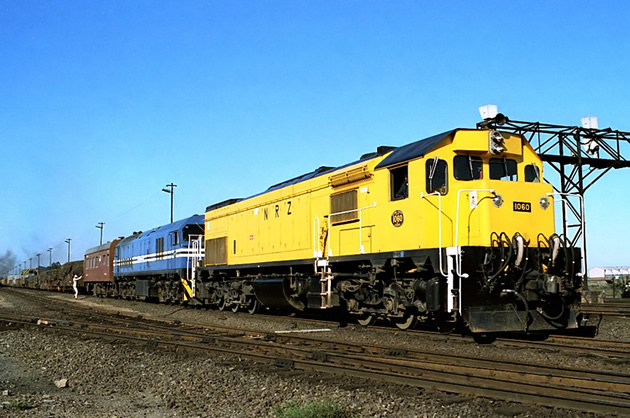
ZIMBABWE was opened up economically by the main railway lines built in the 1890s and early 1900s and right up into the 1980s and 1990s most cargo was carried by the railways with trucks largely limited to short routes feeding into the railways and certain time-urgent functions.
In the older cities there are heavy industrial areas where there are sidings behind all factories, and these were still being extended in the 1960s, to allow wagon-loads of raw materials and the like to be delivered to the back wall loading and unloading bay and for finished products to be moved out.
These days, those sidings are nothing more than a back route.
There are no rail wagons on the tracks, and everything comes and goes by lorry through the front gates.
Since the decline of the NRZ, trucks have basically taken over the bulk of cargo carrying with the railways allowed to grow ever weaker with little or no reinvestment into rolling stock and infrastructure, which in turn has led to very diminished revenues, making a turnaround ever harder.
The liberation war and related end of night traffic ended the virtual passenger monopoly of the railways, but it still competed when peace returned at independence until once again lack of investment drove customers away.
There were two spells when some innovative managements tried to get commuter services operating, especially in Harare where the main line of rail runs east-west just south of the city centre and there is a northern spur running though many western suburbs and satellite towns.
But these were not maintained, and were not backed by investment into infrastructure such as suburban railway stations and other amenities. So when the Second Republic came into office there was for all practical purposes a blank state to rebuild a new-look and efficient railway system.
First, of course, was the need to get the economy growing again and make Zimbabwe a decent destination for those wanting to invest.
A lot of money was required, and still is required, to rebuild the National Railways of Zimbabwe and make it a profitable concern. And that in turn means the economy had to be fixed first.
We have now reached the stage where work can start on the railways and already some orders have been placed for new locomotives and rolling stock, and the equipment needed to restore signalling and communications.
So the railways have passed through their lowest point and can start that journey upwards. One major move was to bring NRZ under the Mutapa Investment Fund, which had characterised the railways as one of those cases where there were no quick fixes for what amount to a failed entity, only the long hard process of rebuilding.
Besides looking at the first of the new equipment orders, the NRZ board, no doubt with Mutapa backing, has started rebuilding the management, returning to the idea of single chief executive to direct and co-ordinate the wide range of tasks that have to be performed simultaneously.
NRZ needs to repair and upgrade track, and in at least one case has to extend the network.
At the same time the new rolling stock needs to be put on the upgraded track. Cargo handling facilities, often rented out as shops, need to be reclaimed and put back into action if they are suitably placed.
Often new cargo handling will be needed, but because so much of the older facilities need an almost total rebuild to function again, the opportunity arises to use the clean slate presented by the Second Republic to see what are the best solutions.
At the same time, NRZ needs to start marketing its solutions, and listening to potential customers so that it can provide the desired services now required, rather than trying to sell what was wanted 30 or 50 years or even a century ago.
With the determined effort to build up a heavy industrial base to supply a growing a export-led manufacturing sector, the railways will have to play a major part. Railways have always been the obvious choice when moving high-bulk modest value cargo. But they seem the obvious choice for heavy industrial products which trucks just cannot carry.
Mozambique has been building up its railway system, so we need to connect with something good on our side to handle the growing traffic to the ports in that country, as well as tap he growing supply chains and markets there.
The dream of the trans-Kalahari railway linking Zimbabwe and Botswana to Walvis Bay in Namibia is still alive, and now more important than ever.
So NRZ not only has to rehabilitate itself, but do so making the changes to meet modern customer needs, and then needs to work on national and regional expansion of the railway network.
The new management has its work cut out, but we wish it well and every success.



