admin
admin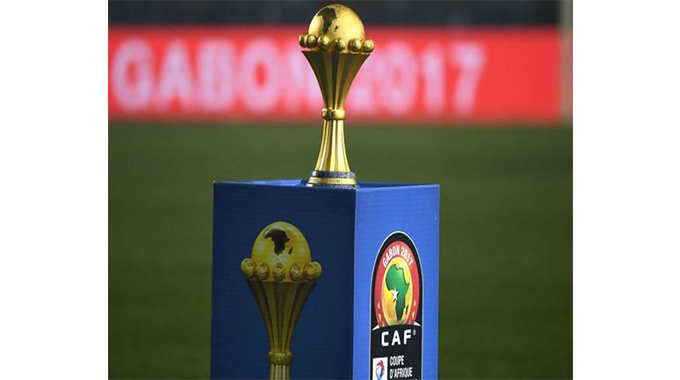
THE draw for 2021 AFCON finals, held in Yaounde, Cameroon, on Tuesday night, has generally been welcomed by the football family.
Many stakeholders have described it as fair and one which presents our Warriors, with a good chance of writing a success story at the continent’s biggest football festival in January and February next year.
Our boys, who are making a third straight appearance at the tourney, will open their campaign against Senegal, who are Africa’s number one-ranked side, and are the favourites to win Group B.
Then, they will face familiar foes, the Flames of Malawi, in their second match, before completing their group assignments with a battle against Guinea.
The mood across the country is that unlike during the other four AFCON finals, where we have taken part, our adventure in Cameroon will not be over when the final whistle is blown to signal the end of our final group match.
The expectation is that, for the first time at the Nations Cup finals, our boys will find a way to get past the group stages and book a place in the knock-out phase of the tournament.
Since making our AFCON finals debut in Tunisia in 2004, we have never made it into the knock-out phase of the tourney, with our Class of 2006, under coach Charles Mhlauri, coming closest to emerging, from a tough group, in Egypt.
They ended with the same number of points, three, as Senegal and Ghana, in a group dominated by the Super Eagles of Nigeria, who won all their three matches.
However, an inferior goal difference meant we finished bottom of the group.
But, things have changed and, back then, it was a 16-team tournament, where only the top two teams, in each group, would qualify for the knock-out stages.
Now, it’s a 24-team tournament, which means even the teams which finish as the four best third-placed sides, are handed the tickets to play in the Round of 16.
This format was first used at the last AFCON finals, in Egypt, where the Warriors found themselves with a chance, going into the final group game against the Democratic Republic of Congo (DRC), with victory virtually guaranteeing them a place in the knock-out phase.
But, somehow, our boys collapsed and were well beaten, 0-4, by a team which, during the qualifiers, they had stunned 2-1, in their fortress, in Kinshasa.
Sunday Chidzambwa, who was the coach back then, blamed the chaos in his team’s camp, which saw the Warriors spending hours in meetings with the ZIFA leaders, as they pressed to be paid their outstanding dues, instead of focusing on the big assignment.
Even an offer from Nyasha Mushekwi, who dangled a carrot to his teammates to win the match against the Congolese, in exchange of an undisclosed amount of bonuses, which he would pay from his pocket, could not inspire the team given a lot of damage had already been done.
For a Warriors side, which had charmed the continent by running hosts Egypt close, before going down 0-1, in the opening match of the tournament, before being the better side, in a 1-1 draw against Uganda, in their second match, this was a miserable end to their adventure.
But, once again, it highlighted that, when it comes to tournament football, there is a lot that needs to be done to get the best out of even the most talented of teams and ensure that they fulfil their capacity.
It’s about ensuring that there are no distractions and issues related to what the players should get when they should get it and how they will get it, have to be covered, and guaranteed, long before the boys step into battle.
It’s about spending days, and nights, with all the concentration focused on the next opponents, studying them, noting their weaknesses and plotting how best you will exploit those shortcomings.
It’s also about spending long hours, looking at their strengths, their danger men, how they usually make full use of their prized assets and how we can repel such danger, when we plunge into battle.
In Egypt, our Warriors were shocked to learn that, ahead of their opening match against the Pharaohs, the Egyptians had spent about two months, studying how we play, who are our best players, how do we usually employ them and the phases of the matches when we are at our strongest and at our weakest.
They had invested a lot into studying us, even though they were the favourites, on paper, to beat us, on the basis of the superior quality of the players which they had in their fold.
There was no room to take any chances because, the Egyptians knew, when it comes to tournament football, it’s not your reputation, which counts, but how you deal with the challenge, in front of you, on the day of the battle.
These are areas that we need to improve on, for us to really come to the party, when we get to Cameroon so that this generation of players, who have delivered so much for their country can, at last, be remembered as the ones which qualified, for the knockout phase, for the first time, in our history.
Of course, we are well aware of the reservations, related to the capacity of our coach, Zdravko Logarusic, to stand the heat, at such a major tournament.
Those reservations are justified, because of our poor results, since he took over but we know that, even some teams, with the worst coaches, have gone on to use the sum of the qualities of their players, to do very well.
We have a good chance in Cameroon and we should not blow it.


 Online Reporter