admin
admin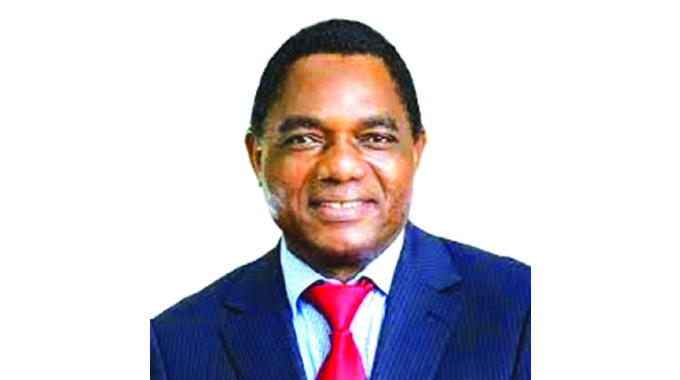
Zambia and Zimbabwe are not just neighbours, but share so much common history that nothing that takes place on one side of the Zambezi can fail to affect the other side, and if that mutual interdependency is to work positively it is best if the countries work together closely.
President Mnangagwa pushes this close relationship, something he finds easier than most since he spent so much time as a young man in Zambia and likes the country and its people. Fortunately for Zimbabwe this is reciprocated; as he noted in reports yesterday he has been on good terms with most Zambian Presidents, starting with Founder President Kenneth Kaunda who sadly died so recently.
His enthusiastic acceptance of the invitation by President Hakainde Hichilema to attend his inauguration yesterday will help cement the modern close relationship between the two sister states and ensure that they continue working together closely as both press to improve the lives of their peoples.
In a sense this is reciprocating Zambia’s assistance at a difficult time in Zimbabwean recent history when President Mnangagwa assumed office to serve out a term before winning his own mandate the following year.
Former president Edgar Lungu was easily the most enthusiastic visitor at that first inauguration, and passed on the message that political opponents can work together for the common good by bringing his two living predecessors, Kenneth Kaunda and Rupiah Banda, with him, despite the fact that they came from quite different strands of the Zambian political landscape.
This willingness to accept totally the democratic will of the people is one of Zambia’s major contributions to Africa and our region. In its long road since independence it has now seen the inauguration of seven Presidents, each assuming office in a smooth transition with President Hichilema’s inauguration marking the third time a sitting President had, after losing an election, calmly handed over the office to the winner.
But at the same time the losers, whether they were the opposition seeking a change or the party with the majority at the last election now coming second, accepted the result. Zambia has never been bedevilled by the losers trying to destroy the country; Zambian losers are not always happy about losing, but they do try to make the new system work while at the same time figuring out how they can win next time.
President Mnangagwa has correctly marked this high level of political maturity and normality as an example to everyone else in the region.
The people are sovereign and they decide who they want to lead the country, and it is wrong for the losers to cry foul. President Hichilema, in fact, lost his first five presidential elections, against winners from two separate political parties, but never tried to pretend he had won and never refused to accept the result. All he did at each loss was work harder for his next attempt, another example of “normality”.
Now he has won he faces many of the same problems that his six predecessors faced, and many of those are the same problems that most countries in Africa face. All African leaders recognise that there are two critical goals: economic growth, but with that growth benefiting everyone with no one left behind.
Zambian history, and its electoral transformations, put that dual goal in stark relief. President Kaunda did a great deal in his long watch to overcome some of the serious problems inherited from one of the more unequal colonial heritages and did much to help create that one-nation culture in Zambia.
He had to do this as a front-line state, being bombed by his neighbours, and subjected to border closures. When Zambians reckoned they wanted a change in 1991, hoping to see faster economic growth, they ran into a different set of problems with President Frederick Chiluba, who most Zambians now agree was dishonest.
Zambia’s economic resurrection and growth largely came with the third incumbent, president Levi Mwanawasa and with his programmes continued after his death in office by president Rupiah Banda. The two stressed investment, working with the international community, and building the economy. And Zambia’s economy did grow, despite the over reliance on a single commodity, copper.
But many Zambians believed too many people were being left behind, the other pillar, and so switched to president Michael Sata, who also died in office but his successor, president Lungu, was from the same party and followed his basic stress.
What President Hichilema now has to do is somehow combine the two goals, rapid growth but the growth spread and inclusive so that no one is left behind. He starts off with a lot of goodwill from Zambians, having won by a very large majority. Founder President Kaunda certainly thought he was the best person to pull off the double, consistently endorsing him in his presidential attempts against both pro-business and pro-equality opponents.
Politically Zambia is a three-party system and in a sense the Zambians have returned to the modern equivalent of the original party that led them to independence in the hope that it can do that double.
Some of the lessons of Zimbabwe’s Second Republic could be applied, not so much the nitty gritty programmes since Zambian society is different, despite the shared history and culture, but the stress on that double goal of forging ahead with everyone being carried along in the advance. And doing this in a climate that has zero tolerance for corruption and which requires high levels of management of the economic basics.
We in Zimbabwe must hope he succeeds.
Having a richer neighbour, an industrialising neighbour, and a neighbour with a sufficiently diversified economy that the ups and downs of the London Metal Exchange do not disrupt economic ties will be a huge advantage to us, as we too become a richer country, an industrialising country and one that is not panic stricken over movements in commodity markets.



 Online Reporter