Online Reporter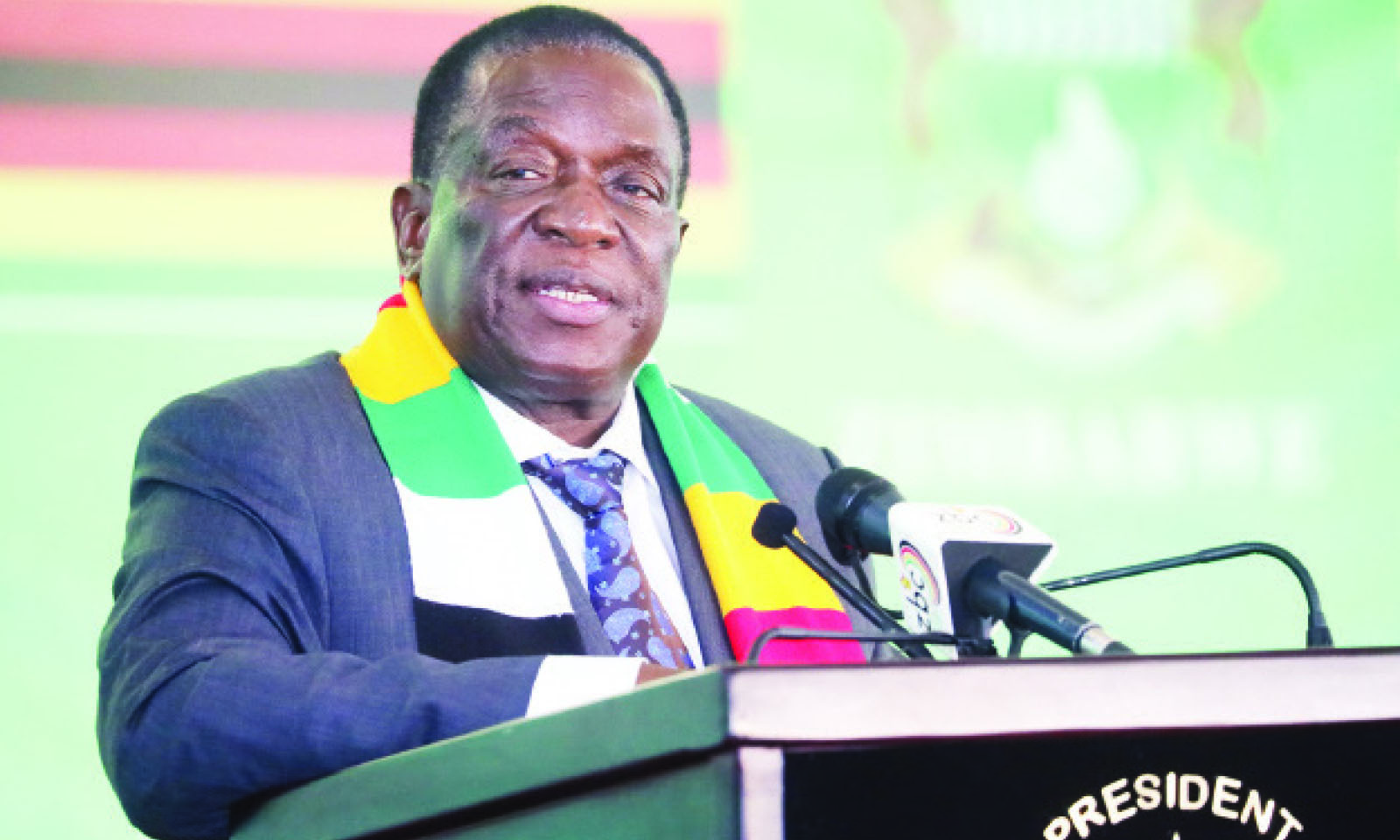
THE easiest way of pushing development is to find hard-working people with the right skills to do the work and then let them get on with it.
But they usually need access to at least the basic equipment or inputs and it is here that the Government needs to step in, along with anyone else who is interested.
Since he took office, President Mnangagwa has pushed the Second Republic policies to ensure that those who were marginalised are given practical opportunities to be those hard-working people with the right skills.
Then he can watch the results, which lead to the implementation of his Vision 2030 of an upper middle income society.
There are a swathe of these policies, largely starting with the very successful Pfumvudza/Intwasa programme that empowered small-scale communal and resettlement farmers.
The new concepts included making sure these farmers were hardworking, by setting the digging of the land preparation for conservation farming as a requirement to get into the scheme, and then making sure they had the right skills by arranging training and backing this with roving extension officers giving advice.
An important addition to this policy is that the hard-workers being trained and supported have to do the work. The systems set up automatically track the inputs and first make sure they reach the farmers being supported. They then ensure that the farmers use the fertiliser and seed to grow crops, not sell the inputs and then relax in the sun, living off the payment.
The idea of someone living in idleness at the expense of the taxpayer has been an anathema.
President Mnangagwa wants a nation of producers, not renters.
Other programmes have been added over the years, such as the village boreholes with their associated village business units.
Even with the devolution of so much community capital development, we have noticed that those communities willing to put in some hard work, such as digging foundations and collecting local materials, seem to be at the top of the list for the next project.
In each case an empowerment policy has the three core principles: Those benefiting must show they are willing to put in the very hard work required, that they have or are acquiring the required practical skills and that they will be honest and fulfil the conditions laid down.
As a practical policy it would seem that these conditions have to be the essential base, otherwise we just get waste, corruption and gouging. President Mnangagwa was stressing the need for results this week when he presented the next tranche of equipment under the US$2 million revolving Presidential Youth Fund, a programme launched early this year.
The equipment comprises tipper trucks and front-end loaders and is meant to be the foundation of a swathe of suitable businesses run by youths.
The youth fund is designed to open doors and give youths an opportunity to create and grow their businesses.
It must be noted that it is a revolving fund, that is those who benefit must in time pay back so that the next batch of youths can be helped through finance or equipment.
The Government can top up the fund each year so that it grows and can help more youths.
But with a revolving fund being topped up, the total capital deployed grows, and a significant if modest empowerment fund can become a significant and large empowerment fund as it recycles earlier batches of capital and adds new batches.
But that result comes from the initial results that the President is looking for, successful youths earning money and using the equipment for what it was designed to do and doing that themselves.
Empowerment, for example, does not mean abusing the facility or renting out the trucks to some long-established business and trying to live in idleness on the rentals.
A fair amount of effort must have been made to select the right youths for the schemes and presumably this process would have been seeking proof that the youngsters were able and willing to work hard and that they had the skills or would be able to complete the needed training.
Empowerment programmes are not social welfare schemes for those who through age or disability or some other legitimate cause cannot earn a decent living.
An empowerment programme is designed to open doors and, as it says, empower those who have all that is needed to make a success of life. These empowered people will then build the sort of society we want, that is one of successful and productive people, paying taxes and generally contributing at high levels to their communities and society in general.
Vision 2030 is not some abstraction. It is a practical programme that means having an upper middle income society where we have upper middle income people forming that society.
This means we have to ensure that everyone so far as possible is producing at the levels needed to create those incomes for themselves and their families. This is what drives the Presidential empowerment programmes.