Online Reporter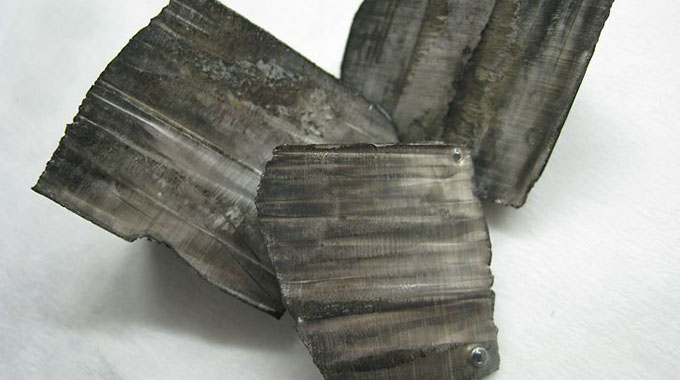
ONE of the oldest and largest lithium mining firms in Zimbabwe has commissioned its final processing plant and started exporting pure lithium sulphate salts rather than concentrated ores.
Lithium has to be transported, bought and sold as one of the standard traded salts, as the pure metal is exceptionally reactive and will even burst into flame on contact with water, condensation or other moisture.
So the lithium sulphate is a product that a lithium-ion battery factory can have delivered to the factory gate, without any intermediate extra processing once it leaves Zimbabwe.
Prospect Lithium is the first lithium miner to meet beneficiation standards laid down by the Government and so will be moving out of the Government quota system, a temporary measure to allow concentrated ores to be exported until the end of the year, and back into a normal if monitored freer trade environment.
In February, the Government suspended exports of lithium ores and concentrates, along with the ores and concentrates of other minerals.
The move was to make it clear to mining companies that they had to process their ores to the final product used in international trade.
A second reason was the discovery that some of the ores being shipped out of the country included other higher value, but non-declared metals and elements.
With pure refined products, simple routine sampling and testing can be easily done at minimal cost and no delays.
But the main reason was to ensure that Zimbabwe receives full value for its mineral wealth.
Ores are not all that valuable until processed, and even when there is some strong link between a miner and the foreign processing plant, a lot of the value is added in the processing and benefits that next stage in the value chain.
Zimbabwe can plan on a far more stable export revenue with processed metals. Ores can fluctuate in price quite considerably in global markets, while the refined products undergo far lower swings because refining is largely a fixed cost.
A lot of the value added in Zimbabwe comes from the hiring of local staff, the new jobs created and the money paid in taxes and spent by those new workers, so there is that additional benefit as well as the higher export returns.
While Prospect is the first lithium miner to meet the beneficiation standards, other plants are being built.
The export suspension on ores and concentrates was modified to allow exports under a quota system with more checks and monitoring, but it has been made clear that this concession runs out at the end the year.
While major producers might want their own processing plant, we see no problem in mining companies sharing facilities, as happens with some other minerals, or an investor running a contract processing service that anyone can use.
There are other possibilities and combinations to ensure all minerals are refined or processed locally.
The important point is that the processing is in Zimbabwe, and that the final product is pure and suitable for international trade.
For miners in Zimbabwe, the local processing should make economic sense. The country is a landlocked State near the southern end of Africa and transport costs can only be kept down if lower volumes of a higher value product are shipped.
Low value and high volumes make transport a far larger factor in the costing.
It also seems likely that some valuable by products can be isolated at the processing stages, opening further opportunities for mining companies that might not even have known they had that potential extra source of revenue.
While mineral ores tend to concentrate one element, it is far from unusual to find even more valuable elements, if in far lower concentrations.
Even trace elements can be allowed to accumulate at a processing plant until there is a useful quantity.
Prospect has been working on its processing plant for some time, and has invested US$400 million to build it.
This time lag is why lithium mining was allowed to start before the processing plants were ready.
It also shows the need for new mining firms in future to come to some arrangement with more established others or independent processors as part of their preparations before starting the digging.