admin
admin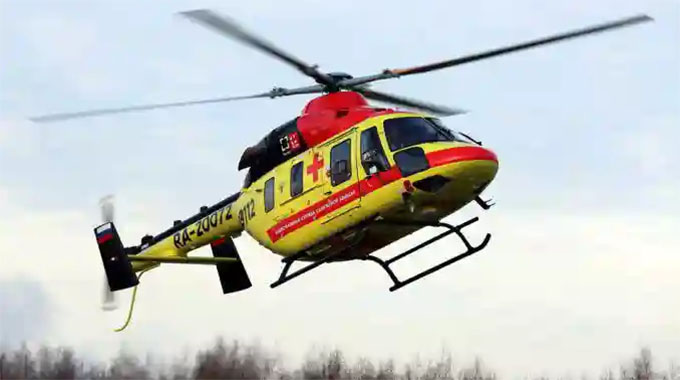
THE advent of the new Government-sponsored helicopter ambulance service run by a Russian investor has brought a major upgrade to the public health sector, one that will save lives as well as end critical gaps with private health care.
The public health sector had fallen behind private health facilities, but the Second Republic has been rapidly working on narrowing the gap, at least in medical facilities although private hospitals are more likely to offer unshared rooms and other luxuries.
But the upgrade of the public sector has seen the most advanced surgery in the country, as well as general routine hospital care, and some of the largest surgical and medical teams, as well as the widest network of hospitals and clinics.
A fairly large fleet of ambulances has already been deployed, with more on order, to make sure that the very sick and severely injured can be moved up the referral ladder, if necessary from clinics and district hospitals all the way to central referral hospitals.
Now, added to what has become the routine road ambulances over the last couple of years, we have the helicopter ambulances where a patient can be moved from the furthest district hospital all the way to one of the handful of major referral hospitals in less than an hour.
And the Government sponsorship means that this service is free for those who need it.
The first flight on the new helicopter ambulance was from Chegutu district hospital to Sally Mugabe Central Hospital in Harare, and the two involved State hospitals highlight the public health sector.
There have been air ambulance services in Zimbabwe before, in the pure private health sector and at fairly high cost. The new service means that this particular type of health service is now extended to everyone, regardless of their means and dependent solely on their medical needs rather than their income, so a lot of lives will be saved.
The referral network in the public health sector means that illness and injuries are treated at the lowest possible rung on the ladder, both for ease of access and to make sure that budgets are extended efficiently as far as possible.
Most illnesses and minor injuries can be dealt with by trained nursing professionals and clinics, but these clinics will also recognise more serious illnesses and injuries promptly and want the patient moved to the nearest hospital, and that hospital might well want the patient moved again to a hospital with more specialised staff and facilities.
But with only a very small percentage of patients needing the ultimate level of equipment, it is relatively easy for the top end of the referral hospitals to have that staff and equipment.
What is needed in this sort of set up is ensuring that the most critical patients can be moved from their point of contact with the public health sector to the top layer of hospitals, hence the ambulance services and now the air ambulance services.
A lot of the pressure for the upgrade has come from President Mnangagwa, and the arrival of the Russian investor HeliDrive Air Ambulance is a direct result of his engagement and re-engagement drive that has seen Zimbabwe entering into a partnership with a Russian investor.
This latest addition to the health sector shows the advantages of the very open door foreign policy of President Mnangagwa’s Government, that Zimbabwe will be a friend to everyone and an enemy of no one.
This ensures that Zimbabwe will be able to tap the goods and services it needs, regardless of who may or may not be applying illegal sanctions, and will be able to look at a wide range of potential suppliers and investors, and then choose the best for our needs. By not excluding anyone, we have the widest possible selection.
The African Union has a continental health policy that seeks to increase health budgets to adequate levels. That is important in absolute terms. But it is also important that the increased funding is used most efficiently and effectively, so that every dollar works very hard for the benefit of patients and potential patients.
The rapid growth of private hospitals and treatment clinics in recent years is something new in Zimbabwe. In colonial times almost all medical treatment was in Government hospitals, although many professionals had both Government posts and private medical practices.
The growth of the State sector was, regrettably, slower than the growth in population and slower than the rise in sophistication of the necessary services.
That changed with the Second Republic, with adequate budgeting at long last, respectable targets being set and implemented, a dramatic boost in administrative efficiency, which also included a few jail terms for any corruption that had crept in, and a general sense that everyone, including the very poorest, deserved decent medical care.
This was embraced by the professional staff, who now had access to supplies and equipment and whose morale was rapidly rising.
We are now looking at extending the medical aid services, that largely cater for the middle income urban groups, a fairly modest minority, with a basic national health insurance scheme that will be affordable for many more in the State sector, so allowing budgets there to grow rather than having most of the fee-paying services reserved for the private sector.
Most Zimbabweans will continue to need to rely on the public health sector, even as Zimbabwe reaches upper middle income status, but as the economy grows, the Government can raise health budgets, offer ever better public services, and make sure the most vulnerable are well cared for.



 Online Reporter