Online Reporter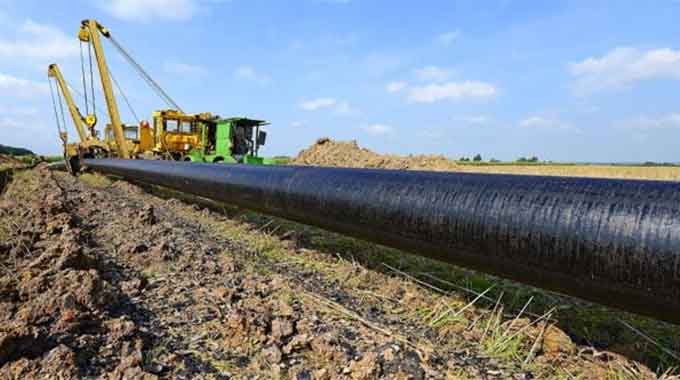
THE cheapest and safest way of moving liquid fuels, such as petrol and diesel, is by pipeline and even the switch over the next decade to much of the world’s road transport to electric vehicles will still mean there will be a high demand for liquid fuels for those purposes where electric vehicles are not effective.
The trunk pipelines from Beira, where there are modern off-loading quays for petroleum fuels to Feruka near Mutare, and then from Feruka to Harare, carry more than three quarters of Zimbabwe’s liquid fuels after previous upgrades to the infrastructure of the National Oil Company of Zimbabwe, now owned by the Mutapa Investment Fund.
But with the high level of economic growth since the start of the Second Republic, especially in areas which see corresponding high growth in use of petroleum fuels, further upgrades and the heavy investment they require are now needed, and probably sooner than many suspected.
At the moment NOCZIM can handle around 3 million litres of fuel a year, but is planning on a major shift upwards to 5 million litres a year.
NOCZIM is also interested in increasing its pipeline and storage network to become a regional supply hub for its other landlocked neighbours, Zambia, Botswana and Malawi.
Such extensions will obviously bring the advantages of pipeline deliveries to other major cities and centres in Zimbabwe that will lie on the new pipeline routes, especially Bulawayo and the Midlands, where the major industrial push of the coming few years is likely to be centred.
Most oil fuel importers want to use NOCZIM for as much of their business as possible, and will continue to do so if NOCZIM can continue to compete with road transport on price as well as efficiency. So far NOCZIM, one of the stars in the Mutapa portfolio, has managed this with little difficulty.
This not only works with its customers, but provides an example to other infrastructure companies, showing that providing a critical service under a monopoly can be done both well and profitably.
So far as Mutapa is concerned, all it really needs to do for NOCZIM is keep an eye on its efficiency and approve a build up of the capital investment budget.
Everyone is well aware that oil companies are providing fuel imports, so Zimbabwe is moving forward without a bottleneck for fuel, but these same companies are using NOCZIM as fully as possible, moving as much as possible by pipeline.
While distribution north and south of Feruka must still go by road, and the huge NOCZIM terminus in Harare feeds not only the largest province by population and fuel demand, Harare Metropolitan, but has to be a hub for large swathes of the rest of the country.
The upgrade of the major pipeline and the extension of this to pipelines that can supply fuel to neighbours, with Zimbabwean oil companies tapping the pipelines en route, seems very worth while.
Since being set up in 2024 as the active national holding company for most former parastatals and State-owned enterprises, Mutapa has been going though the accounts, operational and management structures of the companies it took over.
It has found it has a core of businesses like NOCZIM that appear to have been well-managed and have an effective central economic role to play.
And by highlighting these concerns it shows what is possible and how things should be done.
There is a second group of companies that are fundamentally sound and viable, but which probably need capital investment and a tightening of their management structures, as well as a willingness to accept that just because they were State owned before being moved to Mutapa, they are somehow owed a living.
Inroads are being made in changing attitudes and being willing to accept second best and more and more of these companies are likely to move up into the star ranks of the Mutapa empire.
Then come what are described, somewhat callously, as the hopeless.
Some are dead, and might just need a funeral, but others, such as the National Railways of Zimbabwe, are vital for future progress and will need to be rebuilt from the ground up, not impossible as that is how they were built in the first place.
But the necessary reforms and rebuilds are likely to be radical and certainly drifting along as declining business as usual is not an option.
Mutapa is starting the hard work of disentangling some neglected and almost defeated businesses to initiate the rebuilds. It will take a very clear-sighted approach to do this properly, but it must be done.