

 admin
admin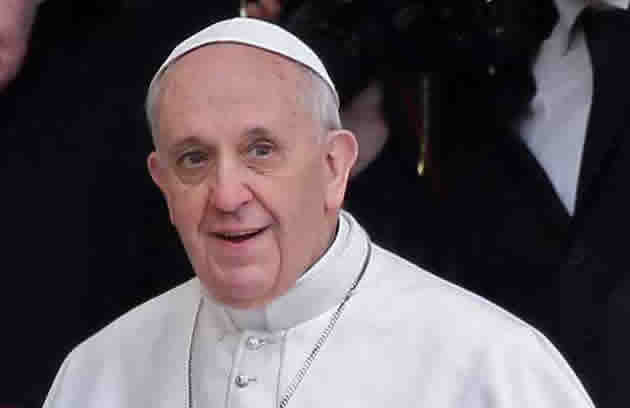
IN his 12 years as the head of the Roman Catholic Church, Pope Francis gave an example of leadership that stressed the need to be with the people rather than dwelling on the institutional character of the church. That example and character is likely to be his enduring legacy.
Although of Italian descent, he was the first pope to be born and brought up outside Europe since the eighth century, being an Argentinian and so the first pope from Latin America and the first from the Southern Hemisphere. That aura of being an outsider was reinforced by the fact that his entire career in the church had been in service as a priest and a bishop in Argentina, rather than as a Curia official in Rome, and as an outsider, he had a particular vision of the church.
Even as the cardinal Archbishop of Buenos Aires and so required to sit on commissions of the Holy See, his visits to Rome were brief and he was never a Curia bureaucrat. Principally he was a very active bishop, reforming the finances of his diocese and showing his already known emphasis on including the poor, doubling the number of priests assigned to shanty town parishes as well as spending time there himself.
Theologically he was conservative, as are most Catholic bishops, but he was open as both bishop and pope to the pastoral approach, looking at people as people and wanting to develop their own holiness. It was this double that saw him receive the necessary two thirds majority in the 2013 conclave after the abdication of Benedict XVI.
His choice of papal name after St Francis of Assisi, the rich medieval young man who became the champion of the poor, told everyone where his own emphasis was to be if they didn’t already know. Right from the beginning he removed a lot of the pomp of the papacy, staying in a guest house rather than the Vatican palace, and eating in a self-service cafeteria with whoever else was staying there.
He retained the iron pectoral cross he had been using in Buenos Aires, wore the plain white cassock of a pope without the fancy cloaks and extras, and wore walking shoes rather than red slippers. This symbolism could be seen as nailing his colours to the mast and was far more than a public relations exercise.
This stress of his was seen in his social justice views. While no socialist, he was very critical of rampant and unregulated capitalism and called for both a universal basic wage, a guaranteed minimum income for everyone, and higher taxes for billionaires.
As the first scientifically-trained pope, having worked as a chemistry laboratory technician before finding his priestly vocation, he was always ready to follow science when it came to climate change and health.
He is famous for his encyclical and later statements that everyone and every Government has an obligation to minimise and reverse climate change, being part of the obligation we all have to look after the Earth. That was seen in more detail when he backed communities, such as those living in the Amazon basin, who were trying to prevent the destruction of their environment.
During the Covid-19 pandemic, he supported health measures such as lockdowns, with the proviso that people were not to be left alone and that his priests had an obligation to visit the sick and the health workers. He also made it crystal clear that people had a moral obligation to get vaccinated once the vaccines became available.
His views on divorced people and LGBT people attracted a lot of criticism from traditionalists in the church, as well as criticism from others who hoped he would reverse the church’s teaching on these topics. He never altered or attempted to alter the teaching of the church, but wanted to see a lot more compassion and understanding.
The admission to holy communion of those remarried in civil ceremonies after divorce and with the previous spouse still living, or those married to such a divorcee, was formally left up to the bishops and priests looking at each individual circumstance. This had been a practice by a fair number for some time but without formal sanction.
Again he never changed the church’s teaching on same sex couples, but he did want to see a far less judgemental attitude and no civil laws banning such relationships between adults. He told bishops to distinguish between a crime and a sin. On other legal matters he moved the church into total condemnation of the death penalty in all circumstances and said it was never justified or permitted.
The sexual abuse scandal in the church, partly addressed by his predecessor, saw him caught between his support for the victims, his caring for the sinners, and the need to avoid false allegations. After what he admitted were some wrong decisions, he did reform processes, so that allegations of abuse had to be properly investigated and judged promptly and where criminal, the civil authorities informed. Bishops were sacked, and even a cardinal dismissed.
Being the first pope ordained after Vatican II, he embraced reforms that council brought to the church, in the devolution of authority, the raising of the laity and the dialogue with those of other faiths and religions. He spoke strongly against Islamophobia, and held meetings with senior Muslim clerics during his travels to majority Muslim states, stressing the need for people to live together in peace.
Even in war he kept a clear mind. He condemned the 2023 attack on Israel by Hamas, but also condemned the Israeli response and the destruction of so much life in Gaza. He made, right to the end of his life, a daily phone call to the single Catholic parish church in Gaza to show both his support for the suffering and to yet again nail his colours to the mast.
His whole social teaching was to look at the people who were suffering: the refugees denied refuge, the poor denied basic support, those under bombardment, those being oppressed in other ways. He spoke up for these outcasts, continuously. He lived up to his name.


 Online Reporter