dyton mupawaenda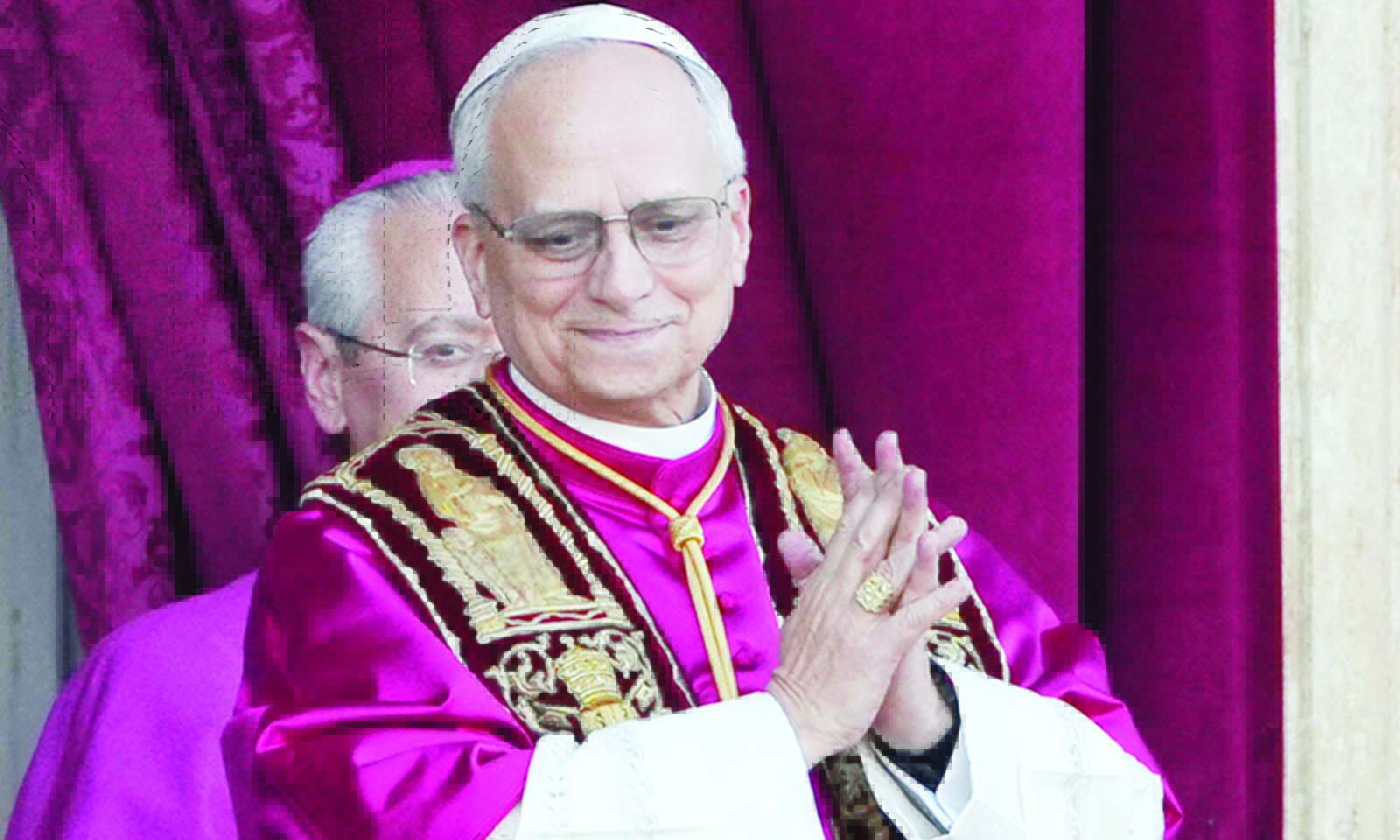
WITH Pope Leo XIV (born Robert Prevost), the cardinals appear to have decided on continuity when electing a successor to Pope Francis by choosing a man who like the late pope combines a moderate but firm theological outlook with an openness to the world and a stress on service over position.
His membership of a service religious order and his long service in Peru mean, like Pope Francis, many of his social views would have been formed in a developing country with high levels of inequality and deep pockets of poverty.
Both men had to navigate the need to maintain a balance in the disputes in Latin America between proponents of liberation theology and the obvious need for social change while holding fast to the central core, rather than conservative embellishments, of church teaching.
His choice of a papal name is significant. The last pope with that name, Leo XIII, was a long-lived pope in the last two decades of the 19th century. He was noted for his openness in dealing with secular governments, and bringing the Catholic Church back into the centre of world affairs, while at the same time making a determined effort in the church’s social teaching to deal with the often serious wretchedness of the working classes arising from the industrial revolutions that had swept much of the world in the preceding decades.
His very famous encyclical Rerum Novarum (of new matters) rejected both Marxism and laissez faire capitalism, and insisted that workers had the right to fair employment, a living wage, and the right to form trade unions with Governments able to step in. It has been the foundation of much Catholic social teaching right up to the present day. The concepts it introduced now form a strong strand of modern progressive labour legislation in many countries and the need for regulation of business.
It is likely that the modern billionaire capitalists will find Leo XIV as difficult to deal with as they did Pope Francis when it comes to letting rip in the pursuit of pure profit and wealth, regardless of any other consideration.
Like the late Pope, Leo XIV has spoken in the past about the growing disaster of climate change and the need to stop and preferably reverse this damage to the environment, with humans being stewards of the Earth rather than exploiters.
While many Americans are obviously ecstatic about the first North American and US pope, Leo XIV has never been identified with that group of American cardinals and bishops locked into conservative political thought.
Like the Jesuit Pope Francis, Pope Leo XIV is a member of a religious order, in his case the Order of St Augustine or the Augustinian Friars, a mendicant order that stresses service to the people and whose vow of poverty is communal rather than individual, with an emphasis on sharing with the have-nots. It is highly unusual in modern centuries for members of religious orders to be elected pope and only a tiny minority of cardinals belong to an order.
Although born in Chicago, US, Pope Leo XIV spent most of his adult life outside the United States following his university studies and initial few years mainly in parish work and returning only briefly twice to work in the US.
With a father of French and Italian descent and a mother of Spanish descent via Ecuador, he had the language and social background for work in Latin America and was sent there by the Augustinians.
Much of his time was in Peru, starting in the Augustinian mission in that country but then occupying a number of roles within the Peruvian church. He was eventually appointed a bishop, serving as head of a more remote diocese for a decade and acquired Peruvian nationality.
He had spent 12 years in Rome from the beginning of this century, but in two back-to-back terms as the elected prior general or head of his worldwide religious order showing the regard his fellow Augustinians held him, rather than as a Vatican bureaucrat and then returning to Peru.
Bishop Prevost was moved by Pope Francis from his Peruvian diocese to the top ranks of the Vatican just two years ago, at the beginning of 2023 as prefect or head of the Dicastery of Bishops, one of the top half dozen posts in the church. This dicastery keeps tabs on priests with the potential to become bishops, and monitors bishops, and while the pope makes the final decision on all appointments of bishop, the dicastery makes the recommendations and prepares the detailed shortlists.
By all accounts Cardinal Prevost was an enthusiastic supporter of Pope Francis in having bishops, while meeting other requirements, who would stress service over position. While only in that post for just over two years, he would have had dealings with many bishops, including that large majority of voting cardinals who are archbishops and bishops of major dioceses around the world.
In retrospect, Pope Francis, after seeing his new top aide in action, must have decided that the cardinals should at least look seriously at Robert Prevost when choosing his successor. He was given the almost automatic appointment to cardinal deacon in September 2023 that his post would normally carry but in February this year, he was promoted from a very junior cardinal to cardinal bishop. This was an unusual step for what amounted to a newcomer in the college, and not only that but given the title of one of the seven ancient suburban dioceses of Rome.
This moved him from sixth from the bottom in the order of precedence in the College of Cardinals to one of the top 13, including the two patriarchs of the eastern rights, and one of only five who were still under 80 and so able to vote in the conclave that has just been concluded. Those listing likely popes before the election missed the significance of this move, but it certainly would have been noted by the cardinals themselves and made sure they gave him serious consideration, even though most would have been a cardinal for longer than his 19 months.
Like Pope Francis, Leo XIV has a scientific background. His initial secular degree was in Mathematics. This secular educational background, before his philosophy and theology higher degrees, obviously made it easier for him to follow the science on climate change and in areas such as welcoming measures to control Covid-19 and the need for vaccination.
With an estimated 1,4 billion adherents, the Catholic Church is the largest religious organisation in the world. As its head, the Pope potentially has tremendous influence in the wider world as well as within the church. But this potential influence can vary, from non-Catholics thinking he does not matter, to a lot of people of goodwill taking note of what he says.
Pope Francis, in this wider role, was seen as the pope of the poor and dispossessed, of the refugees, the outcasts and those suffering in war. If Pope Leo XIV can do the same, and probably if his name means anything also teach on social economic rights, then Pope Francis will have a worthy successor.


 Online Reporter