

 admin
admin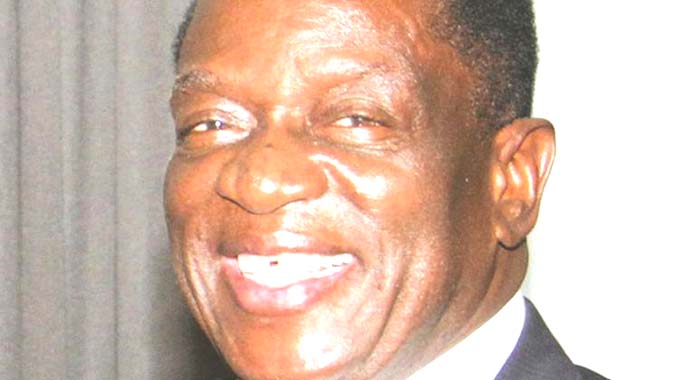
Zimbabwe’s industry is now getting that personal Presidential attention to detail as President Mnangagwa starts touring major industrial areas visiting the major factories in Bulawayo last week and Mutare this week.
The reasons are obvious. He wants to see for himself what is now there and how it is operating so when he and the major industrialists start talking they are on the same wavelength. And they are talking.
The President needs to know what they are doing right and what the Government is doing right, and he needs to then have informed debate on what both need to do to expand industrial production.
And it is both. As President Mnangagwa noted in Bulawayo there are limits to what the Government can do, and can be expected to do. The Government has already made doing business easier and is fixing up the basic infrastructure that all in the private sector need.
One Government area is sorting out the legal and taxation requirements, and these are now simplified and are close to best practice with a commitment to continue the process. There are limits as the Government does have to ensure that factories are safe and do not wreck the environment and that labour laws are fair to both employers and employees.
It also has to raise taxes to pay for all the things and services that everyone wants, and that industry pays its share. But tax codes can encourage investment and Zimbabwe does do this.
The second area where the Government has to be active is in infrastructure and basic services. Industry needs guaranteed electricity and water supplies, functioning sewers and usable roads.
Some of that has been put in place already, for example Zesa is now able to keep the wheels turning, and others are in progress such as the determination to start piping water from the Gwayi-Shangani Dam to Bulawayo from the end of next year, with the dam almost complete and the tender process for the pipeline now in progress.
The third area where the Government must take the lead is in ensuring a stable and functioning fiscal and monetary environment, and the Second Republic has now managed this by tying Government spending to the taxes received and finally using market forces to allocate foreign currency to the productive sectors using the auction system, rather than having a bunch of clerks in the Reserve Bank trying to juggle matters and use hidden subsidies for favours.
At the same time distorting and inefficient subsidies have been removed, both from currency allocations and from specific products, with the subsidy budget now channelled far more efficiently to social payments to people at the bottom of the pyramid who actually do need help.
The Government is also upgrading the education sector, stressing the education of skilled and technologically-literate school leavers and graduates of universities and technical colleges who can be rapidly trained for industry, can keep abreast of the new and emerging technologies and can contribute fully.
Other areas are more difficult. Industrialists cannot be given guaranteed markets, regardless of quality and price, through import controls and high protective tariffs.
We tried that and while it worked for a few years inevitable collapse followed. In any case, the modern global progress in opening economies means that such remaining controls need to be relaxed, and the commitment to the African Free Trade Area means Zimbabwe must play by the new rules, as it wins far more than it loses.
But the Government is now out of the micro-management of the economy, and expects the private sector to use advantages Zimbabwe possesses in a region and continent, where market forces determine so much, to produce far more at the right quality and the right price.
A pro-business environment is the Government’s job, and input from industry and everyone else is taken into account to make that environment ever better. But operations within that environment is largely the job of the private sector who after 55 years of living with controls and the whims of bureaucrats, and complaining about this frequently, are now being unleashed.
After listening, and the President is keen on hearing good and bad news and taking into account everyone’s views, there is that message the President is delivering: that business must produce, must be innovative and must do what it is supposed to do and do it better.
To some extent this has been done, with local industry now filling most of our supermarket and shop shelves largely by producing products of acceptable quality at prices below the cost of imports.
But our manufactured exports are still pretty dismal and our industrialists, especially our major industrialists, now need to learn to compete in regional and continental markets, especially as these start opening up with the new free trade agreements that will give advantages to those who make products in Africa for African conditions.
The innovation and skills they acquired to cope with bad fiscal management, over control and even how to cheat now have to be directed to making the markets work for them.
But here the President is impressed. Walking into a factory complex employing 2 000 Zimbabweans making stuff that can be sold must be cheering, and obviously the factory owners are doing something right.
In a sense President Mnangagwa is not just seeing how industry is now working, and discussing how Government and industry together can make it work better, but he is also looking at the future.
Vision 2030 is not just a slogan, or wishful thinking.
It is a practical and achievable goal, but that achievement requires that for every factory we have today, there must be 10; that we must build on the achievements of our farmers and the investments of our miners to industrialise.
The final purpose of these factory tours, and the time devoted to them, is to stress that the Government sees the private productive sectors as the critical component of economic growth and that the mutual suspicion that has in the past bedevilled relations between Government and the private sector is something that is now dead and needs to be buried.
As the head of major Bulawayo industry noted, it was 32 years since his factory was visited by anyone close to the centre of power.
President Mnangagwa’s visits are creating the climate where everyone can work together, each doing properly what they are supposed to be doing, to build the prosperous Zimbabwe we all want, and we all need.


 Bongani Ndlovu
 Online Reporter