daniel chigunwe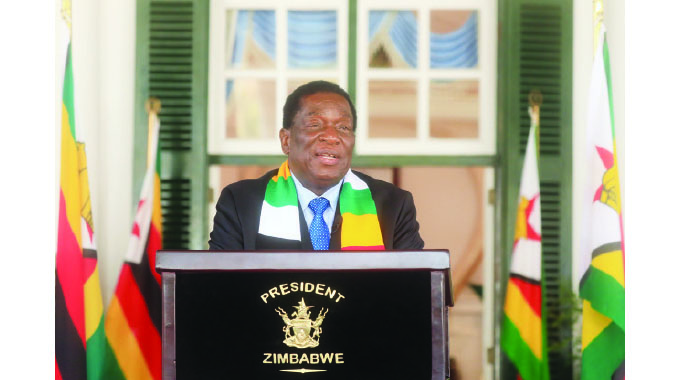
Today President Mnangagwa will be sworn in for his second full term after being elected for a second time by an absolute majority of voters for the second time.
The swearing in ends the electoral processes and closes the first term of President Mnangagwa.
The other 10 Presidential candidates have either, in the case of nine of them, explicitly accepted the results of the poll, signing off on the results, or in the case of the tenth, have implicitly accepted the result by refraining from launching a legal challenge to that result.
At the same time the Parliament that served the nation with President Mnangagwa in that first term was dissolved a few hours before the polls opened last month. Zanu PF has a large absolute majority in the House of Assembly of 73 over the opposition. The Senate, elected on proportional representation, as always has three large groups.
The biggest, Zanu PF, has 33 seats. The CCC has 27. Holding the balance are the 18 senator chiefs and the two senators representing people with disabilities.
These 20 are all independents, not taking the whip of either party, but traditionally after making sure their concerns are heard and that the special interests of the communities they serve are taken into account, effectively without window dressing, tend to vote with the elected majority.
So, now is the time to be looking forward, because there is so much to do in this second term. President Mnangagwa, since this is his second term, will be hitting the ground running, building on the many successes of his first term and having a very good idea of how to fix the odd policy that did not produce the desired results in full.
To a degree, he had this in his first term as he had been sworn in to complete the last few months of his predecessor’s final term, which at least gave him time to find out just what was going on and what was not going on, and the national situation was not that wonderful at that time, and started planning how his administration would first fix things and then get the country moving forward again.
What we can all expect is an intensification of the pro-growth policies he introduced five years ago, along with that insistence that this growth must benefit everyone, with no one and no place left behind.
The idea of favouritism or that there should be some sort of an elite that could benefit from the growth leaving others behind was not on the cards. This is especially important when we consider what the independent Zimbabwe inherited in 1980, one of the most unequal societies in the world, the inequality largely a result of settler colonialism.
While the worst of that was eliminated fairly quickly, with the land reform of early this century taking care of the last institutional inequalities, there is regrettably still that gap between the top and bottom rungs of the ladder.
Another main thrust of President Mnangagwa’s policies is for Zimbabwe to be an upper middle-income society by 2030.
This goes a lot further than just pushing up the gross national product rapidly; that is just a necessary condition, not a sufficient condition.
While Zimbabwe as a nation must obviously be a lot richer, we do not need a return to the colonial condition where less than 5 percent of the population had well over half the assets.
So the vision also means that a lot of Zimbabweans, like a very large majority, need to be in the middle income groups themselves.
A major revision of the whole investment policy, welcoming investors prepared to come to Zimbabwe, saw a massive jump in mining output, along with creation of more than 50 000 new jobs, many of them for skilled workers, and a significant rise in investment in the industrial sector, an area where the second term will see accelerating progress.
Agriculture was low-hanging fruit with a vast number of small-scale farmers living in serious poverty and many just in subsistence farming and needing food aid in many years.
Land reform had created the asset base in land, but many of the small-scale farmers did not have the finance to access inputs and other requirements to farm effectively as profit-making businesses.
Pfumvudza/Intwasa was the major policy that changed this, making sure inputs were supplied to farmers prepared to work hard and thus making sure that they were able to profit from that work.
This has seen many households moving out of serious poverty and already there are a growing number of “middle income” small-scale farmers who are now able to continue growing their businesses.
The most spectacular change has been in the tobacco belt, where the small and decaying towns, and they were decaying in the last years of colonialism, are now growing fast and becoming the commercial centres of communities of farmers whose incomes are rising.
This progress will be seen spreading in the second term as more farming communities move up the income ladder. At the same time the A2 farmers had access to finance through the AFC and the banks, and with corruption being hammered could access this finance simply by showing they were competent and able to use the money properly.
The assault on corruption was critical. For example a lot of road work now in progress required major reforms at Zinara, basically replacing the board and management and bringing in competent and honest people who would collect the toll and licence fees and make sure they were used on roads, not on padding personal lifestyles.
And despite the extraordinary journeys undertaken by good defence lawyers, we are now starting to see the kingpins of the corruption occupying jail cells and civil cases in progress where the profits of corruption are being returned to the people.
But a lot of this dramatic work in farming needed the equally dramatic increase in exports from mining, so that there was enough foreign currency to buy the fertilisers and other chemicals.
It all fits together, including the royalties that allowed the Government to budget for the improvements without borrowing. Already we have moved from food self-sufficiency to the calculations that need to be made over how much the surpluses should be stocked to cope with bad years and how much can be exported.
Much of the future growth will be more in line with rural development, bringing families and communities into the modern middle classes, rather than growing enough food, a box we have ticked. These are areas where Government policies were seriously successful and much of the second term will be refining them and accelerating the progress.
The manufacturing sector is already growing, but now needs to invest more so that it can service the huge new markets opening up and creating its own by the expansion of the skilled labour force.
This may need some changes of attitude among some established industrialists. The manipulations and extravagant price rises a few months ago were hardly the sector’s finest hour.
But a country of middle income people will be buying a lot of extra products, so industrialists who can produce the right quality at the right price are already seeing new doors opening, and need to work with their customers to keep up the momentum.
The second term will thus see more Government thrusts into infrastructure, such as power stations, roads, dams and the like, so that everyone whose business is growing, including those at the base of the ladder, does not have artificial limits placed on that growth.


 Online Reporter