

 admin
admin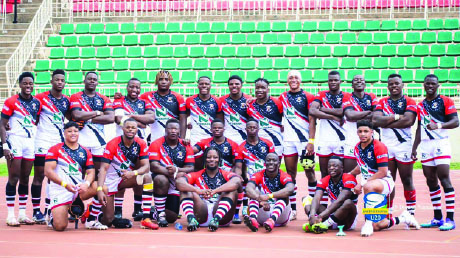
THE good results posted by the Zimbabwe Under-20 rugby team at the Barthes Africa Trophy that concludes tomorrow in Nairobi, Kenya, is testament of how sound organisation in any sport can bring results.
The Junior Sables, as the team is fondly known, are set to play in the final against the hosts Kenya tomorrow with hopes of defending the Under-20 African title which they won last year in the same country.
This tournament features some of the finest junior rugby teams in Africa.
The best news for Zimbabwe so far is that the Junior Sables have already qualified for the World Junior Trophy finals to be held in Kenya in under three months, thanks to their brilliant run at the Barthes Trophy.
This is a genuine feel good story in our sports sector, which often is weighed down by mediocrity.
But the Junior Sables have underlined the gulf between them and some of the countries in the region, judging by their dominance on the pitch.
They first thrashed West Africans Ivory Coast 55-0 and then accounted for North Africans Tunisia 60-6 in the semi-finals.
Both games were openly one-sided in favour of the Junior Sables.
Now, the hope back home is that they continue with their good form and upset the hosts Kenya to retain the title tomorrow.
Kenya have been enjoying the home comforts on their way to the final and the Zimbabwe junior rugby team have a match in their hands, which could test their resolve.
But that impending final game aside, there must be something about this Zimbabwe team, especially post-Covid-19.
The structures put in place by the Zimbabwe Rugby Union for development of the age-group teams are probably beginning to pay dividends.
The Junior Sables made the country proud last year when they lifted the continental Under-20 title after beating rivals Namibia in the tournament’s final played in Kenya.
The Shaun De Souza-coached side went on to finish second at the Canada International Rugby Series organised by World Rugby and featuring the hosts Canada, Chile and Uruguay late last year.
After winning their first continental title in a decade and also doing well in Canada, the Zimbabwe Rugby Union have done well to support the structures.
They retained former Zimbabwe rugby star De Souza as head coach of the team to foster continuity, which is key in balancing development and getting results.
The Prince Edward School head coach has proved the right man for the job.
Along with his assistants Marvin Chirume and Costa Dinha and team manager Hugh Vera, ZRU have assembled a strong team of technical minds.
But these men cannot achieve the desired goal if they fail in team selection, which has to be as balanced and unbiased as possible.
De Souza had to cast his selection net wide to ensure he has the best available squad at his disposal.
Players have to be selected on merit for the process to maintain integrity and bear fruit.
ZRU have done well to provide the platform for trials that give all the players with potential an opportunity to impress, mainly through the robust schools’ rugby programme.
Schools rugby has gone from strength to strength, with the backing of ZRU.
The union has the Zimbabwe Under-18 team, which is the premier school boy rugby team in the country with the best of the Under-18 players selected through a rigorous and thorough selection process that starts at schools level, then Provincial level before the provincial teams meet at a central venue for the final trials.
This Zimbabwe Under-18 boys team used to play in what was the Craven Week in South Africa but with time the team is now selected to play in the Academy Week in the neighbouring country.
Most of the players who have played for the Junior Sables have gone on to represent the Zimbabwe senior men’s rugby team, known as The Sables.
“The Under-20 team had five players called up into the national Sables team and one into the Sevens Cheetahs team,” said ZRU president Aaron Jani recently.
“Our ambition and drive as a team is aligned towards the achievements of the set sectorial targets of improved performance and nation-building as set out in the National Development Strategy of Youth, Sport and Culture.
“Our aim is to leave no one behind, to increase participation and inclusivity within the game, as we work towards Vision 2030.”
The ZRU should be applauded for taking seriously the importance of preparations. In the case of the Junior Sables, they had to begin their preparations for the Barthes Trophy early and had enough time to plan their game.
Preparations are key for any competition.
De Souza and his team started off this year with a talent-loaded provisional squad of 73 players which has been dubbed the High Performance Squad.
As part of preparations for the Kenya tour, most players have been getting some game time in the Paramount Garments Under-20 League organised by the ZRU.
The Junior Sables Under-20 High performance team also featured in the second edition of the Nedbank Challenge Cup.
The ZRU chief executive, Sifiso Made, said the automatic qualification of the Zimbabwe Under-20 national team for the Junior Trophy demonstrated that rugby’s development structures in the country are working.
This same Junior Sables squad is now tipped to provide the personnel who have the potential to qualify for the senior men’s Rugby World Cup in 2027.
But before that, focus should be on tomorrow’s Barthes Cup final and the upcoming World Junior Trophy to be held in Kenya from July 15 to 30.
The Junior Sables are in the same group as Scotland, Uruguay, Canada or USA at this tournament.
The World Rugby Under-20 Trophy is the second tier competition, below the main competition – the World Rugby Under-20 Championship which is also returning for the first since Covid-19 and will be hosted in South Africa from June 24 to July 2023.
The Zimbabwean team has received support from the Government and they were hosted by President Mnangagwa at State House. Financial support has been pledged for the team which is eyeing a World Cup qualification.
Some of the companies that have partnered with the Junior Sables in their journey are Nedbank, ProTyre Fitment Centre, Phero Steel, FX Logistics, Firstlink Insurance Brokers, WORK2BEWELL and more can still come on board to ensure flawless preparations and continuous development. The age-group teams are the future of any sport and it is important to support them.



 Online Reporter