Online Reporter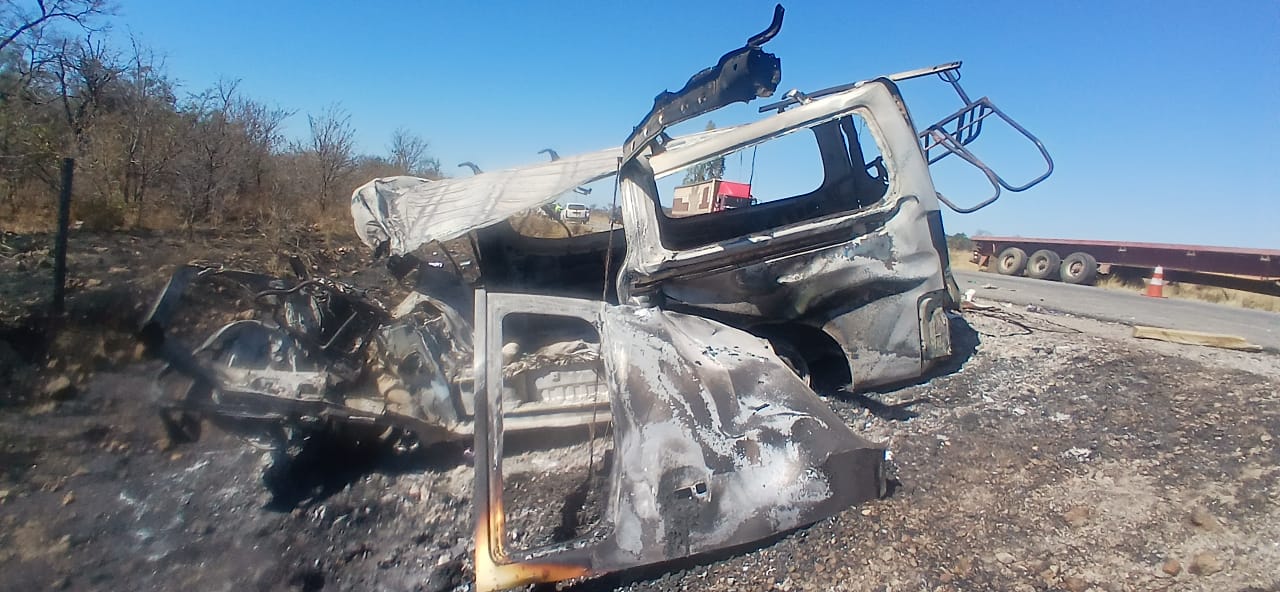
TWO serious accidents this month have seen large numbers of people killed: the ferry disaster on Lake Kariba that claimed 97 lives and the head-on collision involving a kombi near Chivhu on Friday evening that claimed another 27.
In both cases there was gross overloading of passengers. That not only drives up death tolls in the obvious way, with more people at risk of dying, but in most cases will make survival much harder and hamper emergency escape and rescue.
The Kariba ferry was carrying almost twice its licenced 90 permitted passengers.
When it capsized there were more people trying to get out from under the overturned hull, more likelihood of being trapped under, fewer opportunities for grabbing a lifejacket, even as a float, and less chance that a surviving passenger would be able to find a handhold on the overturned ferry.
So a higher proportion of passengers would not have drowned if the ferry had been carrying the correct maximum.
There was also that problem of numbers when rescue boats launched from the shore, both by Government agencies and private owners, in tracking down those floating in the water and who might still be alive if they received prompt attention.
That made the rescue efforts harder.
With the Chivhu kombi crash there was an almost immediate fire.
When a bus or kombi catches fire the only effective survival path is to get out quickly, smashing windows and pushing or dragging people out.
If their clothes are burning the flames must be smothered as they reach the ground, which can be done quickly, but first the people must be out of the kombi.
Overloading a bus or kombi means it is much harder when everyone is jammed together to find any room to smash open windows and then lever people out, especially when we might be talking about less than a minute.
And of course there will be more people to get out of each window or door.
It is the numbers for each escape route that is the important figure rather than any total.
Most buses and kombis have windows designed as escape routes; these are easier for a normal adult to push out than the other windows, but they do require a bit of space for an adult to lean back and push.
We, at present, have no idea if the kombi involved in the Chivhu crash still had functioning escape windows since so many kombi windows are not really functioning, and a broken door that can only be opened from outside by the conductor leaning out of a window is not uncommon.
We hope the mandatory VID inspection of the wreck will try and establish if any escape was in fact possible.
As successful evacuation of burning planes and buses has shown, it is possible to get a lot of people to safety in that crucial first minute or two.
Airline cabin crews are specially trained for those very fast evacuations to get people out and let the insurance companies sort out replacement of abandoned bags and personal possessions.
But that sort of evacuation is impossible if everyone is so jammed they cannot move.
Those rushing to help would find the same problem, that it was almost impossible to grab people pressed against the windows and to throw water or aim fire extinguishers where the flames were burning.
We must continually remember that we are talking about a very short time where any rescue is meaningful, rather than just body recovery.
The other problem with overloading is the increased risk of an accident in the first place.
Those commenting on the ferry capsize have noted that with so many passengers standing or sitting on the deck instead of in a seat were far more likely to be flung to the listing side, making the list ever worse and the capsize more likely.
A bus or kombi carrying too heavy a load is harder to manoeuvre.
The Ministry of Transport and Infrastructure Development has done sterling and successful work in setting and enforcing standards making accidents less likely in the first place, and making it clear that there is a chain of personal responsibility stretching upwards from the bus driver or ferry captain for enforcing regulations.
That must continue and be expanded to make sure passenger safety rules are also strictly enforced. But we also need to pay attention to what happens when the worse comes to the worst and there is an accident.
These will happen and might well not be the fault of the driver or captain.
But they still must know what to do to minimise death and injury and, in the ultimate disaster, to allow as many passengers as possible a reasonable chance of escape.