Chronicle Editor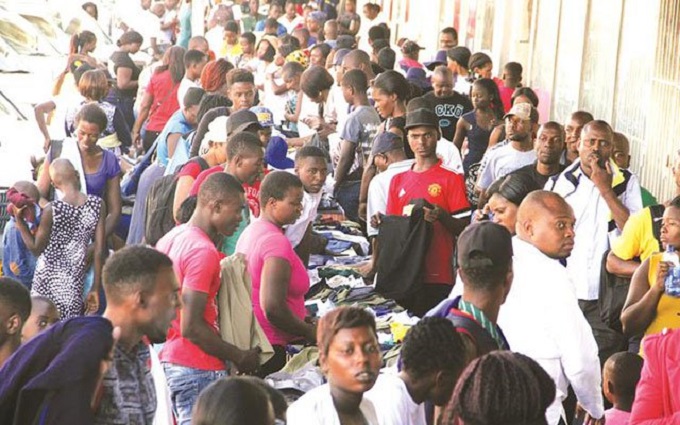
We are halfway through this year’s festive season and in the next 10 days schools will open. For many people with children in school, the merriment of Christmas Day will, or has already given way to much emotional suffering. They enjoyed themselves, spent much money on food and drink on Christmas Day but that joy may have ended even before they celebrate New Year’s Day given the large sums of money they have to spend on school fees, uniforms and stationery for their children as the first term of 2019 begins.
Many schools have increased fees by wide margins citing the economic challenges that have been affecting the country over the past three months. Some private schools are demanding fees payment wholly in foreign currency with the more “charitable” ones asking parents to pay tuition fees by swipe or bond and levies in foreign currency. A number of boarding schools have not only increased fees but are also saying parents must provide groceries when their children come to school next term. The groceries being demanded would be pooled together with those that other children will bring and used to feed them all. This will be in addition to the foodstuffs that parents traditionally give their kids for supplementary feeding.
In addition to the increases in fees, suppliers of uniforms have provoked an outcry after they also increased their prices by more than 200 percent.
A school in Marondera, Wise Owl Learning Centre, said in a circular to parents it had been forced to increase fees due to the prevailing economic situation.
“The impact of the economy has affected all of us in various ways as a nation. No sector, including the education sector, has been left out,” the circular said.
“With this in mind, the Board of Trustees, together with the school administrators, would like to assure you that a lot of prayer, thought and deliberation has been put in to find the best way forward to ensure the school does not lower standards of its products and services.”
Parents whose children are boarders and in secondary will have to fork out $3 200 while textbook and science levies have been set at US$120 and US$50 respectively.
For boarders doing Advanced Level, fees will now be $3 500 while textbook and science levies are US$150 and US$50 in cash.
Heritage Primary School in Harare kept fees unchanged at $2 100 but the institution was now demanding US$150 to “balance their books” and US$25 for ICTs.
Some schools in Bulawayo are also demanding part payments in foreign exchange. Others, including the more expensive trust and church-owned ones, have only reviewed their fee structures and are not asking for payments in hard currency.
With respect to uniforms, outlets in Bulawayo are now selling shoes at $60 up from $20, a satchel $62 up from $21, shirt and short $65 up from $20, dress $45 up from $15, blazer $150 up from $50, skirt and blouse $80 up from $30, hat $30 up from $11, socks $6 up from $2 and tie $18 up from $9. A full set of uniform for a Grade One pupil costs an average of $135.
Even schools that sell uniforms to pupils and do not allow them to buy from elsewhere have revised the uniform fee to around $500 from about $250, payable in bond or swipe.
In view of these statistics, sending their children to school next year is likely to prove challenging for parents and guardians, many of whom have not had any corresponding salary increases since October when the price madness began. At the same time we are mindful that schools, like all other institutions, are operating in the same economy that has been unstable lately and as such have to make adjustments to keep afloat.
We therefore call on learning institutions and suppliers of uniforms and other school requirements to be reasonable so that they do not set prices or fees that parents and guardians will find too high. On the other hand, parents must realise that the economic environment demands that reviews be made.
Finding that balance has, however been elusive particularly for the local business sector, schools included. How, for example, does a uniform supplier, justify increasing the price of a pair of school shoes from $20 a pair to $60? This goes back to our consistent criticism of what we argue is unbridled greed among local businesses.
On school fees, we are encouraged that the Government has laid down the conditions that schools must follow before raising the money payable. This includes making sure that school administrations provide proof that they consulted parents who consented to the fee reviews, providing school budgets before a formal application is made to the Permanent Secretary for Primary and Secondary Education who must approve the request before fees can be increased. The procedure is fairly thorough to prevent schools from increasing fees unilaterally while, at the same time, giving administrators of learning institutions room to defend their proposals.
The challenge has, however, been gaps in enforcing the procedures in case where schools disregard them. It will be essential for the Government to ensure that Statutory Instrument (SI) 1597A of 2007 is upheld without compromising the viability of schools.


 derick.khumalo