admin
admin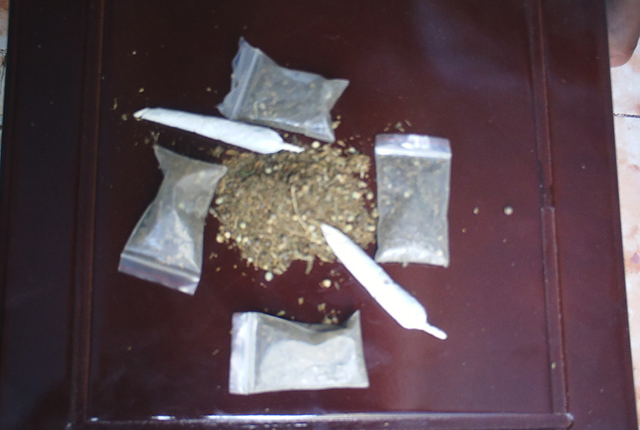
The drive against illegal and dangerous drugs has seen more than 300 convictions in recent months, more than half the number of dealers and possessors brought before the courts, with a handful of acquittals where there was not enough evidence once the trial started.
Since the main policy is to hit the dealers, smugglers, producers and sellers of illicit drugs with prosecutions and the courts, while trying to rehabilitate the users, this paints a sad picture of just how prevalent drug dealing and thus drug abuse has been in Zimbabwe, and the consequent need to continue the action to reduce the threat and where possible eliminate it.
The other factor that has come out of the courts is that crystal methamphetamine, more commonly known as mutoriro, has assumed an unexpected dominance in the drug trade, being responsible for more than half the cases taken to court.
We would assume this also indicates that a lot of mbanje trade is done at a very localised and informal level, with most producers growing one or two plants and either smoking the stuff themselves or selling it to those who they are friendly with, since it is unlikely that this drug is dying out. This makes it difficult to catch them.
There are of course major busts, when whole fields of mbanje or bales of the stuff in the boots of cars, are found and magistrates get the job of deciding how long a jail sentence should be. And the professional dealers are likely to sell both mbanje and crystal meth and so appearing in both sets of statistics.
We do not advocate that users of tiny quantities should necessarily be kept out of court.
While fines are probably appropriate for first offenders caught using a drug, or possessing tiny quantities, court appearances would have the advantage that a magistrate could also impose a suspended jail sentence, coming into effect when a user does not learn and seeks rehabilitation but instead carries on with their addiction or habit.
But we need to be careful that we do not clog the court system, and clog the jails and statistics, with pure users while the dealers and producers are able to spend years out on bail. There would also the problem that we see a large number of arrests of users as a major sign of success, which it is not so long as dealers and producers are not caught and stay in business.
Even with dealers, at least those in the bottom tier, the street dealers, serious co-operation with the police should be a mitigating factor. That means that a street dealer who identifies their source of supply, or the grower of their mbanje, or the smuggler of their imported drugs, could have a reduced sentence.
As we climb the dealing ladder sentences must, of course, become ever more severe, and it becomes ever more difficult for defence lawyers to find valid mitigation and proposals now being studied to raise maximum sentences should reflect this.
The person importing or organising the import of large blocks of hard very dangerous drugs is someone who needs a reasonable number of years behind bars to understand how serious this sort of offence can be, and even the drug mules need long sentences. These are also deterrents. At one time Zimbabwe was not really under threat from imported drugs, and mbanje and illegal alcohol were the main two problems. Having a closed economy and a non-convertible currency made the country relatively unattractive for smugglers and foreign suppliers. Dollarisation and the continuation of a multi-currency regime mean that there are a lot of potential users with foreign currency who can afford the imported drugs and who, from the numbers being arrested, are buying.
Crystal meth has to be imported. In theory it could be produced locally given access to a decent laboratory, but that would still require some imports of the raw materials. The sort of skilled person who could make the stuff can be found in Zimbabwe, with our emphasis on skills, but the problem would be the materials.
One of the thrusts of our anti-drug campaign, now we know the size of the crystal meth problem, must be to interdict the supply chain, that is stop it from coming into Zimbabwe, just as we interdict the smuggling of drugs such as cocaine and heroin.
We all know of smuggling, and efforts are now being stepped up to interdict other commercial smuggling, not just of illegal drugs but of a wide range of items where smugglers want to avoid duty of legal imports. But the anti-smuggling patrols and those who track down smugglers need to be aware of the possibility that a smuggler will have illegal drugs as well as commercial goods and so searches need to be thorough. At the same time we need to maintain pressure on mbanje. It is clear from some of the statistics from rural provinces that this menace is not always taken as seriously as it should be.
It is known that it is the most common illegal drug that is abused, probably by a reasonable margin, but looking at statistics it seems there is more attention being paid to the imported drugs.
We also need more community involvement. You cannot sell drugs without someone knowing about it. Some public spirited people will tell the police, others will not bother. This is where the police need to make reporting easier, such as with WhatsApp numbers and the like. There is also need to make people less reluctant about turning others in.
There are those who see drug abuse and even drug dealing as victimless crime, and so ignore it. But abusers do become addicted, and need ever larger quantities to satisfy their addiction, and so are ever more likely to suffer the side-effects, which are sometimes fatal.
Another point to get across is that even if you think there are no victims, only people making wrong decisions, how laid back would you be if your children started taking drugs. We would imagine that most people would want anyone who introduced their child to drugs, or who sold their child drugs, to be taken out of circulation, and the same attitude needs to be shown when it comes to those who sell to other people’s children.
In theory plain clothes police could wander around areas where drugs are thought to be most available and wait until a dealer approaches them, but that is both difficult and probably requires unlimited numbers of police.
The police can be far more effective if a lot more people tell the police what they know, and then the police follow up. Here a plain clothes officer need just approach the suspected dealer, rather than wandering the streets for a week, to get the evidence to make the arrest.
This crackdown on drug dealing, and drug use, requires a range of strategies and will take a lot of time to show appreciable falls in dealing and abuse. But we have to start somewhere and then continue, one step at a time.



 Online Reporter