

 admin
admin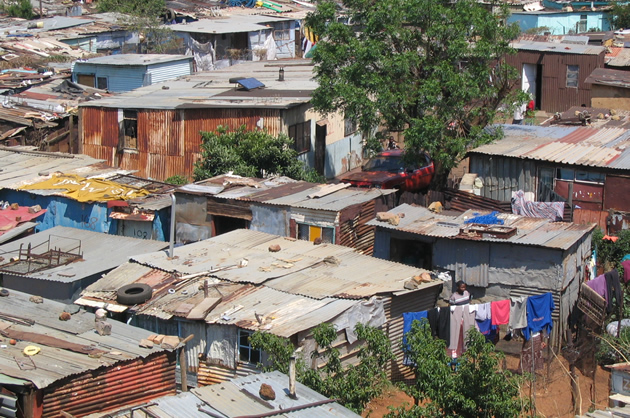

THERE have been concerns that South Africa is sitting on a ticking time bomb that will one day explode leaving the country in chaos and anarchy due to the glaring inequalities between the previously marginalised blacks and privileged white population.
Despite the best of efforts, the South African government has since the first democratic elections in 1994, failed to narrow the chasm between the haves and have nots and blacks still constitute the majority of the poor people in that country.
Statistics indicate that despite many policies aimed at closing the poverty gap, blacks make up over 90 percent of the country’s poor at the same time they are 79.5 percent of the population. As recently as last year, 70 percent of South Africa’s land was still owned by whites. This is despite the promises of the ruling African National Congress to redistribute 30 percent of the land from whites to blacks.
Whites hold much of South Africa’s land, secured through freehold tenure. More than one-third of the population occupies 13 percent of the land, often in insecure or secondary ways. It is a sad indictment on the ANC that more than two decades since the end of apartheid, a large section of the South African population still lives in squalor with bare necessities lacking in townships and informal settlements dotted all over big cities such as Johannesburg, Cape Town, Pretoria and Durban.
While the end of apartheid opened the door for equal opportunity for all South Africans regardless of race, today that country struggles to correct the inequalities created by decades of oppressive white rule. The sad reality is that the end of minority rule left the country socio-economically divided by race and while government policies have sought to correct the imbalances through state intervention, these have had little success.
Oxfam — an international charity organisation — last year released a report titled, Even It Up: Time to End Extreme Inequality. It starts with a case study from South Africa and compares a black woman born to a poor family in rural Limpopo to a white man born on the same day in a rich suburb of Cape Town. Using the United Nation’s World Development Report, it said the woman was one-and-a-half times more likely to die in the first year of her life. The man, statistically, would live 15 years longer. He would complete 12 years of schooling and probably go to university. She would be lucky to complete one year of schooling. Her children would be stuck in the same place. The report said the two richest South Africans had the same wealth as the bottom half of the population. Johan Rupert, chairperson and chief executive of Remgro and chairperson of Richemont, is worth R82.35 billion, and Nicky Oppenheimer, chairperson of De Beers is worth R72.6 billion.
Oxfam said: “In South Africa, inequality is greater today than at the end of apartheid. Extreme inequality corrupts politics, hinders economic growth and stifles social mobility. It fuels crime and even violent conflict. It squanders talent, thwarts potential and undermines the foundations of society.”
Official records indicate that South Africa has one of the most unequal income distribution patterns in the world. Approximately 60 percent of the population earns less than R42,000 per annum whereas 2.2 percent of the population has an income exceeding R360,000 per annum. Given the grim picture currently prevailing in the so-called Rainbow nation, it is inconceivable to expect blacks to accept the prevailing status quo hence the sporadic outbreaks of violence in poor townships often expressed through xenophobic attacks or protests against poor service delivery.
The rise of the Economic Freedom Fighters party led by firebrand former ANC Youth League president Julius Malema points to a nation disillusioned with the slow pace of economic integration and pining for strong leadership to tackle inequality head on. It is in this context that President Robert Mugabe told journalists in Botswana on Wednesday that South Africa needs a second liberation to empower black citizens who remain marginalised despite a political dispensation that brought majority rule more than two decades ago. Cde Mugabe, who is also Sadc chairman, said xenophobic attacks against other Africans were as a result of the imbalance in wealth distribution, stressing that South Africa should not be condemned but needed urgent help.
“The pressures with people of South Africa are so much that we cannot avoid incidents of that nature (xenophobia). People are unemployed, lots of young men and women are in the streets so when they see people from neighbouring countries running small shops they conclude that it’s these people that have robbed them of their chances, which is not the case,” the President said.
“It’s not the other African but it’s a factor of the whites that have kept opportunities to themselves. The political dispensation did not address the disparities between white and black with most of the land in the hands of whites and most of the employment opportunities enjoyed by them (whites),” he said.
We agree totally with the President that South Africa needs help to close the inequality gap.


 Online Reporter