Online Reporter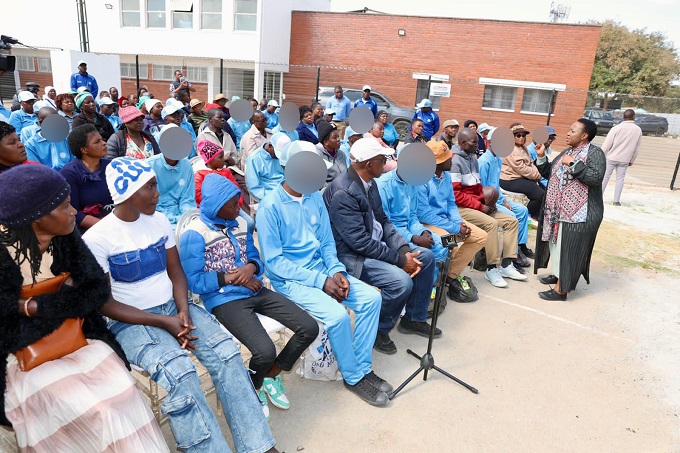
PART of the growingly effective battle against drug and substance abuse needs to involve the courts, both to see how the judicial system can cut the traffic and because any more innovative approaches, such as options of rehabilitation instead of prison, will require court orders.
So the decision to set up a set of specialised drug and substance abuse courts with dedicated magistrates and prosecutors is necessary, as is the training course now in progress to make sure that the 22 magistrates and 22 prosecutors selected for the first 11 courts, each with two magistrates and two prosecutors, will be consistent and effective.
This is something new within Zimbabwe and so those involved need to work out the rules and look at the sort of sentencing requirements that each will follow to make sure that sentences are both appropriate and the same across all courts.
We are already using sentencing guidelines for most crimes and courts now, so adding the new courts simply makes this complete.
Already some people have noticed that different magistrates have different ideas of the most appropriate sentence. Some of the differences that are seen are purely because of different circumstances and surrounding events.
But some reflect different views and here the court officers need to work out a common purpose.
As is the case in many other aspects of life, the courts convert Government policies, which provide goals and direction, into something that is practical and can work in the confines of a courtroom. This is why a fair amount of top talent has been deployed to the development and training programme, so we get this part right from the beginning.
If we get the foundations right then we can build on something secure and not have to retrace our steps as the battle heats up, just add to the data we have been accumulating and make sure it is working as intended.
We already in Zimbabwe distinguish between sellers and suppliers of drugs on one side, and the users on the other side.
The two groups do need different approaches and we should make sure that we maintain the dichotomy.
We do not need the sort of mess you get in some jurisdictions where a user is treated as a long-term dangerous criminal occupying much of the prison space with little chance of rehabilitation and release from their addiction.
On the other hand, when it comes to those who, for the sake of money, are more than happy to create addicts and ruin lives, they seem to approach the profile of the classic criminal more precisely.
The Government and Parliament are looking at a National Drug and Substance Abuse Control and Enforcement Agency, to combine and make permanent the strands of the ad hoc temporary committees and other cooperative elements that have already seen us working out how best to prevent drug abuse and then force a retreat on what we already have.
Part of the plans include a strong strand of rehabilitation, and this might well require a degree of compulsion. To some extent this is already in place. A majority of psychiatric unit beds are already occupied by drug users and abusers and psychiatric patients can be held compulsorily, not having the right to sign themselves out.
Obviously it will be better if they are to be confined. They should be separated for specialist treatment for addiction, rather than mixed with other psychiatric patients who very often have quite different needs and usually require very careful prescriptions that can restore their minds to the states needed for the subsequent psychological help.
An addict might need some sort of medical prescription to break the physical addiction, but then will almost certainly need more help in rebuilding their life. And it is likely that some sort of out-patient care will be needed, perhaps for life.
One of the most successful anti-addiction programmes in the world is the one built up by Alcoholics Anonymous, pretty much the ultimate in self-help organisations since you have to be an admitted alcohol addict to belong.
But seeing how some quite ordinary people have rebuilt their lives, and how much value they place on their weekly meetings, shows what is possible and what can work.
Magistrates and prosecutors are going to have to learn how to cope with those who are willing to start rehabilitation, but then fall off the edge and revert to addiction. The other problem that might emerge comes from a trend in Zimbabwe for small-scale users to be given the option of an admission of guilt fine.
This is fair enough as far as it goes, but is not much use if the same person is arrested every week. As in some other areas where such fines are useful, there needs to be someone keeping count, so first offenders and multiple offenders can be treated differently.
A lot of these sorts of high practical details are going to have to be sorted out by the magistrates and prosecutors assigned to the special courts.
They can be backed by medical and legal experts and should be supported, but in the end they are going to have to call many of the shots if the programmes are going to work.
The emphasis that was placed at the opening of the course on the centrality of the courts in the long battle we face to reduce and one day eliminate drug abuse was a fair description of what the initial 44 and those who join them are going to have to face. We wish them well and hope all of us continue giving them our support.