admin
admin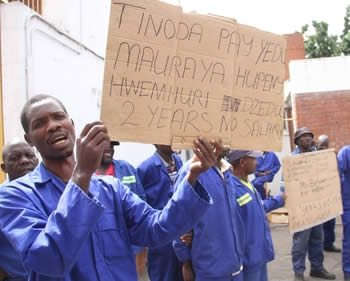
Wildcat strikes are the bane of all labour relations, destroying the necessary element of trust that must exist between employer and employee.
Strikes are not forbidden under Zimbabwean law, except for certain categories of exceptionally essential staff, for example the police, but there are a number of steps that have to be taken first to resolve the dispute.
And if those are not taken then the strike is a wildcat strike and a breach of faith by the strikers.
And one major factor that some Zimbabwean employees forget is that even when a strike is called after going through all these steps, strikers are not paid while they are off duty.
This does not happen anywhere in the world, it being accepted that those off duty, even in a legal strike, cannot expect their pay.
This is why some unions in some countries build up assets for what is known, at least colloquially as a strike fund, the union undertaking to pay a fixed sum for each day people are off duty or each week.
Without that a strike is fairly meaningless, since the strikers will lose more than they can ever hope to gain and this is why the other systems to resolve the dispute are now ever more being resorted to.
Negotiation is, in the end, the only realistic option. This does require, of course, that both employer and employees are willing to take the negotiations seriously and negotiate in good faith, and this requires a lot of cards to be placed on the table and careful explanations made.
Employers have to accept that employees obviously want to improve living standards, or at least keep them stable, and employees have to realise that no employer can create money out of nothing and that expenses, such as labour costs, have to be covered by revenue.
Employees also have to realise that labour costs, while obviously a major item on any employer’s budget and generally one of the larger items and frequently the largest, are not the only one.
So we come to the almost continuous talks in Zimbabwe between the Government and the workers in the public sector.
Generally these are done well. The public sector unions and staff associations come well prepared, showing the cost of living, how pay has been eroded since the last pay increase, and start pitching what sort of pay deal is needed.
The Government comes with its up-to-date financial figures, its own budget and budgetary and tax forecasts, the revenue for the Government being what the taxpayers pay in.
Within the two sets of figures the need is to get the maximum that is affordable. It helps that generally the Government has a far flatter salary structure that many use in the private sector, that is the gap between the best paid and the lowest paid is a modest multiple.
It also helps that the employees are taxpayers, and so know from their own payslip that increasing taxes is not really an option.
One negotiating stance of the public sector unions has been to try and restore what was there in the last days of dollarisation.
Regrettably that dates from the days when there was no fiscal discipline and the money was, in effect, being printed. That collapsed, simply because it could never be sustained and should never have been tried.
The Government has consistently, over the last couple of years, shown its willingness to take the employee’s concerns very seriously and show excellent faith.
While insisting that proper fiscal discipline has to be shown and that creating money out of thin air by borrowing or printing is not an option, it has pushed up pay and benefits the minute the tax revenue permits this and has looked for creative ways of extending benefits, and converting talk on benefits to actual benefits.
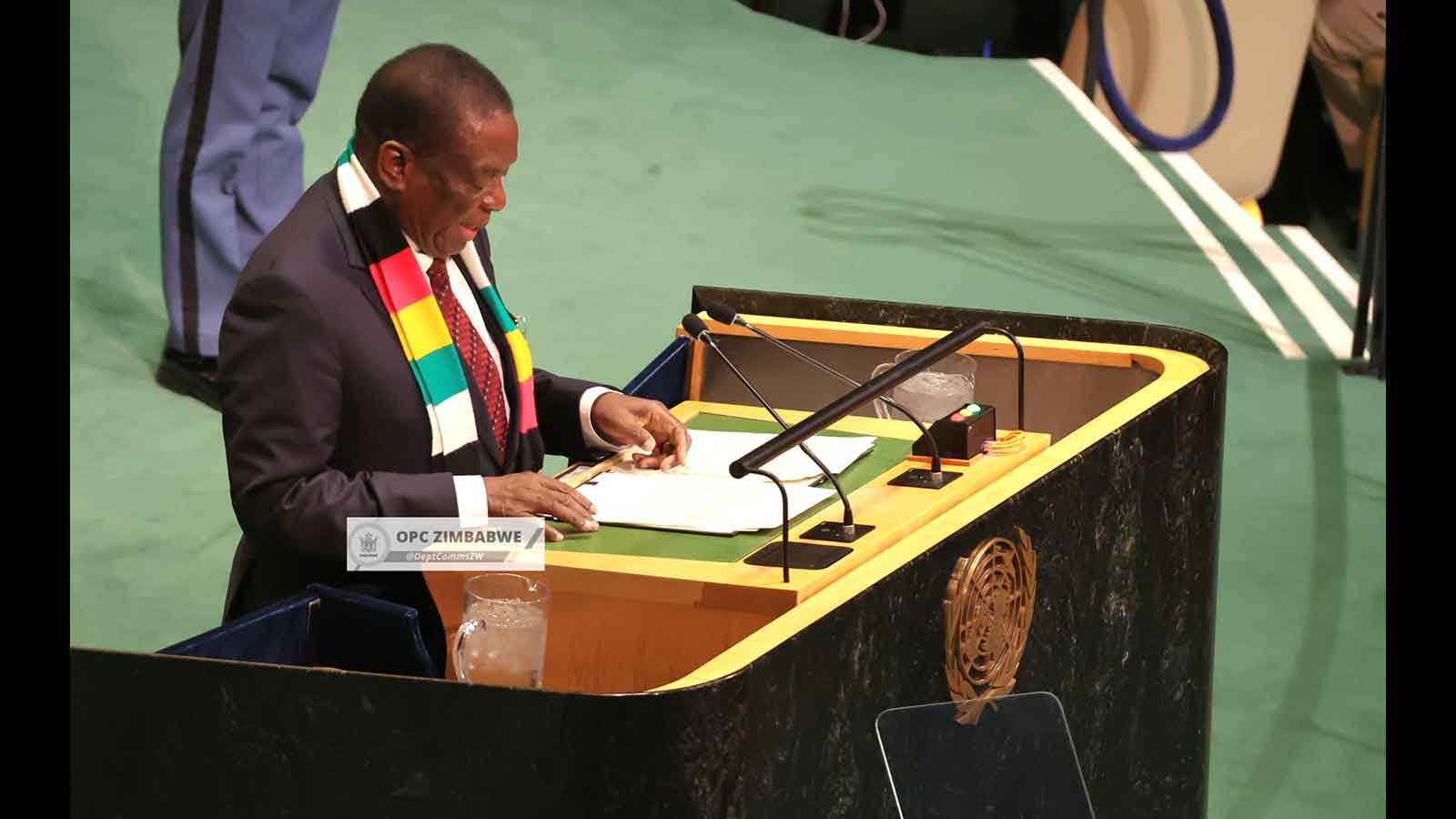
This decision to go for the absolute maximum affordable comes from the very top, President Mnangagwa himself.
As the talks reach a certain stage the decision has to go to the person in charge, and after interrogating his experts and officials and gathering together all that is available in cash and non-monetary benefits, the President has made the decision of pushing the maximum practically possible.
He has not been trying to prove any points about showing workers where they can get off, but rather appreciating the point that they need everything he can get assembled and then deciding on doing that.
Most of the unions and associations have gone along with this, reluctantly to be sure, but have come to the correct conclusion that what can be wrung out of the employer in the talks has been wrung out of the employer, and in any case have concluded that the employer is not holding anything back but has instead pressed hard for what it can do.
There is, however, a small group of smaller unions who are besotted by gesture politics and who feel secure in calling for the wildcat strike, despite these being illegal and despite the clear warning backed by action in the past that no one can be paid while on strike.
They have also seen that industrial action outside the realm of the legal parameters has led, in other sectors, to disciplinary action.
Some feel, wrongly, that they will be saved by outsiders. Some have political ambitions. Some may well be willing to be used.
There is disciplinary action now in progress, and again there are unions within the system negotiating for modifications of this, which they are entitled to be doing as they show their willingness to work for all public servants, including those who do not support them.
But it is important to stress that the wildcat action and the resulting disciplinary action had zero effect on the decision -making process.
They are not linked and the wildcat action only did not have a negative effect on the Government stance because the President and his Government were looking at the issues, including those presented by the public sector associations, rather than the pressures.


 Online Reporter