Online Reporter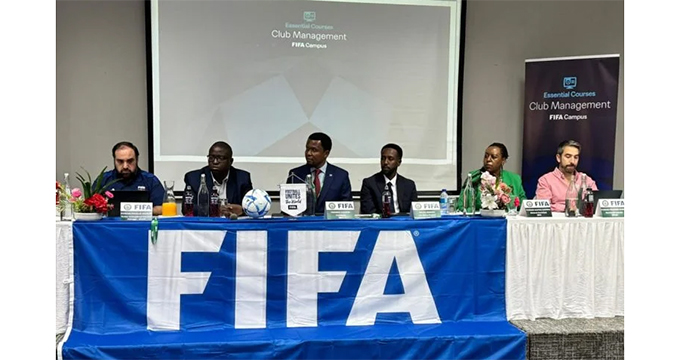
AS the FIFA Essential Course in Club Management unfolded in Harare this week, the spotlight shone — and for once — not on the players or the coaches, but on the men and women, whose decisions shape the destiny of Zimbabwean football — the administrators.
For too long, national game’s football story has revolved around heroes on the pitch and tacticians on the touchline.
Yet, the game’s true success, based on sustainability, integrity and growth, rests on those men and women tasked to run the institutions that make football possible and tick.
FIFA’s Club Professionalisation and Management Programme, which has brought the Zurich-based institution’s senior officials like Solomon Mudege, David Fani, and Marcos Pelegrin to Zimbabwe, is a timely reminder that football is as much a business as it is a passion.
As reported elsewhere in this publication, this is only the second time that FIFA are undertaking this kind of programme in Africa, which also underscores the fact that t the Zimbabwe Football Association (ZIFA) are gradually regaining the confidence of the world football body.
This is the second phase of a continental drive that began in North Africa, designed to build capable, transparent, and forward-looking football organisations.
Through vital modules in strategic planning, governance, finance, club licensing, and commercial management, FIFA seek to instil the discipline and professionalism that have long separated successful football nations from the struggling ones.
Zimbabwe’s decision to host this African edition of the course is as bold as it encouraging and a signal of the readiness to move with the global trends. It reflects the determination of the new ZIFA leadership under Nqobile Magwizi to shift from a tradition of fire-fighting for which, this association is famed, to future-building.
ZIFA ought to, and refreshingly so, be praised for embracing this opportunity to build the capacities of their affiliate members.
We also that by staging this vital indaba, it is Zimbabwe’s demonstration to play catch-up, albeit with the helping hands of FIFA and the continental body, the Confederation of African Football (CAF)
But hosting alone is not enough and both FIFA and CAF can only do so much in terms of interventions.
The real test lies in whether the carefully selected administrators — especially those from the Premier Soccer League, the Women’s League and the Regional Division One leagues — who have been in attendance, will take what they learn and translate it into measurable transformation at club and league levels.
On the basis of a history of lackadaisical approaches to full implementation and adoption of previous FIFA interventions, the game’s administrators have been the Achilles Heel and a huge let down.
They have been largely to blame for the stunted growth that local football has experienced.
Coaches, referees and players have been playing their part and the ball is now in the court of those tasked with policy formulation and implementation.
Modern football has evolved into a complex billion-dollar industry, blending sport, entertainment, and entrepreneurship.
The most competitive clubs in the world are not only defined by their trophies but by their governance models, marketing strength, and financial management. They are brands, businesses, and community pillars rolled into one.
For Zimbabwe, emerging from years of turbulence and rebuilding its place in the continental game, strong administration is non-negotiable.
No amount of talent on the field can compensate for weak structures off it. Clubs that lack proper governance, transparency and planning are doomed to stagnate regardless of how many promising players they produce.
This week’s training, which ended yesterday, offered administrators a chance to reimagine their role. They are not mere caretakers; they are leaders entrusted with the future of the game.
Leadership today means embracing accountability, mastering modern management tools, and fostering a culture of professionalism that trickles down to every department — from finance to youth development.
FIFA, according to the global federation’s president Gianni Infatino, have already invested over US$1,28 billion in African football development since 2016 through the FIFA Forward Programme.
The world body who will unveil another four-year FIFA Forward cycle in 2026, have done their part in providing resources and expertise.
Now, it is up to local administrators to ensure that these investments yield tangible results in the form of stronger clubs, better governance, and a sustainable football economy.
As the two-day indaba concludes, may the lessons learned not be shelved together with the name tags and conference folders.
The clubs represented from the PSL, the Women’s leagues to the Division One contenders hold the keys to Zimbabwe’s football renaissance.
If administrators step up, apply the principles of sound management and lead with integrity, the players and coaches will have the foundation they need to succeed.
The future of Zimbabwean football will not be built in ninety minutes on the pitch. It will be built in boardrooms, through decisions and policies that value transparency over convenience, structure over sentiment, and sustainability over short-term success.
The time has come for administrators to be the leaders that football needs.
Zimbabwe’s flagship sport should kick-on from this FIFA initiative and cover some ground.
After all a combination of factors have left the people’s sport lagging far behind some of their peers in the region and on the continent at large, especially the North African countries like Morocco, who ironically are the hosts of the 2025 Africa Cup of Nations and more importantly are now hosting FIFA’s office in Africa.