Online Reporter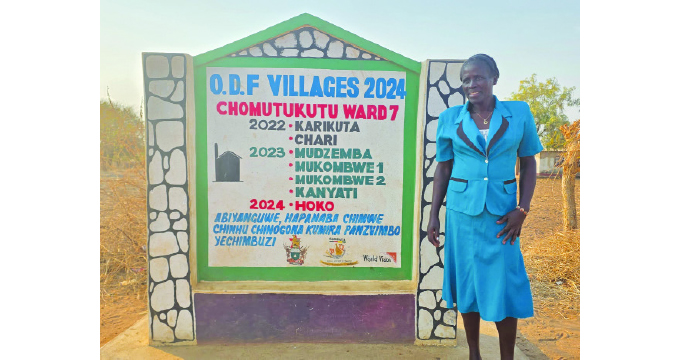
Rumbidzayi Zinyuke-Senior Health Reporter
WHEN villagers in Karikuta, deep in the arid heart of Rushinga District in Mashonaland Central, began talking about toilets and handwashing basins in 2021, many dismissed the idea as unnecessary.
For generations, open defecation had been a way of life, a practice shaped by drought, poverty and lack of infrastructure. But today, that same community stands tall as one of Zimbabwe’s shining examples of transformation in water, sanitation and hygiene (WASH).
Their journey from open defecation to having toilets and clean, piped water is not just a story of infrastructure, but of dignity restored and improved health.
For Mrs Idah Sirika, chairperson of the Karikuta piped water scheme, the change was made possible through leadership and persistence. In a society where behavioural change can take time, the approach was simple: lead by example.
“When the idea of toilets was introduced, there was a lot of resistance because many people were used to open defecation. As leaders, we realised we had to take charge. I was one of the first to build my toilet, a concrete hand washing basin and a rubbish pit divided into sections for biodegradable and non-biodegradable waste.
“Once people saw what we were doing, they started following suit. In just five months, every household in our village had a toilet.”
Karikuta soon became a model of progress. The first in Chomukutu Ward 7 to be declared open defecation free (ODF) in 2022. That success inspired neighbouring villages, and today all 10 villages in the ward have achieved ODF status.
For many villagers, this transformation required commitment and teamwork. The project began with little more than community meetings and shared determination. Mrs Chengetai Katiza, said the journey was far from easy, but the sense of ownership made all the difference.
“When we started, we only had three proper toilets in the whole village. Even those who couldn’t afford to build were helped by others. Having toilets and piped water has brought so much relief to us,” she said.
Before the programme, women in particular faced challenges that affected their dignity and health. The absence of toilets forced them to find secluded areas, often risking their safety and privacy.
Mrs Monica Mutatapasi remembers those days vividly.
“Children would go into the bushes at any time, but for adults, especially women, it was always a struggle to find privacy. There was always the risk of being seen. The toilets and handwashing facilities have restored our dignity and improved our health because we used to record many diarrhoea cases,” she said.
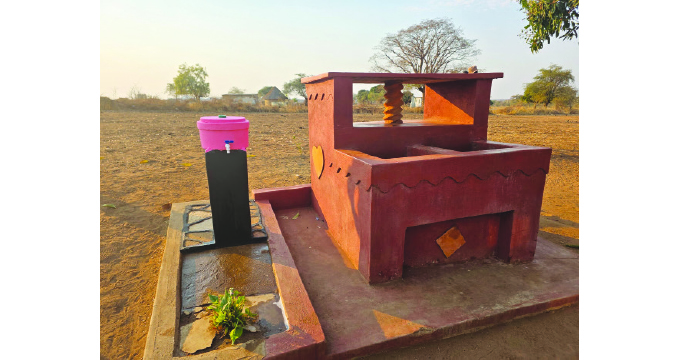
Most villages in Rushinga now have running water.
At the centre of this change was strong local leadership. The village leaders worked with health officers, community builders and households to drive progress. Village Head Munyaradzi Karikuta said their success came from unity and shared purpose.
“Before the programme, the entire village had only three toilets, so most families used the bush. We rallied everyone to build. Now every home has a toilet, and diarrhoeal diseases have drastically dropped. We have truly witnessed the power of working together as a community,” he said proudly.
As an incentive, the Government and its development partners pledged to support villages that attained ODF status with piped water schemes. The idea encouraged communities to take ownership of their sanitation journey.
Once sanitation milestones were achieved, villagers came together once again, this time to dig trenches and lay pipes that would bring clean water directly to their homesteads. The collective effort further strengthened community spirit and ensured sustainability.
To date, about 164 villages in the whole district have been declared open defecation free and more are still working towards this milestone.
The change has been both measurable and transformative.
According to District Environmental Health Officer, Mr Batsirai Mahlanza, the turnaround is a result of strong coordination and community participation.
“In 2017, sanitation coverage in Rushinga was only 33 percent, and diarrhoeal diseases were common. Through the WASH programme, we trained local committees and health workers, and worked closely with traditional leaders and government departments. Today, sanitation coverage stands at 67 percent, while water access has increased to 78 percent,” he said.
Mr Mahlanza said the district’s approach ensured that sanitation gains are supported by sustainable access to water.
Beyond better health, access to clean water has eased the daily burden on women and children who once spent hours fetching water from distant sources. With more time available, families have been able to focus on income-generating projects and education.
The health benefits have also been profound. Clinics report fewer cases of diarrhoea and other water-borne diseases, and hygiene education has become a cornerstone of community life.
According to District Medical Officer, Dr Delight Mutsamba, the data speaks for itself.
“In 2017, Rushinga recorded nearly 5 000 diarrhoea cases a year. This year, we have recorded just over 1 200, a significant decline. Cholera, which was once a major threat, has also dropped drastically. During the 2008 cholera outbreak, Rushinga was the worst affected district so this is a welcome change.
“While we still record cases, we are not reporting any cases in ODF villages. The combination of sanitation, water access and hygiene education is saving lives,” he said.
Dr Mutsamba added that while challenges such as population movement and informal mining continue to pose risks, Rushinga’s experience showed how consistent investment and community participation can transform public health outcomes.
According to the latest Cabinet update, 97 percent of Zimbabwe’s population now has access to safe drinking water, while 77,1 percent have access to improved sanitation facilities. Under the Presidential Rural Development Programme, more than 4 194 boreholes have been drilled in rural areas, and 906 business units established across all ten provinces.
To ensure better coordination, Government has set up a multi-sectoral National Action Committee on WASH, chaired by the Minister of Lands, Agriculture, Fisheries, Water and Rural Development, supported by a dedicated WASH directorate within the same Ministry.
These initiatives are helping to advance the sustainable development goals and Zimbabwe’s roadmap to becoming an upper-middle-income economy as the emphasis on rural development and community-led sanitation ensures that no one is left behind.
Back in Karikuta, the taps continue to flow, a powerful symbol of progress and pride. The transformation has not only improved living standards but also restored hope for a better future.
For Mrs Sirika, the achievement is deeply personal and a source of pride for every villager.
“Women no longer wake up before dawn to fetch water or risk their safety. Our children are growing up in clean homes, free from disease. We are proud of what we have built together,” she said.