admin
admin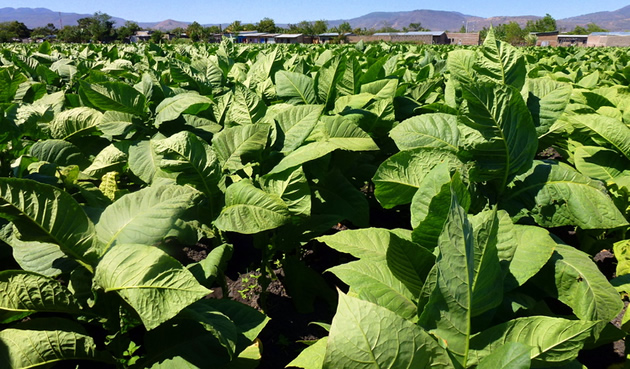
It has taken resettled farmers only 17 years to better a tobacco output record that the former farmers set after more than a century of production.
Commercial tobacco growing started in the country in the 1894–1895 season and from that time until the land redistribution programme in 2000, was dominated by white farmers. As more of them took to growing the crop, gained more experience and invested more in the land, output grew. It peaked in the 1999-2000 season when 236 million kg was harvested.
The growers undertook highly mechanised operations and had been in the business over many generations. Because they had been on the land for long periods, they had the best technical skills to grow the crop. Also, they had easier access to affordable finance.
The launch of the fast track land reform and redistribution programme in 2000 opened up the highly lucrative but capital intensive industry to more black producers. Most of them did not have any skills or resources beforehand, thus they learnt on the job; the hard way. As expected output dropped sharply in the early years of the land reform programme. For example, 69 million kg was harvested in 2005, but went up to 73 million kg in 2005. The lowest it fell was in 2008 when only 48 million kg was reaped but from then on, as government support rose and farmers mastered the land and the skills, output and quality started rising – 58.5 million kg in 2009, 123.5 million kg in 2010, 132.5 million kg in 2011, 144.5 million kg in 2012, 166.7 million kg in 2013. It kept rising and last season, 215 million kg was recorded.
The record set in the 1999/2000 season was broken in the 2017/2018 season after farmers produced 237, 1 million kg of the golden leaf, according to statistics from the Tobacco Industry and Marketing Board (TIMB), raising $688,7 million.
We are delighted that our farmers are doing so well in such a very short period of time and under very difficult operating conditions.
It is because of their sweat that tobacco has recovered its status as one of the linchpins of our economy. Last year, the sector accounted for 25 percent of the country’s total exports which stood at $3, 8 billion.
Farmers are refusing to be hampered by their short spell on the land, a not-as-yet-established skills base and resource constraints.
In addition to farmers’ hard work, the Government has done very well in supporting them to produce. It has assisted through providing inputs, facilitating better market access and broadly creating an environment that is conducive for the new farmers to excel.
We must also appreciate that more than 82 percent of the crop that was sold during the ongoing tobacco marketing season was grown thanks to the financial and technical support from independent contractors. They are spending millions supporting tens of thousands of farmers. They indeed must be lauded for that role. We have no doubt that without the support from contractors, the recovery we have seen over the past few years, capped by the record output this season, would not have been achieved.
Therefore, we commend the contractors as well and urge them to continue on the same line.
Because the riches people are realising through growing tobacco are evident for all to see, more people are taking it up. By this time last year 98 795 farmers had registered to grow tobacco, but so far this year 145 000 farmers have registered to grow it in the 2018/19.
We are pleased with the progress being made with regard to tobacco growing, as we are with other segments of the agriculture sector, the anchor of our economy. As output steadily rises, leaf quality is also improving.
Going forward, farmers need to work even harder so that they enhance their output and productivity and put more of their land under the crop. They are encouraged to acquire better skills in tobacco growing and on-farm processing capability so that the quality of their output improves.
The Government has done well to include tobacco growing under the command agriculture programme. This step will obviously boost production just like command maize production has resulted in record high output of the staple.
On the other hand, contractors who are clearly instrumental in the good work that is being done in tobacco growing are encouraged to intensify their support for the farmer.
Having attained the 237,1 million kg record within only 17 years, the country expects tobacco farmers to perform better in seasons to come.



 Online Reporter