admin
admin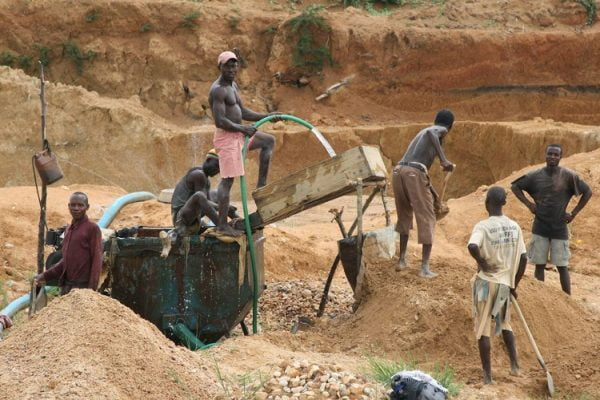
ZIMBABWE, one of the world’s top producers of gold, holds substantial endowments of close to 40 minerals.
Due to this, the US$12 billion mining industry by 2023 is within reach.
The mining industry contributed 6,2 percent towards Zimbabwe’s Gross Domestic Product (GDP) between 2009 and 2015 and 8,4 percent from 2016 to 2018.
As of October 2018, about 60 percent of the country’s export earnings came from mining while over five percent of the population was employed in the sector.
Thus, when exploited in a sustainable manner, the mining sector has the potential to transform the Zimbabwean economy.
According to the Zimbabwe Mining Report (2007), if strategically developed using latest technologies and also through beneficiation, Zimbabwe’s mining industry will be key to the nation’s development.
However, while gold continues to be the main earning mineral, its contribution to the total mining industry value is slightly depleted due to a plethora of challenges.
Top on the list is the illegal mining going on in Penhalonga, Odzi and surrounding areas.
While artisanal miners are playing a key role in boosting gold output, some of them are channelling their gold to the black market and bleeding the national fiscus in the process.
Through some of the methods being used by artisanal miners, Zimbabwe’s mining sector has damaged the environment and continues to do so.
For example, mining activities are creating large waste dumps, and run-off from these is contaminating soil and inland water bodies.
Although a number of laws to protect the resource base are in place, including the Natural Resources Act whose main objective is to control the use of resources, some unscrupulous miners prioritise the dollar at the expense of environmentally friendly mining practices.
Once covered with thick forests, the trees in the gold rich areas of Manicaland are being cut down wantonly without any effort to plant more trees to curb deforestation.
A lot of areas are also dotted by thousands of holes as people dig in search of the precious mineral.
This had led to erosion, which is dangerous for the environment as it sweeps away top soil and destroys river banks.
As if that is not enough, toxins used in the extraction of minerals, for example cyanide and mercury, are polluting the environment and will eventually result in people being unable to farm in certain places.
In addition, almost all of the mined ore of non-ferrous metals become waste and a burden to the environment.
Irresponsible mining activities also destroy animal habitats and ecosystems.
The activity that surrounds the mine, including people movement, explosions, road construction, transportation of the goods, etcetera, are harmful to the ecosystems and changes the way the animals live.
However, despite these drawbacks, the mining industry has posted growth over the past couple of years as the Government of Zimbabwe is playing an active role in ensuring that mining activities are done in a sustainable manner.
The Government has undertaken the task of ensuring that mineral resources bring profits to small operations and this has seen mines creating employment for locals.
Both small-to-medium and large scale mining entities in Zimbabwe are being encouraged to invest in technologies that minimise the aforementioned environmental risks.
Also, the Ministry of Mines and Mining Development, the Environmental Management Agency and Zimbabwe Miners’ Federation needs to embark on environmental awareness programmes to educate mining entrepreneurs on sustainable environmental management.
Through these efforts, the social and financial well-being of indigenous Zimbabweans is expected to improve as the nation trudges towards attaining a middle income economy by 2030.
While we enjoy the revenues derived from our minerals today, it is imperative for us to remember that the future generations also need to inherit a rich environment that is intact.



 Online Reporter