Online Reporter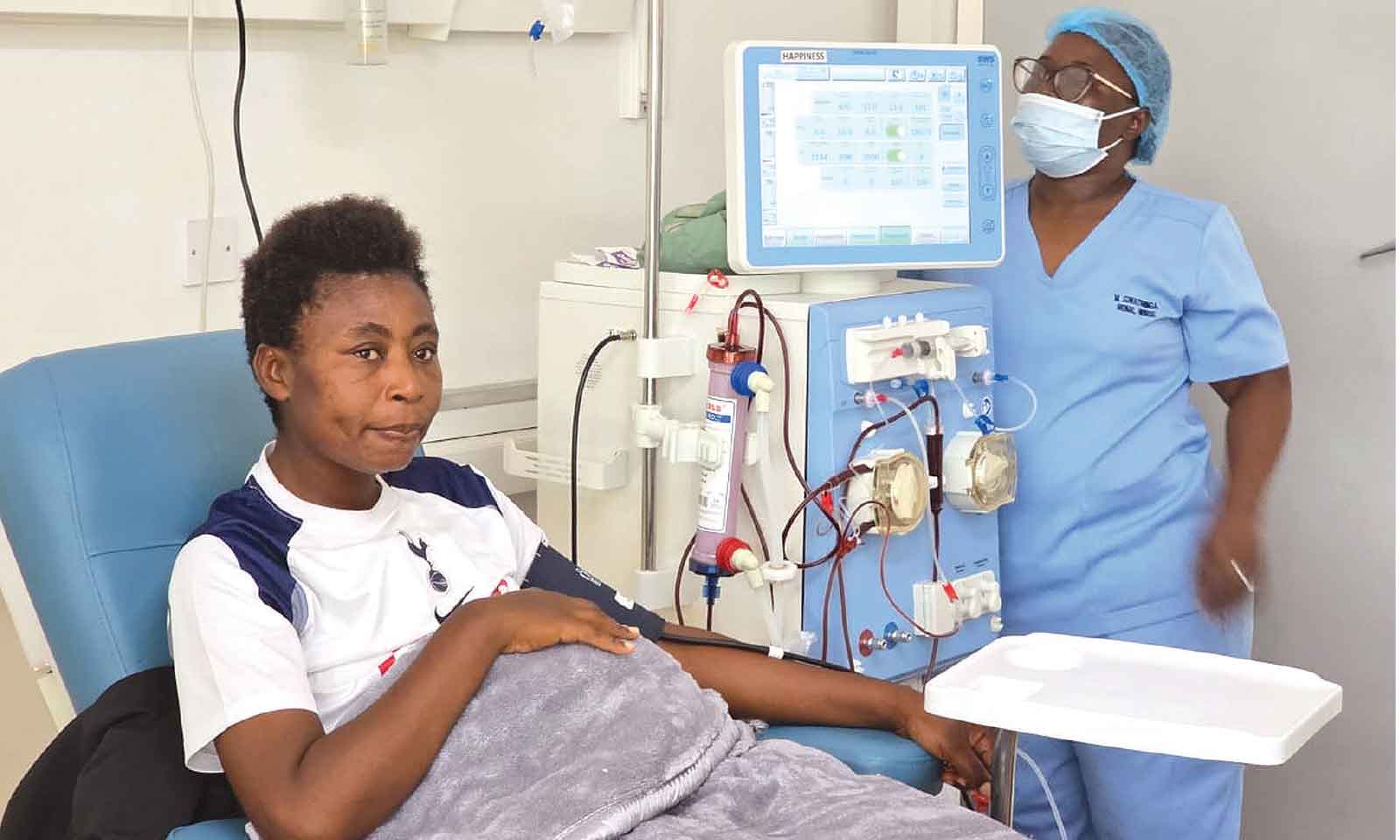
THE Second Republic’s determination to bring modern medical technology to everyone who needs it has seen many dramatic improvements to the public health system in both depth and outreach.
The latest such move is the commissioning of 21 new kidney dialysis machines at Parirenyatwa Group of Hospitals, taking the renal unit there from a handful of machines that could not cope with the load to a properly equipped and well-functioning unit.
Even more remarkably, treatment on these machines is free.
That means the price of treatment is not a factor when acute or chronic kidney illness that needs dialysis is diagnosed.
As soon as the doctor orders the treatment, it is available, even if the person is destitute.
Quite a few of the patients need to spend a bit of money on transport, but with free treatment at the other end of their journeys that is affordable.
We need to remember that when a patient has been diagnosed with a degree of kidney illness that requires regular dialysis, it must be available, or the patient will die fairly soon after some intense suffering in their last weeks or months of life.
Dialysis machines were always a bit scarce, and some sterling efforts had to be made to add even one or two machines to the number.
The late national heroine Cde Sally Mugabe, who needed regular dialysis for years, took a lead and her influence helped publicise the need for dialysis, and raise the extra money, but it was literally one machine at a time.
Now the Second Republic buys 21 new machines for its largest hospital in a single order.
While the work of upgrading the public health system will never end, since there will always be improvements that are possible, the Second Republic has made tremendous progress on both restoring older standards and making new advances.
The days when anyone needing anything remotely complex had to go to the private sector are over, although improvements in the public system must be pressed so income and wealth cease mattering.
President Mnangagwa himself has taken a personal interest in this progress of the public system, since a decent health care system that can cater to all regardless of status or income is a central plank of the people-centred development he demanded when he came into office, a demand that grew in intensity with the outbreak of Covid-19 soon afterwards that exposed many shortcomings in the public health sector.
So the accelerated work of regular upgrade and proper maintenance was pushed forward.
This also helped to retain many more professional medical staff in Zimbabwe.
One reason for labour unrest and increasing emigration rates was the hopelessness many professionals felt when confronted by patients they should have been able to help, but could not because even the most elementary medical equipment and supplies were not there.
The President’s direct action as things improved was still needed to create the innovative solutions to sorting out the logistic logjams that were developing.
It was all very well to have the medicines and supplies in stock, but they had to be moved from the shelves to the wards before they were of any use.
At the same time, the budgeting process within the Ministry of Finance, Economic Development and Investment Promotion started becoming very creative.
Not only was the normal capital budget for health improved, as Zimbabwe started mobilising its own resources and fiscal reforms allowed the capital budget to become a healthy number two on the spending list after employment costs, but new sources of capital were tapped.
These started with the tax on sugar in drinks and squashes, a small tax that had almost zero effect on prices, or more precisely had sugared solutions the same price as those using non-sugar sweeteners.
It was followed by other small taxes on what most medical professionals would regard as unhealthy takeaway foods.
New cancer machines, funded by the sugar tax, have been commissioned with more on order. Those tiny taxes have added up to the millions of dollars needed to buy top-end equipment.
At the same time a growing effort is being made in preventative medicine and in showing people how to live a more healthy lifestyle.
It is still early days, but the reasoning is sound; if fewer people need expensive care for life-threatening or even fatal illnesses, then the budgets can be stretched more widely to give this care for those who need it.