Online Reporter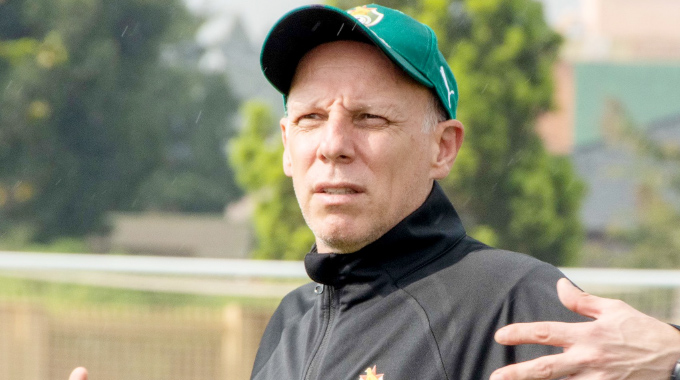
ZIMBABWE’S national team has arrived at a moment that will define a coach and a generation. Michael Nees was hired to steady a rocking ship, to give the Warriors shape and a plan.
A year on, his record and public posture force a hard question; is he the coach who can take this team beyond messy qualifying rounds and into a credible Africa Cup of Nations campaign in Morocco?
The facts are simply unforgiving. In the World Cup qualifying cycle the Warriors have scored five goals and conceded 11.
They have lost four qualifiers, drawn two, and remain without a win in crucial matches.
Nees’ year in charge shows two wins overall, both against the same opponent, Namibia.
Those numbers do not suggest progress.
They suggest a team that still lacks identity, cutting edge in attack and the defensive organisation needed against Africa’s better sides.
Words matter almost as much as results.
Nees has repeatedly downplayed ambition, praising the bare minimum, while warning against what he calls “daydreaming”.
He has labelled AFCON qualification an “over-achievement” and dismissed big public targets as unhelpful.
That posture creates two problems.
It lowers internal expectations when the squad needs belief, and distances the coach from supporters, who expect a leader to match their hunger.
Critique of tactics can be productive, but a national coach should never sound as if he came to manage resignation.
The upcoming fixtures are a clear test.
Zimbabwe still face South Africa and Lesotho in the World Cup qualifiers and then head to Morocco to meet Egypt, Angola and South Africa in Group B.
Egypt will arrive with Mohamed Salah and a squad accustomed to elite competition.
South Africa have already beaten Zimbabwe 3-1.
Angola are no longer an easy opponent.
To get out of the group, Zimbabwe must score more, defend set pieces better, and adopt an attacking plan that produces consistent chances, not just hopeful crosses or counter flashes.
Practical tasks are obvious.
First, establish a reliable attacking identity, whether that means quicker transitions, wide overloads, or a target man, who wins aerial duels.
Second, stop defaulting to ultra-defensive shapes that invite pressure and mistakes.
Third, hand genuine responsibility to emerging talents instead of giving them token minutes.
Players such as Tawanda Chirewa, Bill Antonio and Twanda Maswanhise, to name just a few need clear roles and sustained game time to grow into international standards.
Fourth, sharpen set-piece routines both defensively and offensively and make sure the team trains them until they become instinctive.
Those demands land at ZIFA’s door.
The association must be brutally honest about what it has signed up for.
If Nees can correct course in the next two qualifiers and present a credible plan that converts into goals and stronger performances, he should keep the job.
If he cannot, ZIFA needs a contingency plan, not excuses.
Stability matters, but stability without progress is stagnation. An interim coach who galvanises the squad for Morocco may be more valuable than stubborn loyalty to a manager who cannot inspire.
This is not merely administrative. It is moral.
Zimbabweans bring passion and hope to the national team.
They deserve a coach who respects those emotions and channels them into preparation and tactics, not a manager who lectures the media about unrealistic dreams.
Past successes under local and foreign coaches show that Zimbabwe can compete with Africa’s better sides when there is clarity, brave selection and shared belief.
That history should be a blueprint, not a footnote.
Nees still has a narrow window to prove critics wrong.
Let performances, not press statements, decide.
The next matches must show tangible improvement.
More shots on target, coherent attacking patterns, a midfield that links defence to attack, and fewer errors leading to goals.
The coach must present a believable roadmap for Morocco, with contingency plans for injuries and suspensions and a style that players can execute under pressure.
If Nees delivers, he will have repaid the faith of those who hired him.
If he fails, ZIFA must act quickly and transparently.
The aim is clarity, not chaos.
Keeping a coach who does not match the team’s ambition is not stability; it is surrender.
The Warriors have talent, and they have a chance to make Morocco a platform rather than a farewell tour for a generation.
The next 30 days are more than a tactical trial.
They may decide whether a coach stays in charge as this squad prepares for the continent’s brightest stage.
For the players, the fans, and the nation, the choice must prioritise belief, coherent tactics and an attacking plan.
Anything less would be an abdication of responsibility.
ZIFA should publish clear review criteria and a short transparent performance window, so supporters know how the coach will be judged and what would trigger a change.
Accountability matters, and politics or inertia must not decide Zimbabwe’s fate.