

 admin
admin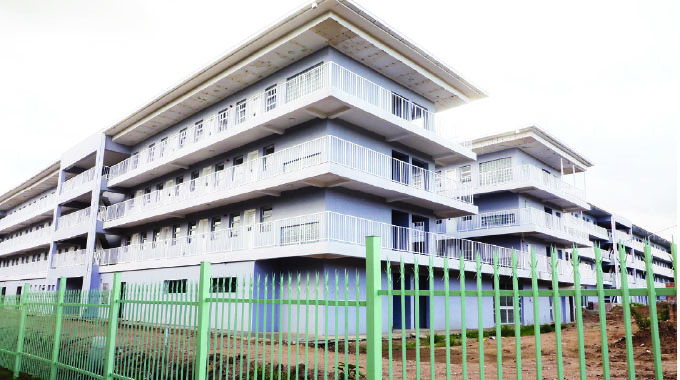
The dramatic expansion in universities and university places means a lot more students need affordable accommodation near where they study, this accommodation also being conducive for studying.
While universities and technical colleges have never been able to offer all students accommodation in their halls of residence, the figure has now fallen to about 15 percent.
The expansion of the tertiary education system to far more towns and cities means more students can possibly stay with families, but the Government goal of a State university in every province has now been achieved, none of these universities or colleges are designated just for those who live in the province and some of the specialities and centres of excellence attract students from across the country.
In any case, outside the two metropolitan provinces, there are a large number of rural areas and small towns in every other province, and regardless of where a student studies they need somewhere to live.
As part of the programme to meet this need the Government has been building student accommodation at its universities, and has also backed a programme headed by the Infrastructure Development Bank of Zimbabwe, which brings in elements of the private sector, to build student accommodation.
As with other infrastructure proposals and operationalising policies, it needed the Second Republic to turn the words into action, in this case into buildings where students can live.
The first of these new complexes, Bulawayo Students City, has just been finished with room for 1 023 students.
The investment also sees other services on site, along with the sort of essential security and adequate standards that students need if they are to get full advantage of their tertiary education.
A lot of students obviously have to live in lodgings at the moment, and these vary.
Some landlords provide decent value near a university or college, modest rooms in secure surroundings with basic shared bathroom and kitchen facilities, or even daily meals.
Others are not so pleasant and demand full price for something really substandard, and some students simply have to accept whatever they can find. It is not always easy.
IDBZ programme needs full support to back the Government’s own budgetary commitments for on campus accommodation, and we also need to encourage creative thinking.
One idea that came up in recent years involves conversion of some of the private office blocks in central Harare that find it difficult to attract business tenants.
This is a direct result of the decision by a lot of businesses to move out into the suburbs, where office accommodation is tight and being built, rather than remain in the city centre.
There are lots of reasons for these moves, but they became possible once modern wireless and cable communications spread, so the concentration of businesses into a business district was no longer required and a lot of business owners wanted more attractive surroundings with on-site customer parking, and were prepared to make arrangements for staff transport if necessary.
So we have a number of large older office blocks in the city centre, some of which could well be suitable for conversion.
The main conversion costs would be plumbing, renovating and expanding old office bathrooms on each floor by putting in showers, and setting aside an area for cooking and dining.
These under any conceivable change in planning rules would need to be centralised since fire risks if nothing else would bar cooking in rooms.
There would be minimal conversion for bedrooms in those buildings where partitioning was permanent, since an office can be a bedroom, although the buildings with open-plan offices would need to be partitioned with fireproof partitioning.
In the sort of building that would be suitable for conversion, the older buildings, the major problem of little or no on-site parking would not be a problem.
Few students own cars and the odd mature student with a vehicle, or the ones with parents rich enough to buy their children a car, have fewer problems of finding accommodation.
This lack of on-site parking makes other conversions, such as upgrading an older building into specialised office accommodation, difficult or impossible.
Most of the older buildings that could be considered for conversion are not that high-rise, say six stories or less, so the very high costs of replacing defunct lifts would not necessarily have to be incurred.
A young person can walk up more flights of stairs than a late-middle aged office worker of 50 years ago.
The operational costs would be modest: security, some form of “adult supervision”, cleaning, and finding a suitable contractor who can run a canteen with meals that students can afford but which meet nutrition standards.
The conversion would require some flexible thinking in the planning authorities, although an area zoned for commercial and office use also allows residential use as a matter of course.
Standards would have to be set for the conversions, and input from interested parties in just what sort of accommodation would be useful and how it should be administered would be desirable.
Outside Harare city centre there are not many, if any, large older office buildings that are empty or almost empty, but still structurally sound and suitable for conversion, but Harare metropolitan has two large State universities and a swathe of State technical colleges, so the demand for student accommodation is large.
At the same time housing is tight and modern trends of a lot more flats means that lodger’s rooms are not going to be so readily available.
While conversion of office blocks will cost money, the costs are far less than building the actual physical structure in the first place and so significantly lower investment funds are needed.
While the conversions would not be a panacea, they will be possible in some cases, and make good economic sense, and so should not be excluded just because we have not done this sort of thing before.



 Online Reporter