

 Online Reporter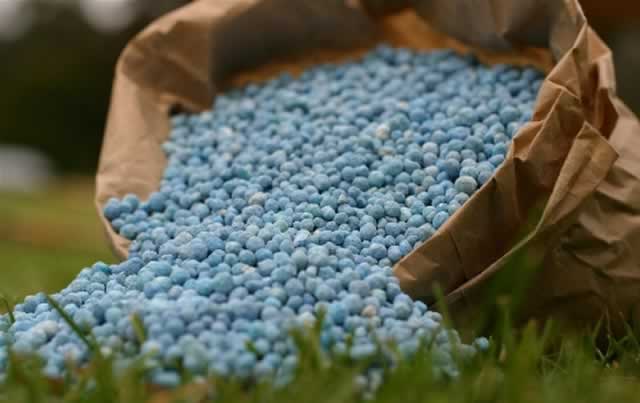
THE war in the Gulf has not only cut back global supplies of petroleum and natural gas that transited the now-closed Strait of Hormuz, but also of fertilisers, particularly nitrogenous fertilisers, and is a wake-up call for Africa.
We have to stop relying on imports from outside the continent and develop our own raw materials to make sure our farmers can produce the ever larger harvests the growing population needs.
Even when the Strait reopens, we need to recognise that while the African Union can minimise and eliminate conflict in Africa, we cannot control global trade routes and supplies.
Zimbabwe has to play a far more central role in this endeavour, after the African Union activated the Africa Centre for Fertiliser Development, which was assigned to Zimbabwe years ago. A full fertiliser industry for Africa will require a lot of regional and continental co-ordination, as no single country has all the required raw materials.
Zimbabwe is more favoured than most with a significant phosphate deposit at Dorowa, and under the Second Republic this State-owned mine and processor has been recapitalised and is being brought up to full production, with that process being accelerated since the Mutapa Investment Fund took over the mining company and its assets and included it in its reorganisation and strict accounting.
We also used to produce a fair amount of ammonium nitrate in Kwekwe, at least enough for the late colonial era although a lot more is now needed. That used surplus Kariba South electricity to liquefy air, to get the nitrogen, and electrolysis to get the hydrogen. Once cheap hydroelectricity was no longer an option, manufacture switched to imports of the far more common ammonia from natural gas producers for the first half of the industrial process before continuing with existing methods for the second half and for production of urea, the other main nitrogenous fertiliser.
Mozambique is opening new natural gas fields, and while we will have to pay world prices for raw materials would prefer a decent market next door. In a few years we will probably have our own natural gas at Muzarabani.
The Kwekwe industrial complex, which had been run down, is being revamped, again following the Mutapa takeover of the manufacturer, with 20 000 tonnes a year of top dressing planned for the very near future. Sable, the industrial company, can import ammonia from Mozambique, which has natural gas and downstream industries, and the refurbishment of the Kwekwe factory can, therefore, obtain secure supplies from a neighbour, instead of sometimes difficult imports from outside the region and Africa.
We need to build up production of the third major ingredient of general fertilisers, the potassium salts. The biggest suppliers are in the East European war zones, so again we have higher costs and cuttable supply lines. So far these salts have not been found, at least in viable mining quantities, in Zimbabwe.
But it could be worth looking in areas that were once underwater, such as the lower Zambezi and Limpopo Valleys, and perhaps in central Botswana. In any case reasonable deposits are likely near the mouth of the Congo River, and by offering a guaranteed additional market we could encourage investment in that area.
World fertiliser prices are unlikely to fall, even when the Strait of Hormuz re-opens, but we can take action to minimise the price rises.
It was noted at a recent SADC meeting of Agriculture Ministers that having a plethora of regional standards and licences, farmers were having to pay more than they should. Rationalising the regional fertiliser market to a single set of agreed standards and formulas, thus makes excellent sense.
Building up our own manufacturing should also cut operational costs, as well as creating a lot of skilled jobs in a pool of exceptionally skilled people, and building up the expertise needed to expand production.
African countries will be looking at fertilisers as among their most crucial early products from faster industrialisation, so trade is more likely in raw materials scattered in pockets across the continent rather than in 20kg bags. But a more integrated manufacturing system will open doors for those with expertise and industrial back-up and cross-border partnerships are likely.
Other systems will be needed to keep costs under control. Farmers can cut fertiliser use without cutting harvests with smart crop rotation, including a legume stage, far more use of low-tillage and mulches, and extra care in water management to reduce significantly the leaching of nutrients. All this is also required for better drought control, so they can win twice.
The holistic approach will keep their costs under control and so make them more viable and profitable. Organic fertilisers cannot cope alone, but they can be grown and processed on farms to reduce demand for chemical fertilisers.
As is common, there is no single silver bullet but rather a collection of industrial knowhow, good practice and other methods.



