admin
admin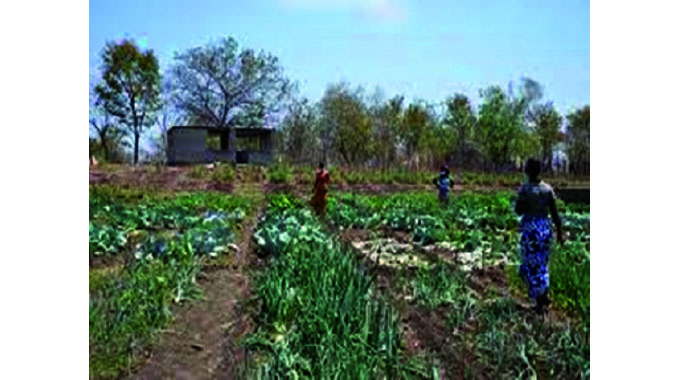
Providing equal opportunities, equal treatment and equal openings for women has not always seen the action following the desire and the rhetoric, so the statistics showing women farmers are in the majority among smallholders benefiting from Pfumvudza, in both the grain and cotton programmes, is a sign that we are now getting this right.
The female majority obviously starts with Second Republic attitudes that there must be zero discrimination and that no one can be left behind because of who they are and where they live. That was translated in action by simply making it clear, and President Mnangagwa stressed this only recently, that everyone who qualifies through undergoing training and making the required land preparations has an absolute right to accessing inputs.
A second aspect that turns theory into practice is the actual research that went into conservation agriculture in a bid to ameliorate the effects of drought and maximise production. One of the corner stones of the new systems is to get maximum yield from smaller plots, rather than dubious yields from larger fields.
This, as some practical women’s organisations have pointed out, opens the door to full participation by women. Few women farmers own the ploughs, harrows and oxen needed to plough and prepare land under older farming practices. Most own the simpler hand implements that are used to prepare the plots in Pfumvudza.
While the initial research into conservation farming probably did not consider this point when the research workers were busy creating systems that would maximise output for a given input of seed, fertiliser and labour, the women win from the serendipity. And as they are providing the given input of labour this was good news.
The inclusion of well over 1 million women in the programmes, 1 050 479 in the grain scheme and 141 654 in the cotton scheme, has a lot of other ramifications in the social and economic life of Zimbabwe. Thanks to a lot of major legal reform in the early days of independence, from the Legal Age of Majority Act onwards, two generations of women have now grown up knowing that they have equality before the law and, critically, what they earn is theirs.
One major aspect of Pfumvudza is not just to ensure families grow enough food, it is to convert smallholder farmers from subsistence farmers to business people earning a living producing grains, oil seeds and cotton for sale, with markets, prices and payments guaranteed at this stage by the Government. Incomes of those using Pfumvudza might not be massive at the moment, but for many households and many farmers this year might well be the first time they have had a significant income from production.
The fact that women farmers were a substantial block in the last season, and this season will form the majority of those delivering to the Grain Marketing Board and Cottco is a practical revolution, creating not just an extra 1 million business people but an extra 1 million women business people who earn their money from production.
When we talk about the economic advancement of women there is nothing quite so practical as first ensuring they can earn money, secondly that this money is paid directly to them, and thirdly that the decision of how the money is to be spent is their decision. When you put all of this together we have more than just a productive rural revolution, changing the whole mindset of how people see and regard farming, but also a social revolution, changing the whole mindset of how society sees women as farmers.
This will be important as the small scale farmers progress. The Government’s intention is not to just keep plugging away with Pfumvudza. That was a first step to shift the bulk of the small scale farmers into income-earning production. Now plans are press further with the development of areas for too long considered a lost cause.
It will be important, for individuals as well as the country, that the women small scale farmers are included in this progress and that they are not discriminated against in their access to mechanical equipment and the like. But having won a practical equality in Pfumvudza, to match the theoretical legal equality they already had, we imagine that women farmers are not going to let anyone ever again walk over them.
Other interesting points emerge when we consider that at least half the new wealth pouring into rural areas, and that wealth the result of production, piles of grain and cotton and not some form of manipulation, comes from women farmers. This factor needs to be thought through by others in business, who need to remember that each customer is different.
While gender does not, outside perhaps the takings at a bar, have a lot of influence on spending patterns, the fact that they majority of rural women are moving into practical equality with their own incomes does mean and those who seek customers in these areas need to recognise that a majority of their customers could well be women, as a majority the income earners are women.
And finally this advance from a theoretical equality to a practical equality will, we hope, start accelerating the presence of women in other areas. The special extra representation for women in Parliament and shortly on local authority councils was always seen as a short term measure while society continued to adjust. It had to be extended because society was not adjusting that fast.
But as women move into the full world of production and business it is obvious that adjustment in society will have to be faster and better.



 Online Reporter